
Spain Travel Guide Best Places to Visit & Things to Do
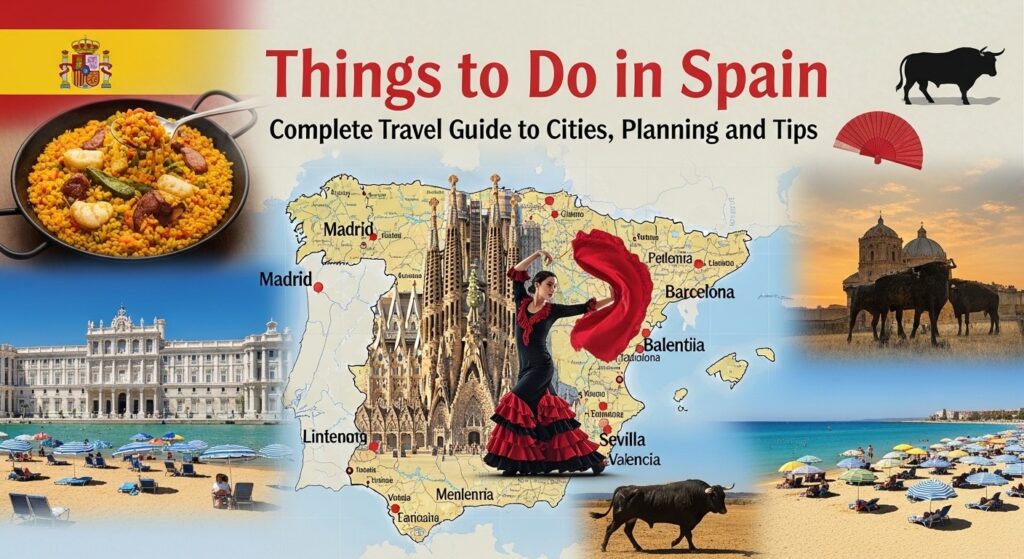
From Gaudi’s Barcelona and Madrid’s royal art museums to Flamenco in Seville and the Alhambra’s Moorish palaces, this spain travel guide covers the best places to visit in Spain, top cities, and practical tips for planning your trip.
POPULAR TOURIST PLACES IN SPAIN
- Barcelona
- Madrid
- Seville
- Granada
- San Sebastian
- Valencia
- Cordoba
- Andalusia
- Basque Country
- Costa del Sol
WHY VISIT SPAIN
Spain rewards a trip built around contrast, and its cities make that easy. Barcelona is Gaudi made real — the Sagrada Familia, Park Guell, and Casa Batllo sit alongside a beach city with genuine nightlife, and the natural anchor of any Barcelona travel guide. Madrid trades that architectural whimsy for royal grandeur and world-class art, with the Prado and Reina Sofia museums both within a short walk of Retiro Park — territory any Madrid travel guide covers in depth. South in Andalusia, Seville and Granada carry Spain’s Moorish history most visibly — the Alhambra’s palace complex is one of the best-preserved examples of Moorish architecture anywhere, and Seville’s Real Alcazar and Flamenco tablaos capture the region’s other defining thread, which is exactly what a dedicated Seville travel guide or broader Andalusia travel guide is built to cover. North along the coast, San Sebastian quietly claims the title of one of the world’s great food cities, with more Michelin stars per square meter than anywhere else on earth. A fast AVE high-speed rail network ties it together, so a spain itinerary 14 days long can cover Barcelona, Madrid, Andalusia, and the Basque coast without losing days to transit.

Six essential experiences
Sagrada Familia & Gaudi's Barcelona
Gaudi's still-unfinished basilica, Park Guell, and Casa Batllo make Barcelona Spain's most visually distinctive city — the essential answer to things to do in Barcelona. Book tickets well ahead, as they sell out fast in peak season.
Prado Museum & Royal Madrid
The Prado's collection of Velazquez and Goya, paired with the Royal Palace's 3,000 rooms, anchors Madrid as Spain's art and history capital, and the top result for things to do in Madrid.
Flamenco & Real Alcazar, Seville
A UNESCO World Heritage palace and the greatest surviving example of Moorish architecture in the world, paired with the Albaicin quarter's views back toward it — the centerpiece of things to do in Granada.
Flamenco & Real Alcazar, Seville
An authentic Flamenco performance and the Real Alcazar's Moorish and Renaissance palace complex define Seville's Andalusian soul, and cover the essentials for things to do in Seville.
San Sebastian Pintxos Culture
The old town's Pintxos bars, paired with La Concha beach — widely considered one of the finest urban beaches in Europe, and the top answer to things to do in San Sebastian.
Best time to visit Spain
The AVE high-speed rail network connects Barcelona, Madrid, Seville, and Valencia in a few hours each, making a car unnecessary for a city-focused itinerary. Within cities, metro systems in Barcelona and Madrid are efficient and affordable; San Sebastian and smaller Andalusian towns are easily walkable once you arrive.
Practical details
Plan your visit
Best time to visit Spain
April to June is widely considered the best window — warm weather, blooming countryside, and crowds that haven’t yet hit summer peak. July and August are the busiest and most expensive months nationwide; September to October offers fewer crowds and the Bordeaux wine harvest; November to February is quietest, with the French Alps shifting into ski season.
Getting around
The TGV high-speed rail network connects Paris to Lyon, Bordeaux, Marseille, and Nice in a few hours each, making a car unnecessary for a city-focused itinerary. Always validate train tickets before boarding to avoid fines. Within Paris, the Metro is efficient and affordable; regional buses and trains cover Provence’s smaller villages.
Where to stay
Barcelona’s Eixample neighborhood puts you near Gaudi’s major works with good metro access. In Madrid, staying near La Latina or the city center keeps museums and tapas bars within walking distance. Seville and Granada’s old towns (Santa Cruz, Albaicin) are worth the premium for walkable access to the Alcazar and Alhambra — book Alhambra tickets and old-town rooms well ahead in peak season.
Continue exploring
From the journal
Latest Spain guide
A deeper dive into planning your trip — cities, food and travel tips.
Frequently asked questions
France is best known for the Eiffel Tower and Louvre in Paris, its cuisine and wine regions like Bordeaux, the lavender fields of Provence, and the glamorous French Riviera coastline.
Most international visitors fly into Paris Charles de Gaulle Airport or Nice Côte d’Azur Airport for direct access to the Riviera. France is part of the Schengen Area, and citizens of many countries — including the US, Canada, Australia, and the UK — can enter visa-free for up to 90 days.
Ten days covers Paris, Provence, Lyon, the Riviera, and Bordeaux without feeling rushed. A long weekend suits Paris alone; two to three weeks allows a deeper regional trip including Normandy or the Loire Valley.
April to June or September to October, when the weather is warm and pleasant without the peak summer crowds and prices of July and August.
Paris, the Eiffel Tower, and the French Riviera draw heavy crowds year-round, especially in summer. Regional cities like Lyon and Bordeaux, and villages in the Loire Valley or Normandy, stay far quieter for travelers wanting to go beyond the highlights.