
Greece Travel Guide Best Places to Visit & Things to Do in Greece
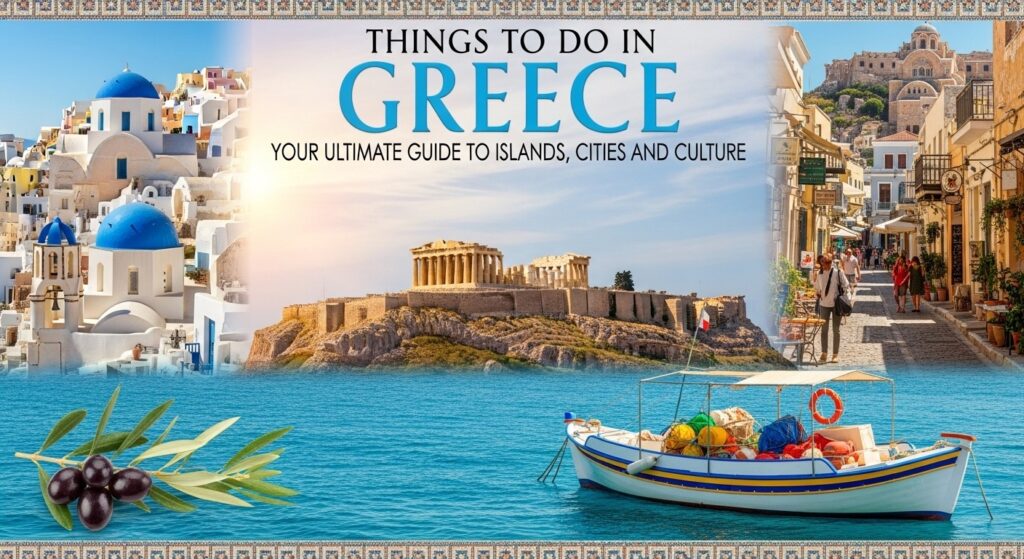
From the Acropolis and Athens’ ancient streets to Santorini’s caldera sunsets and Crete’s mountain gorges, this greece travel guide covers the best places to visit in Greece, top islands, and practical tips for planning your trip.
POPULAR TOURIST PLACES IN GREECE
- Athens
- Santorini
- Mykonos
- Crete
- Rhodes
- Corfu
- Zakynthos
- Paros
- Naxos
- Delphi
WHY VISIT GREECE
Greece splits neatly into two kinds of trip, and the best itineraries do both. Athens carries the country’s ancient weight — the Acropolis and Parthenon rise directly above the city, with the Ancient Agora and National Archaeological Museum filling out a history that predates most of the world’s other capitals, and the natural starting point for any Athens travel guide. From there, more than 6,000 islands take over, each with its own character: Santorini’s whitewashed villages cling to a volcanic caldera and deliver the sunset views that define most people’s image of Greece, which is exactly why a dedicated Santorini travel guide gets searched so often. Mykonos trades that drama for glamour and nightlife, covered in most Mykonos travel guide content, and Crete — the largest island — offers enough variety in beaches, gorges, and Minoan ruins to fill a trip on its own, the territory a proper Crete travel guide is built to handle. Rhodes adds a third layer entirely, its medieval Old Town the largest inhabited one in Europe. Ferries connect the islands easily enough that a greece itinerary 10 days long can combine Athens’ ancient core with two or three islands, covering history, scenery, and beach time without needing a single domestic flight.

Six essential experiences
The Acropolis, Athens
The Parthenon and the Ancient Agora anchor Athens — book tickets ahead and visit early morning to beat both the heat and the crowds. The essential answer to things to do in Athens.
Santorini's Caldera & Oia Sunset
Whitewashed villages perched above a volcanic caldera, with Oia's sunset views among the most photographed in the world — the top result for things to do in Santorini.
Mykonos Town & Little Venice
Iconic windmills, whitewashed lanes, and waterfront buildings built directly over the sea — plus a day trip to the ancient island of Delos, and the core of things to do in Mykonos.
Samaria Gorge & Crete's Beaches
One of Europe's longest hiking gorges, paired with the pink sands of Elafonisi and the turquoise Balos Lagoon — the essentials for things to do in Crete.
Rhodes' Medieval Old Town
The largest inhabited medieval town in Europe, a UNESCO World Heritage Site, paired with the clifftop Acropolis of Lindos, and the anchor of things to do in Rhodes.
Greek Island Hopping by Ferry
Moving between islands by ferry is part of the experience itself, and no trip is complete without a proper greek food guide — moussaka, souvlaki, fresh seafood, and Greek salad show up on every island stop. Book ferries ahead in peak summer, as popular routes sell out.
Practical details
Plan your visit
Best time to visit Greece
Late April to June is Greece’s best window — warm, sunny weather, blooming landscapes, and prices and crowds well below summer peak. July and August are hottest and busiest, especially on Santorini and Mykonos, with temperatures often exceeding 35°C. September to October offers warm sea temperatures with noticeably fewer crowds; November to March is quiet across the islands, with many island businesses closing for the season while Athens stays open year-round.
Getting around
Ferries connect all the major islands and are the standard way to island-hop — book ahead for popular summer routes. Athens has an efficient metro for city sightseeing; between the mainland and islands, or between distant islands, domestic flights save time on tighter itineraries.
Where to stay
Athens’ Plaka and Koukaki neighborhoods put you within walking distance of the Acropolis. On Santorini, Fira and Oia offer caldera views at a premium — book months ahead, especially for view rooms. Crete and Rhodes offer better value than Santorini or Mykonos, with Chania’s Venetian harbor a popular, walkable base on Crete. Islands like Corfu and Zakynthos also suit a family vacation in Greece well, with calmer beaches and a wider range of family-friendly resorts than the Cyclades’ party islands.
Continue exploring
From the journal
Latest Greece guide
A deeper dive into planning your trip — islands, cities and travel tips.
Frequently asked questions
Greece is best known for ancient landmarks like the Acropolis in Athens, the Greek islands including Santorini and Mykonos, its Mediterranean cuisine, and a history that spans the birthplace of Western philosophy and democracy.
Most international visitors fly into Athens International Airport, with direct flights also available to Santorini, Mykonos, and other islands in summer. Greece is part of the Schengen Area, and citizens of many countries — including the US, Canada, Australia, and the UK — can enter visa-free for up to 90 days.
Ten days covers Athens plus two islands (commonly Santorini and Mykonos or Crete) without feeling rushed. A long weekend suits Athens alone; two to three weeks allows a deeper island-hopping route through the Cyclades or Dodecanese.
Late April to June or September to October, when the weather is warm and the sea is swimmable without the peak summer crowds and prices of July and August.
Santorini, Mykonos, and the Acropolis draw very heavy crowds in peak summer. Islands like Naxos, Paros, and Zakynthos, along with Crete’s smaller mountain villages, stay far quieter for travelers looking for a slower pace.