
Italy Travel Guide Best Places to Visit & Things to Do in Italy
From the Colosseum and Vatican to Venice’s canals, Tuscan hill towns, and the cliffside villages of the Amalfi Coast, this Italy travel guide covers the best places to visit in Italy, top experiences, and practical tips for planning your trip.
POPULAR TOURIST PLACES IN ITALY
- Rome
- Venice
- Florence
- Milan
- Naples
- Amalfi Coast
- Cinque Terre
- Capri
- Pompeii
- Tuscany
WHY VISIT ITALY
Italy’s regions each do something different, and that’s what makes a single trip feel like several. Rome carries the weight of the country’s history — the Colosseum, the Roman Forum, and Vatican City all within walking distance of each other, and the natural starting point for any Rome travel guide. Florence, a short train ride north, is the Renaissance made physical: the Uffizi Gallery, Brunelleschi’s Duomo, and Michelangelo’s David — the essentials for a Florence travel guide. Venice breaks the pattern entirely, a city built on water with no cars and no real equivalent anywhere else, which is exactly why so many people search specifically for a Venice travel guide before they go. South of Rome, Naples opens onto Pompeii and Mount Vesuvius, and from there the coastline takes over — Positano’s stacked cliffside houses on the Amalfi Coast travel guide territory, and Cinque Terre’s five fishing villages further north, both reachable without a car if you plan the trains right, which is where a good Cinque Terre travel guide earns its keep. Few countries pack ancient ruins, Renaissance art, and coastal scenery into a route this compact, which is why an Italy itinerary 10 days long rarely feels rushed the way it would elsewhere.

Six essential experiences
Rome's Ancient Core
The Colosseum, Roman Forum, and Vatican City (with the Sistine Chapel) sit close enough together to anchor two to three days on foot — the essential answer to things to do in Rome.
Florence's Renaissance Art
The Uffizi Gallery, the Duomo's dome, and Michelangelo's David at the Accademia Gallery make Florence Italy's essential art stop, and the top result for things to do in Florence.
Venice by Canal
A gondola ride, St. Mark's Basilica, and day trips to the glass-making island of Murano and colorful Burano — no other city moves like this one, and it's the classic answer to things to do in Venice.
Amalfi Coast
Positano's cliffside village, the Path of the Gods hiking trail, and boat tours along one of Europe's most dramatic coastlines.
Cinque Terre
Five clifftop fishing villages connected by coastal hiking trails and a scenic train — a UNESCO World Heritage stretch of the Ligurian coast.
Pompeii & Mount Vesuvius
The best-preserved ancient Roman city on earth sits easily paired with a hike up the volcano that buried it in 79 AD. Further north, Milan rounds out the essential circuit for anyone researching things to do in Milan or things to do in Naples, pairing fashion, design, and Da Vinci's Last Supper with the south's ancient ruins.
Practical details
Plan your visit
Best time to visit Italy
April to June and September to October bring warm, pleasant weather with manageable crowds and better prices than peak summer. July and August are hottest and busiest, especially along the coast; November to February is quietest, ideal for the cities though many coastal towns scale back for winter.
Getting around
High-speed trains connect Rome, Florence, Venice, and Milan in a few hours each, making a car unnecessary for a classic city-focused itinerary. Regional trains reach Cinque Terre and the Amalfi Coast towns, though the Amalfi Coast itself is often easiest by SITA bus or boat once you’re there.
Where to stay
Rome, Florence, and Venice all reward staying centrally within walking distance of major sights, even at a premium. On the Amalfi Coast, Positano and Amalfi town are convenient but pricier — Praiano offers a quieter, more affordable base nearby. Book Cinque Terre and Amalfi Coast accommodation well ahead for summer, when both fill up fast.
Continue exploring
From the journal
Latest Italy guides
Deeper dives into planning your trip — cities, culture and food.
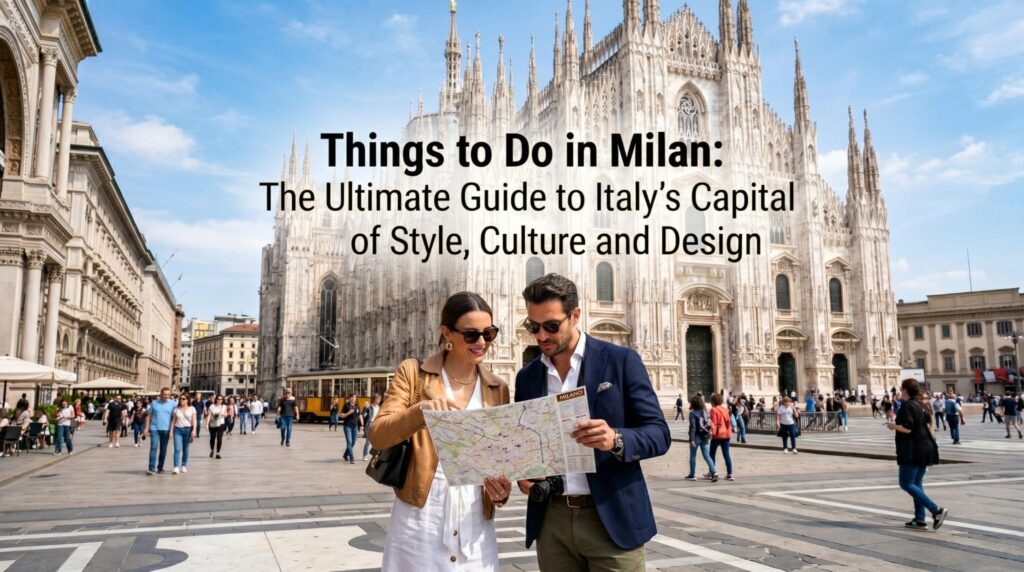
Things to Do in Milan: Complete Travel Guide and Tips
The Duomo, the Last Supper, Brera and Navigli, plus fashion, design and food, all in one Milan guide.
Read more →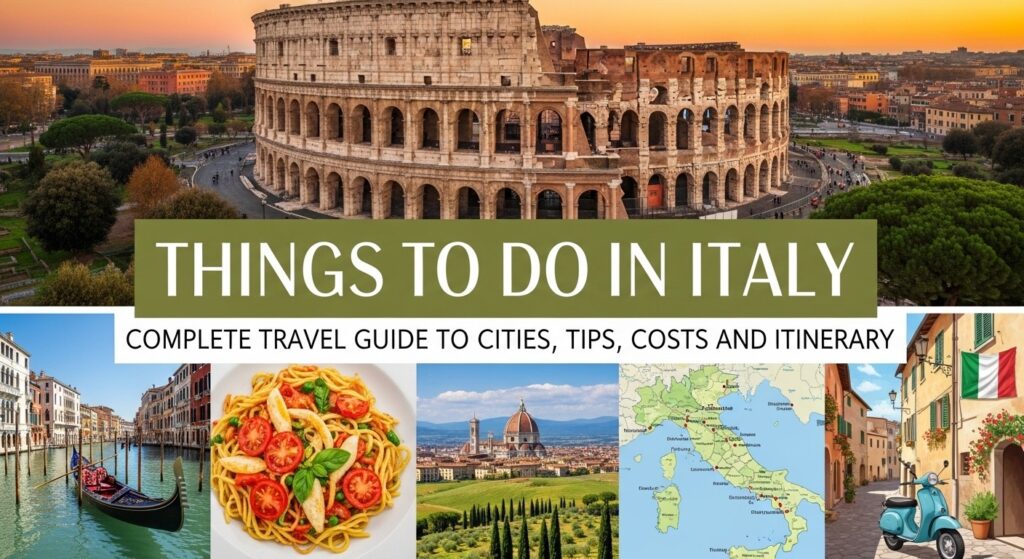
Things to Do in Italy: Top Cities, Tips and Travel Guide
Rome, Venice, Florence, Milan, Naples and the coast, with itinerary ideas, costs and visa info for a first trip.
Read more →Frequently asked questions
Italy is best known for ancient Roman landmarks like the Colosseum, Renaissance art in Florence, Venice’s canals, and its coastline along the Amalfi Coast and Cinque Terre, alongside its food and wine.
Most international visitors fly into Rome’s Fiumicino Airport or Milan’s Malpensa Airport. Italy is part of the Schengen Area, and citizens of many countries — including the US, Canada, Australia, and the UK — can enter visa-free for up to 90 days.
Ten days is the sweet spot for covering Rome, Florence, Venice, and one coastal stop (Cinque Terre or the Amalfi Coast) without rushing. A long weekend suits a single city; two to three weeks allows a deeper regional trip.
April to June or September to October, when the weather is warm without the peak summer crowds and prices in cities and along the coast.
Rome, Venice, and Cinque Terre’s main villages get very crowded in peak season, especially July and August. Praiano on the Amalfi Coast, smaller Tuscan hill towns, and off-season city visits offer a quieter alternative.