
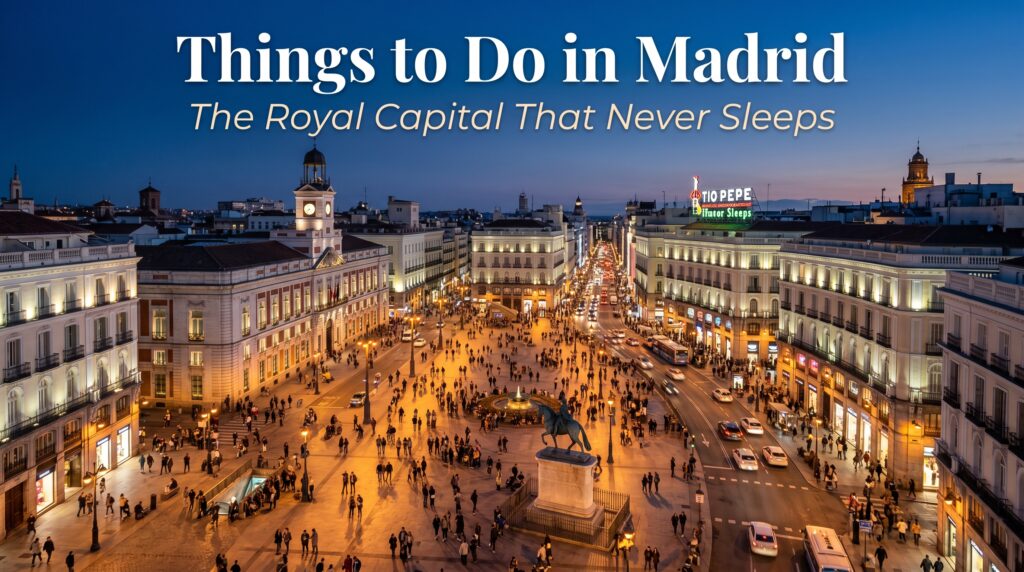
Madrid: A City That Rewards Every Hour You Give It
Madrid is a city that operates on its own completely magnificent terms and makes absolutely no apologies for any of them. It is a city where the greatest collection of European painting in the world sits within walking distance of a royal palace of overwhelming grandeur, where the finest tapas bars in Spain are found in neighborhood streets that most tourists never discover, where dinner begins at 10pm and nobody considers this unusual, where the parks are so beautiful and so well used that they function as extensions of the living rooms of four million Madrileños and where a civic pride and a cultural confidence so deep and so genuine that it permeates every aspect of daily life creates an atmosphere of extraordinary warmth and vitality that makes the city one of the most immediately welcoming and most genuinely enjoyable capitals in all of Europe. The things to do in Madrid are as varied, as rewarding and as consistently surprising as the city itself.
This Madrid travel guide is written for every type of traveler whether you are arriving for the first time with a list of world famous museums to visit or returning to discover the quieter and more personal corners of a city that reveals new layers of character and beauty with every visit. Madrid is a city of extraordinary depth that operates on many different levels simultaneously and the traveler who engages with all of them rather than just the most obvious and most visited will be rewarded with one of the finest city experiences available anywhere in Europe.
The Best of Madrid at a Glance
The best places to visit in Madrid span a city of remarkable variety and remarkable geographic concentration where many of the most important cultural institutions and most beautiful public spaces in the entire country are gathered within a surprisingly compact and largely walkable historic center. The Golden Triangle of Art formed by the Prado Museum, the Reina Sofía and the Thyssen-Bornemisza Museum along the Paseo del Prado constitutes the single greatest concentration of world class art institutions within easy walking distance of one another in the entire world and alone would justify a visit to Madrid of several days.
Essential Attractions and Things to Do in Madrid
Things to do in Madrid begin with the cultural and architectural landmarks that have defined this city as one of the great European capitals and extend outward into the neighborhoods, food markets, tapas bars, parks and nightlife venues that reveal the extraordinary living character of Madrileño daily life.
Prado Museum
The Prado Museum is the most important and most comprehensive collection of European painting in the entire world and one of the most significant cultural institutions in the history of Western art. Opened to the public in 1819 and housing a collection of over 8,000 paintings of which approximately 1,300 are on permanent display, the Prado contains the greatest concentration of masterpieces by Velázquez, Goya, El Greco, Titian, Rubens, Bosch and Raphael available anywhere in the world. The Velázquez rooms containing Las Meninas, The Spinners and The Surrender of Breda are the most important and most frequently visited spaces in the entire museum. The Goya rooms charting the extraordinary evolution of his art from the cheerful tapestry cartoons of his youth to the devastating Black Paintings of his old age constitute one of the most powerful and most emotionally overwhelming artistic journeys available in any museum in the world. Allow at least four hours for a meaningful visit and book tickets in advance. The Prado offers free entry during the last two hours of opening every day which is the most effective budget strategy for visiting one of the world’s greatest museums at no cost.
Reina Sofía Museum
The Museo Nacional Centro de Arte Reina Sofía is Spain’s national museum of modern and contemporary art and one of the most important art institutions in the entire world. Its single most celebrated and most politically significant work is Picasso’s Guernica, the monumental 1937 painting depicting the bombing of the Basque town of Guernica during the Spanish Civil War which is without question the most powerful and most widely recognized anti-war painting in the history of art. Standing before the original canvas in Room 206 of the Reina Sofía is one of the most genuinely moving and most historically significant art viewing experiences available anywhere in the world. The museum also houses an outstanding collection of Spanish art from the early 20th century including important works by Joan Miró, Salvador Dalí and Juan Gris alongside an internationally significant collection of post-war European and American art.
Thyssen-Bornemisza Museum
The Museo Thyssen-Bornemisza completes the Golden Triangle of Art and houses one of the most comprehensive and most chronologically complete private art collections ever assembled, covering the full sweep of Western European painting from the early Italian Renaissance of the 13th century to the American Pop Art of the late 20th century. The collection is particularly outstanding for its coverage of periods and movements that are poorly represented in the Prado and the Reina Sofía including Impressionism, Expressionism, Fauvism and early American 20th century painting.
Royal Palace of Madrid
The Royal Palace of Madrid is the largest royal palace in Western Europe with 3,418 rooms covering an area of 135,000 square meters and is one of the most magnificent and most overwhelming royal residences in the entire world. Built in the 18th century on the site of a former Moorish castle and a later Habsburg fortress that burned down in 1734, the current palace was designed in the Italian Baroque style and decorated with extraordinary lavishness over more than a century of royal patronage. The official state rooms open to visitors include the extraordinary Throne Room with its magnificent Tiepolo ceiling painting, the Royal Armory which houses one of the finest collections of medieval and Renaissance arms and armor in the entire world and the Royal Pharmacy with its extraordinary collection of historical pharmaceutical vessels and equipment. The palace is the official residence of the Spanish Royal Family who use it for state ceremonies but live in the more modest Zarzuela Palace on the outskirts of Madrid.
Retiro Park
The Retiro Park is the most beloved and most magnificent urban park in all of Madrid and one of the finest city parks in the entire world. Originally the private gardens of the Royal Palace of the Buen Retiro built by Philip IV in the 17th century and opened to the public in 1868, the Retiro covers approximately 125 hectares in the heart of the city and provides an extraordinary green oasis of lakes, formal gardens, woodland paths, rose gardens, sculptural monuments and two outstanding art exhibition spaces housed in magnificent 19th century glass and iron structures. The central artificial lake known as the Estanque Grande is the heart of the park where rowing boats can be hired and the extraordinary monument to Alfonso XII rises from the southern bank in a massive semicircular colonnade of remarkable grandeur. The Palacio de Cristal glass and iron greenhouse beside a small lake in the southern part of the park is one of the most beautiful buildings in the entire city.
Best Neighborhoods in Madrid
Understanding the best neighborhoods in Madrid is absolutely essential for experiencing the city beyond its most famous museums and landmarks and discovering the genuine character of Madrileño daily life.
La Latina
La Latina is the most atmospheric, most historically significant and most genuinely Madrileño neighborhood in the entire city. Located in the southwestern corner of the historic center immediately south of the Royal Palace, it is a neighborhood of beautiful medieval streets, magnificent churches, excellent tapas bars and a Sunday morning culture centered on the legendary El Rastro flea market that is completely unique to this extraordinary quarter. The Cava Baja and the Cava Alta are the two most celebrated tapas streets in all of Madrid, lined with excellent traditional bars serving the finest patatas bravas, croquetas, tortilla española and jamón ibérico in the city. Sunday morning in La Latina combining El Rastro with a long tapas lunch on the Cava Baja is one of the most quintessentially Madrileño experiences available to any visitor.
Malasaña
Malasaña is the most bohemian and most creatively vibrant neighborhood in contemporary Madrid, a quarter of independent record shops, vintage clothing dealers, excellent coffee shops, outstanding cocktail bars and some of the finest independent restaurants in the city. The neighborhood was the epicenter of the extraordinary Movida Madrileña cultural explosion that swept Madrid in the years following Franco’s death in 1975 and it retains a creative energy and a genuine countercultural spirit that distinguishes it from every other neighborhood in the city. The Plaza del Dos de Mayo at the heart of Malasaña is the most beloved and most social square in the neighborhood filled every evening with local residents of all ages in the most authentic and most genuinely Madrileño community atmosphere in the entire city.
Chueca
Chueca is the most cosmopolitan, most welcoming and most energetically social neighborhood in Madrid, a quarter of excellent restaurants, outstanding cocktail bars, independent boutiques and a warmth and openness of community spirit that makes it one of the most immediately welcoming neighborhoods in the entire city. The Plaza de Chueca at the heart of the neighborhood is one of the most lively and most genuinely enjoyable public squares in Madrid especially on warm evenings when the entire neighborhood seems to gather around its terrace bars in an atmosphere of extraordinary conviviality and good humor.
Lavapiés
Lavapiés is the most genuinely multicultural and most authentically diverse neighborhood in Madrid, a quarter of extraordinary international food, independent theatres, excellent art galleries, street murals and a community atmosphere of remarkable variety and vitality. It is the most rapidly evolving neighborhood in the city and offers the finest and most affordable international dining experience in Madrid alongside some of the most interesting and most creatively ambitious independent cultural programming in the entire city.
Best Museums in Madrid
The best museums in Madrid extend far beyond the Golden Triangle to encompass a remarkable range of institutions that reveal the full extraordinary depth of Spanish art, history and culture.
The Museo Sorolla housed in the beautiful former home and studio of the Valencian painter Joaquín Sorolla in the Alonso Martínez neighborhood is one of the most intimate and most beautifully maintained house museums in the entire world, preserving the extraordinary Mediterranean light paintings of Spain’s greatest Impressionist in the very spaces where he created them. The Museo Lázaro Galdiano in a magnificent Italianate mansion in the Salamanca neighborhood houses one of the most varied and most surprising private art collections in Spain covering painting, decorative arts, arms and armor, clocks, jewelry and archaeological objects of extraordinary variety and quality. The Real Academia de Bellas Artes de San Fernando on the Gran Vía is one of the oldest and most important art institutions in Spain housing an outstanding collection that includes important early works by Goya.
Madrid Tapas Guide
The Madrid tapas guide reveals a food culture that is central to the entire social and culinary life of the city and completely unlike the tapas cultures of Andalusia or the Basque Country. Madrid tapas are generous, unfussy and deeply satisfying, built on the finest raw materials of the Spanish culinary tradition and served in an atmosphere of conviviality and hospitality that is the defining characteristic of Madrileño social life.
The most essential and most quintessentially Madrileño tapas dishes include Patatas Bravas which are fried potato chunks served with a spicy tomato sauce and aioli and are one of the most beloved and most universally available tapas in the city. Croquetas de Jamón are golden fried béchamel croquettes filled with finely chopped Jamón Ibérico that when made properly are one of the most deeply satisfying single mouthful food experiences in all of Spain. Tortilla Española is the most beloved and most debated dish in the entire Madrileño culinary canon, a thick potato and egg omelette around whose precise recipe, particularly regarding the contentious question of whether onion should or should not be included, Madrileños hold passionate and irreconcilable opinions. Jamón Ibérico de Bellota is the finest cured ham in the entire world, produced from acorn-fed Iberian pigs and cured for a minimum of three years to develop a flavor of extraordinary complexity and depth that represents the absolute pinnacle of Spanish charcuterie tradition.
Madrid Food Guide
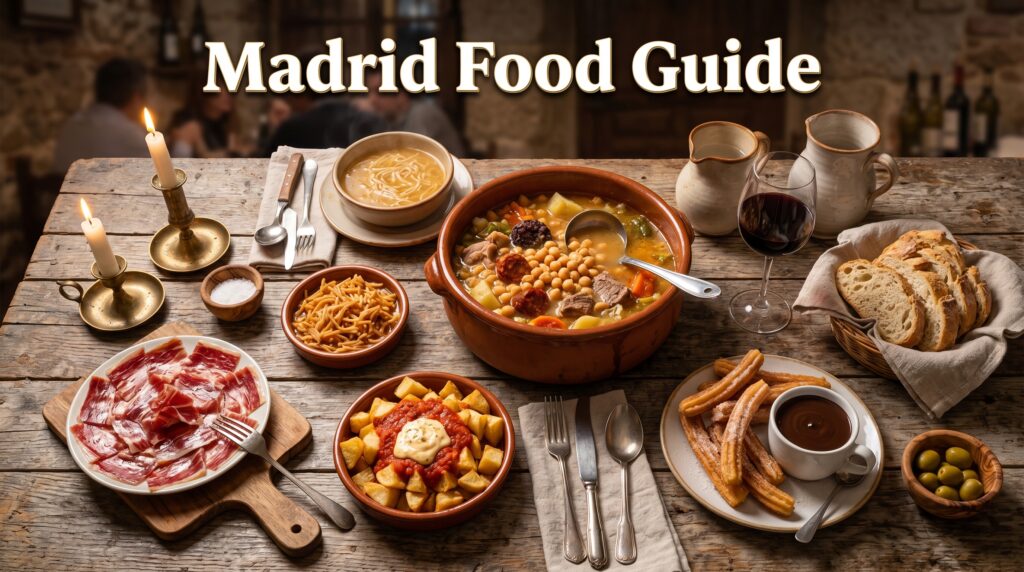
The Madrid food guide extends far beyond tapas to reveal a culinary tradition of extraordinary depth and variety that draws on the food cultures of every region of Spain while also maintaining a distinctly Madrileño character built around the finest raw materials, the most generous hospitality and the most unhurried and most convivial approach to the pleasures of the table.
The Mercado de San Miguel immediately west of the Plaza Mayor is the most famous and most spectacular covered food market in Madrid, a magnificent 1916 iron and glass structure housing an outstanding collection of food stalls selling the finest produce, charcuterie, cheese, seafood, wine and prepared foods in the city in an atmosphere of extraordinary beauty and vitality. The Mercado de La Paz in the Salamanca neighborhood is the finest and most authentic neighborhood food market in Madrid beloved by local residents and offering an outstanding selection of fresh produce, fish, meat and prepared foods at very reasonable prices. Cocido Madrileño is the most emblematic and most deeply Madrileño dish in the entire city, a magnificent slow cooked chickpea, vegetable and meat stew of extraordinary richness and depth that is traditionally served in three courses and represents one of the most completely satisfying and most culturally revealing dining experiences available in the city.
Day Trips From Madrid
The day trips from Madrid available to visitors are outstanding given the city’s exceptional high speed rail connections and its central position in the Iberian Peninsula surrounded by some of the most historically significant and most scenically beautiful destinations in all of Spain.
Toledo is the most popular and most universally rewarding day trip from Madrid, a magnificent UNESCO World Heritage city of extraordinary medieval beauty just 30 minutes from Madrid by high speed train where Christian, Muslim and Jewish cultures coexisted for centuries creating one of the most remarkable concentrations of medieval architecture, art and cultural heritage in the entire Iberian Peninsula. The Cathedral of Toledo is one of the finest Gothic cathedrals in Spain and the collection of El Greco paintings distributed throughout the city’s churches and museums is the most important and most complete in the entire world. Segovia is approximately 30 minutes from Madrid by high speed train and offers an extraordinary combination of the most perfectly preserved Roman aqueduct in the entire world, a magnificent Gothic cathedral and the extraordinary Alcázar castle that served as one of the inspirations for the Disney castle. Ávila is a beautifully preserved medieval walled city approximately one hour from Madrid whose magnificent 11th century city walls are the finest and most completely intact medieval fortifications in the entire world. El Escorial is a magnificent 16th century royal palace, monastery and mausoleum complex built by Philip II approximately one hour northwest of Madrid that is one of the most important and most historically significant royal buildings in the entire history of Spain.
Getting Around Madrid
Getting around Madrid is straightforward and enjoyable thanks to one of the finest and most comprehensive urban Metro systems in the entire world. The Madrid Metro has 13 lines covering the entire city with extraordinary comprehensiveness and efficiency and is fast, clean, safe and very affordable. The 10 trip Metrobús card represents outstanding value for visitors planning to use public transport regularly. The city center is also extremely walkable with the most important museums, parks and neighborhoods concentrated within a compact and largely flat historic center. The city’s extensive bus network provides comprehensive coverage of areas not well served by the Metro. Cycling is increasingly popular in Madrid with a growing network of dedicated cycle lanes and the BiciMAD electric bike sharing system available throughout the central neighborhoods.
Madrid Nightlife Guide
The Madrid nightlife guide covers one of the most extraordinary, most varied and most genuinely legendary after dark cultures in the entire world. Madrid nightlife operates on a timetable so dramatically different from Northern European cities that the entire city effectively lives two complete daily cycles, one oriented around work and daytime activities and one entirely dedicated to the pleasures of the evening and night. Dinner begins at 9pm or 10pm. Bars fill up from midnight. Clubs reach their peak from 3am. The most vibrant nightlife neighborhoods include Malasaña and Chueca for independent bars and creative venues, La Latina for the finest tapas bar crawling, Huertas for the most concentrated and most varied bar scene in the city center and the Salamanca neighborhood for the most sophisticated and most upmarket after dinner drinking and dining. The Kapital club in the Atocha area is one of the largest and most celebrated clubs in Europe with seven floors each offering a different music format and atmosphere. The Joy Eslava in the historic center has been one of the most famous and most beloved clubs in Madrid since 1981 and continues to attract a wonderfully mixed and genuinely Madrileño crowd every night of the week.
Madrid Shopping Guide
The Madrid shopping guide reveals a city of extraordinary retail variety that reflects its dual role as both the political and cultural capital of Spain and the most important commercial center in the Iberian Peninsula. The Gran Vía is the most famous and most dramatic shopping boulevard in Madrid, a magnificent early 20th century street of extraordinary architecture lined with major Spanish and international retail chains and department stores. The Salamanca neighborhood is the most prestigious and most fashionable shopping district in Madrid with flagship stores of major Spanish and international luxury fashion houses concentrated along the Calle Serrano, the Calle Ortega y Gasset and the Calle Velázquez. The El Rastro flea market held every Sunday morning in La Latina is the largest and most beloved street market in all of Spain attracting hundreds of thousands of visitors every week and offering an extraordinary variety of antiques, vintage clothing, secondhand books, collectibles and artisan products in one of the most atmospheric and most genuinely Madrileño street experiences available in the city.
Madrid Itinerary
Madrid Itinerary 3 Days
A Madrid itinerary of 3 days gives you enough time to experience the essential highlights of this extraordinary city while also allowing time to discover some of the neighborhoods and experiences that reveal its genuine living character.
Day 1 is devoted to the Golden Triangle of Art beginning with the Prado Museum in the morning allowing at least three to four hours for the collection followed by the Reina Sofía in the late afternoon to see Guernica and ending with tapas and dinner in the La Latina neighborhood.
Day 2 begins with the Royal Palace of Madrid in the morning followed by an exploration of the Plaza Mayor and the surrounding historic center in the early afternoon and an evening in the Malasaña and Chueca neighborhoods discovering the finest bars and restaurants of the most vibrant and most contemporary quarter of the city.
Day 3 is devoted to the Retiro Park in the morning followed by the Thyssen-Bornemisza Museum in the early afternoon and an evening exploring the tapas bars and restaurants of the Huertas neighborhood.
Extended Madrid Itinerary
A Madrid itinerary of five or more days allows for the Toledo day trip, the Segovia day trip, deeper exploration of the Lavapiés and Salamanca neighborhoods, a visit to the Museo Sorolla and extended time in the food markets, nightlife venues and shopping districts that reveal the full extraordinary depth of this magnificent capital.
Best Time to Visit Madrid
The best time to visit Madrid is from March to May and September to November when the weather is warm and pleasant, the city is at its most vibrant and the summer heat that makes Madrid genuinely uncomfortable in July and August has not yet arrived or has passed.
May is one of the finest months to visit Madrid as the city celebrates the Fiesta de San Isidro, the patron saint festival of Madrid, with an extraordinary program of bullfighting, concerts, processions and neighborhood celebrations that represent the most authentically Madrileño cultural event of the entire year. September and October are outstanding months combining comfortable temperatures, the return of Madrileños from their summer holidays and a full program of cultural events, exhibitions and concerts across all of the city’s major cultural institutions.
July and August are the hottest months with temperatures regularly exceeding 38 degrees Celsius in the city center making outdoor exploration genuinely uncomfortable during the middle of the day. However Madrid empties of its residents during August creating a quieter and more tourist oriented atmosphere that some visitors find advantageous. Winter from December to February is cool and occasionally cold but offers the most affordable accommodation prices and the most authentic and most local atmosphere of any season.
Is Madrid Safe for Tourists
Is Madrid safe for tourists is a question that most first time visitors ask before planning their trip. Madrid is one of the safest major capitals in all of Europe with a well developed tourism infrastructure, a visible and professional police presence throughout the city center and an extremely low rate of violent crime directed at tourists. Pickpocketing can occur in the most crowded tourist areas particularly around the Puerta del Sol, the Plaza Mayor and on busy Metro lines. Using a crossbody bag, keeping your phone in your front pocket and being aware of your surroundings in very crowded spaces is all that is required to travel safely and comfortably throughout Madrid.
Madrid Travel Budget
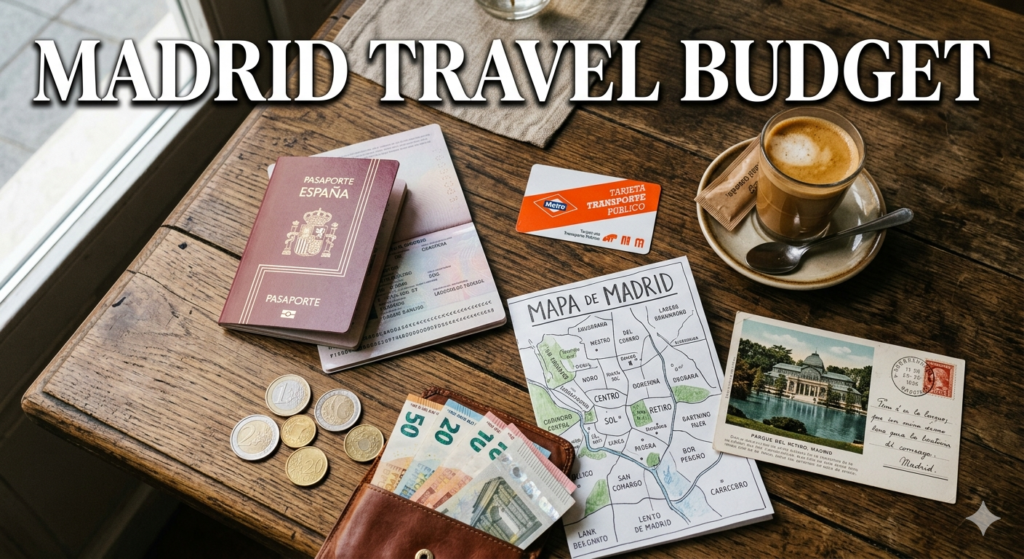
Understanding your Madrid travel budget before you arrive will help you plan a genuinely enjoyable experience of this extraordinary city. Madrid is significantly more affordable than Paris, London or Amsterdam while offering a quality and variety of cultural and culinary experience that rivals any of them.
Budget travelers staying in hostels and eating at local bars and markets can manage on approximately 55 to 80 dollars per day. Mid-range travelers staying in comfortable hotels and dining at good restaurants should budget between 120 and 220 dollars per day. Luxury travel in Madrid including five star hotels, Michelin starred dining and private guided experiences starts from 350 dollars per day.
Budget travel in Madrid is extremely achievable. The Prado, the Reina Sofía and the Thyssen-Bornemisza all offer free entry during specific hours. The Retiro Park, the Gran Vía and the extraordinary neighborhood life of La Latina, Malasaña and Chueca are all completely free to enjoy. Eating a menú del día set lunch at a neighborhood restaurant which includes a starter, main course, dessert, bread and a drink for approximately 12 to 15 euros is the single best value dining experience available anywhere in Spain.
Madrid Visa Requirements
Madrid visa requirements follow the same rules as the broader Spanish and Schengen Area entry requirements. Citizens of the United States, Canada, Australia, the United Kingdom and many other countries can visit Madrid and Spain without a visa for tourism stays of up to 90 days within any 180 day period. From 2025 onwards travelers from many previously visa exempt countries will be required to obtain an ETIAS travel authorization before visiting. Always verify the most current requirements for your specific nationality before booking your trip.
Closing Thoughts
Madrid is a city that gives back in direct and generous proportion to the curiosity and the time you bring to it. The traveler who spends three days ticking off the Prado, the Royal Palace and the Retiro will leave with an excellent and genuinely rewarding experience. The traveler who gives the city five days and ventures into La Latina on Sunday morning for El Rastro and a long tapas lunch, into Malasaña in the evening for the finest cocktail bars in the city and into the Prado at closing time for free will leave with something that goes much deeper than a list of visited monuments and much closer to a genuine understanding of what makes Madrid one of the great cities of the world. Whether you are standing before Las Meninas in the Prado feeling the full extraordinary weight of Velázquez’s genius, eating the finest croqueta of your life at a zinc bar in La Latina at midnight or watching the city wake up around you from a café terrace on the Plaza de Santa Ana at 8am with a café con leche and a tostada con tomate as Madrid prepares itself for another extraordinary day, the things to do in Madrid create experiences of beauty, depth and genuine human pleasure that belong in a very small and very select category of the finest things that travel can offer.
This Madrid travel guide has covered everything from the best places to visit in Madrid and the most important museum collections to the Madrid tapas guide, the Madrid food guide, the best neighborhoods in Madrid, the Madrid nightlife guide, the Madrid shopping guide, day trips from Madrid and Madrid visa requirements. Madrid is waiting and it will reward every moment of attention you give it with extraordinary generosity.
Frequently Asked Questions
What are the best things to do in Madrid?
The best things to do in Madrid include visiting the Prado Museum, exploring the Royal Palace, relaxing in Retiro Park, eating tapas in La Latina, seeing Guernica at the Reina Sofía and experiencing the extraordinary nightlife and food culture of the city.
How many days do I need in Madrid?
A Madrid itinerary of 3 days covers the essential highlights while a Madrid itinerary of five days adds the Toledo day trip, deeper neighborhood exploration and the finest museum collections.
What is the best time to visit Madrid?
The best time to visit Madrid is from March to May and September to November for the finest combination of comfortable temperatures, vibrant city life and the most important cultural events of the Madrileño calendar.
Is Madrid safe for tourists?
Yes. Is Madrid safe for tourists is a common concern but Madrid is one of the safest major capitals in Europe with basic precautions around pickpocketing in crowded tourist areas being all that is required.
What is the Madrid travel budget?
Your Madrid travel budget ranges from 55 dollars per day for budget travelers to 350 dollars or more per day for those seeking a luxury hotel and fine dining experience in the Spanish capital.
What is the Madrid tapas guide most useful for?
The Madrid tapas guide is most useful for understanding the most essential Madrileño tapas dishes and knowing which neighborhoods including La Latina and Huertas offer the finest and most authentic tapas bar experiences in the city.
What are the best day trips from Madrid?
The best day trips from Madrid include Toledo for extraordinary medieval heritage, Segovia for a magnificent Roman aqueduct and Alcázar castle, Ávila for the finest intact medieval city walls in the world and El Escorial for the most important royal palace in Spanish history.
What is the Madrid nightlife guide most useful for?
The Madrid nightlife guide is most useful for understanding the extraordinary late night schedule of the city, identifying the finest neighborhoods for evening dining and bar hopping and planning a genuine Madrileño night out that begins with dinner at 10pm and ends at dawn.
What is the Madrid food guide most useful for?
The Madrid food guide is most useful for discovering the finest food markets, understanding the essential dishes of Madrileño cuisine including the legendary Cocido Madrileño and knowing where to find the most authentic and most rewarding dining experiences across every budget level in the city.
Do I need a visa to visit Madrid?
Madrid visa requirements follow Schengen Area rules and many nationalities can visit visa free for up to 90 days though ETIAS authorization may be required from 2025 onwards.