
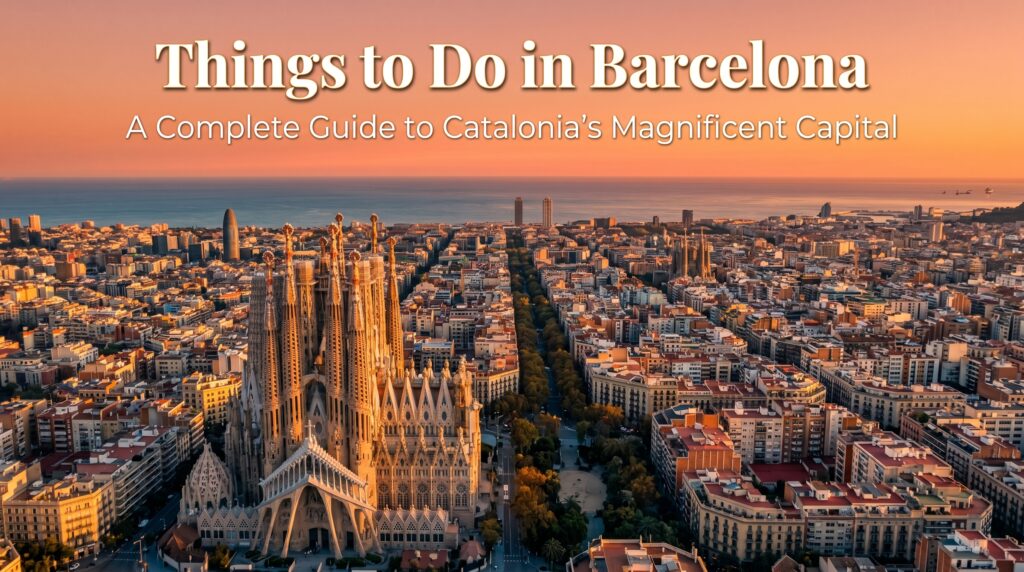
Barcelona: The City That Gaudi Built and the World Cannot Stop Visiting
There is a moment that happens to virtually every first time visitor to Barcelona, usually somewhere between emerging from the Metro at the Sagrada Família for the first time and standing open mouthed on the Passeig de Gràcia looking at the Casa Batlló, when the city simply stops being a place you are visiting and becomes something closer to a physical experience of the human imagination at its most liberated and most extraordinary. Barcelona is a city of such concentrated creative genius, such spectacular natural setting and such irrepressible civic energy that it produces this effect with a reliability and a completeness that very few cities in the entire world can match. The things to do in Barcelona are as extraordinary, as varied and as consistently surprising as the city itself and no single visit can hope to exhaust them.
This Barcelona travel guide is written for every type of traveler whether you are arriving for the first time determined to see the Sagrada Família and the Gothic Quarter or returning to discover the quieter and more genuinely local corners of a city that rewards curiosity and exploration at every level. Barcelona is simultaneously a city of world class architectural monuments, magnificent beaches, outstanding contemporary culture, one of the finest food scenes in Europe and a street life of such vitality and such genuine Mediterranean warmth that it creates an atmosphere completely unlike any other city on the continent.
Finding the Best of Barcelona
The best places to visit in Barcelona are distributed across a city of remarkable geographic and architectural variety where the medieval labyrinth of the Gothic Quarter, the magnificent modernista boulevards of the Eixample, the beach neighborhoods of Barceloneta and Poblenou and the hillside parks and gardens of Montjuïc and the Parc de la Ciutadella each offer completely different and equally rewarding experiences of this extraordinary city.
Barcelona divides naturally into several distinct areas. The historic center encompassing the Gothic Quarter, the Raval and the Born neighborhoods is the oldest and most atmospheric part of the city. The Eixample the great 19th century urban extension designed by Ildefons Cerdà on a revolutionary octagonal grid pattern is where the finest Modernisme architecture including the Sagrada Família, the Casa Batlló and the Casa Milà is concentrated. The waterfront neighborhoods of Barceloneta, the Port Olímpic and Poblenou stretch along the Mediterranean coast. The hilltop areas of Montjuïc and the upper city offer outstanding parks, gardens and panoramic views.
Top Attractions and Things to Do in Barcelona
Things to do in Barcelona begin with the architectural masterpieces and cultural landmarks that have made this city one of the most visited destinations in the entire world and extend outward into the neighborhoods, markets, beaches and food culture that reveal the genuine living character of Barcelona in daily life.
Sagrada Família
The Sagrada Família is the most visited monument in Spain and one of the most extraordinary buildings under construction anywhere in the world. Antoni Gaudí devoted the last 43 years of his life to this extraordinary project and was buried in its crypt when he was struck by a tram in 1926 leaving the church still unfinished. Construction continues today funded entirely by visitor entrance fees and is expected to be completed sometime in the 2030s. The building is simultaneously the most immediately recognizable example of Catalan Modernisme architecture and one of the most genuinely moving and most spiritually powerful spaces that any architect has ever created. The contrast between the elaborate and richly symbolic Nativity facade on the eastern side completed during Gaudís lifetime and the more austere and more geometrically radical Passion facade on the western side designed after his death captures the full extraordinary range of the project. The interior is a revelation of light, color and spatial invention that no photograph can adequately prepare you for. Book tickets many weeks in advance as the Sagrada Família consistently sells out.
Gaudi Architecture Barcelona
The Gaudi architecture Barcelona experience extends far beyond the Sagrada Família to encompass a remarkable series of buildings and public spaces scattered across the city that together constitute one of the most extraordinary bodies of architectural work produced by any single architect in the entire history of the discipline. The Casa Batlló on the Passeig de Gràcia is perhaps the most immediately beautiful and most visually extraordinary of all Gaudís domestic works, a building of such radical formal invention and such extraordinary decorative richness that standing before it produces something approaching a state of architectural ecstasy. The Casa Milà known as La Pedrera immediately north on the same boulevard is equally extraordinary, a building of undulating limestone that appears to flow and breathe like a living organism with a spectacular rooftop landscape of twisted chimneys and sculptural ventilation towers. The Palau Güell in the Raval neighborhood is one of Gaudí’s earliest major works and offers the finest and most accessible opportunity to experience his extraordinary spatial inventions at close range. The Bellesguard Tower in the upper city is one of the least visited and most rewarding of all Gaudís buildings, a Gothic Revival masterpiece of remarkable beauty and historical significance.
Park Guell Barcelona
Park Guell Barcelona is the most beloved and most visited public park in the entire city and one of the most extraordinary examples of Gaudí’s genius for integrating architecture, landscape and decorative art into a completely unified and completely unprecedented whole. Originally conceived as a private garden city development that never found buyers, the park was given to the city of Barcelona in 1926 and opened as a public park. The monumental zone at the heart of the park containing the famous mosaic terrace, the Hypostyle Room with its 86 Doric columns and the magnificent entrance staircase with its famous multicolored mosaic salamander is a UNESCO World Heritage Site requiring advance tickets. The wooded hillside park surrounding the monumental zone is freely accessible and offers outstanding panoramic views over the city toward the sea. Book tickets for the monumental zone well in advance as they sell out very quickly.
Gothic Quarter Barcelona
The Gothic Quarter Barcelona is the oldest and most historically significant neighborhood in the entire city, a remarkably intact medieval urban fabric of extremely narrow streets, Gothic churches, Roman ruins, ancient city walls and atmospheric squares that occupies the area between La Rambla and the Via Laietana in the heart of the historic center. Walking through the Gothic Quarter is one of the most immediately atmospheric and most historically rewarding experiences in Barcelona as every street and every corner reveals layers of history spanning over two thousand years of continuous urban occupation from the Roman colony of Barcino to the present day. The magnificent Barcelona Cathedral with its beautiful Gothic cloister housing 13 white geese is the most important religious monument in the neighborhood. The Plaça de Sant Jaume where the Catalan Government the Generalitat faces the Barcelona City Hall across a broad square has been the political heart of the city for centuries. The Plaça Reial just off La Rambla is one of the most beautiful and most atmospheric squares in the entire city with its neoclassical arcaded facades, its palm trees and its excellent bars and restaurants.
Best Neighborhoods in Barcelona
Understanding the best neighborhoods in Barcelona is absolutely essential for experiencing the city beyond its most famous monuments and discovering the genuine and contemporary character of Barcelonin daily life.
El Born
El Born is widely considered the most fashionable, most culturally vibrant and most rewarding neighborhood in contemporary Barcelona. Located immediately east of the Gothic Quarter, it is a neighborhood of beautiful medieval streets, excellent independent restaurants, outstanding cocktail bars, concept stores and galleries that has undergone an extraordinary transformation over the past two decades from a neglected working class area into the most creative and most internationally celebrated neighborhood in the city. The magnificent Gothic Basilica de Santa Maria del Mar built between 1329 and 1383 by the citizens of the Ribera neighborhood entirely at their own expense is one of the most beautiful and most perfectly proportioned Gothic churches in all of Catalonia. The Born Cultural Centre housed in a magnificent 19th century iron market building contains extraordinary excavated ruins of the medieval neighborhood destroyed by Felipe V in 1714.
Gràcia
Gràcia is the most authentically local and most genuinely Barcelonin neighborhood in the entire city, a former independent municipality that was absorbed into Barcelona in 1897 and has never entirely lost its sense of being a village within the city. Its beautiful squares including the Plaça del Sol, the Plaça de la Vila de Gràcia and the Plaça de la Virreina are the finest examples of authentic Barcelonin neighborhood square life in the entire city, filled every evening with local residents of all ages socializing in the most natural and most genuinely Mediterranean way imaginable. The neighborhood is home to some of the finest independent restaurants, wine bars and coffee shops in Barcelona and is the most rewarding area for experiencing the city as its actual inhabitants rather than its visitors experience it.
Poblenou
Poblenou is the most rapidly evolving and most creatively exciting neighborhood in contemporary Barcelona, a former industrial district along the northeastern waterfront that has been transformed over the past two decades into one of the most vibrant and most innovative urban areas in the entire city. The Rambla del Poblenou is a beautifully human scaled boulevard of independent cafes, restaurants and local businesses that is one of the finest and most authentic Rambla experiences in Barcelona. The neighborhood is home to an outstanding concentration of creative studios, independent galleries, concept stores and some of the finest new restaurants in the city.
Eixample
The Eixample is the magnificent 19th century urban extension of Barcelona designed by the visionary engineer Ildefons Cerdà and built on a revolutionary grid of octagonal blocks with chamfered corners that create a city of extraordinary spaciousness, light and geometric harmony. The Passeig de Gràcia is the grandest and most magnificent boulevard of the Eixample and the address of the finest concentration of Modernisme architecture in the world including the Casa Batlló and the Casa Milà. The Esquerra de l’Eixample or Left Eixample is the most vibrant and most cosmopolitan part of the neighborhood with outstanding restaurants, cocktail bars, independent boutiques and the most diverse and most welcoming community atmosphere in the city.
Best Museums in Barcelona
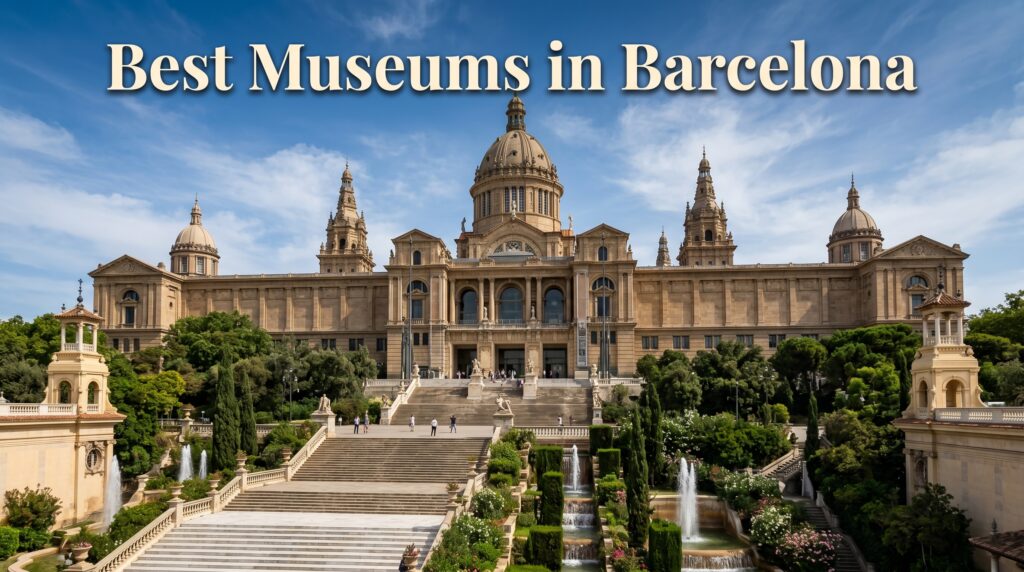
The best museums in Barcelona reflect the extraordinary artistic and cultural heritage of a city that has been one of the most creatively productive in the entire Mediterranean world for over a century.
The Museu Picasso in the El Born neighborhood is housed in five magnificent medieval palaces and contains the most comprehensive collection of Pablo Picasso’s early work in the entire world including the extraordinary Las Meninas series of 58 canvases in which Picasso produced a complete and radical reinterpretation of Velázquez’s famous painting. The Fundació Joan Miró on Montjuïc is a magnificent purpose built museum designed by Josep Lluís Sert housing the most comprehensive collection of Joan Miró’s paintings, sculptures, drawings and tapestries in the world in a building of extraordinary light and spatial beauty. The Museu Nacional d’Art de Catalunya housed in the magnificent Palau Nacional on Montjuïc contains the finest collection of Catalan Romanesque art in the entire world including extraordinary frescoes removed from Pyrenean churches in the early 20th century and reinstalled in purpose built apse reconstructions that provide one of the most spectacular and most moving art viewing experiences available in Barcelona.
Barcelona Food
Barcelona food is a culinary experience of extraordinary variety, creativity and quality that draws on both the deep traditions of Catalan regional cooking and the most innovative and most internationally influential contemporary gastronomy in the entire world. Catalonia has more Michelin starred restaurants per capita than almost any other region in the world and Barcelona is the epicenter of this extraordinary concentration of culinary talent and ambition.
Essential Catalan and Barcelona Dishes
Pa amb Tomàquet is the most fundamental and most beloved element of Catalan food culture, bread rubbed with the cut face of a ripe tomato and drizzled with olive oil and salt that is served as the inevitable accompaniment to virtually every meal in Barcelona and represents one of the most simple and most perfectly satisfying food experiences in the city. Crema Catalana is the Catalan precursor to the French crème brûlée, a rich egg yolk and milk custard flavored with lemon zest and cinnamon and finished with a caramelized sugar crust that is the most beloved traditional Catalan dessert. Escalivada is a beautiful and deeply flavored roasted vegetable dish of aubergines and red peppers charred over an open flame and dressed with olive oil and garlic that is one of the most quintessentially Catalan preparations in the entire regional culinary repertoire. Fideuà is the Catalan alternative to paella made with short thin noodles instead of rice cooked in a rich seafood broth and finished in the oven until the top layer of noodles is crispy and golden. The Boqueria Market on La Rambla is the most famous food market in Barcelona and one of the most spectacular in the entire world but is now primarily a tourist destination. For the most authentic and most rewarding food market experience in the city the Mercat de Santa Caterina in the El Born neighborhood and the Mercat de l’Abaceria in Gràcia are far superior.
Day Trips From Barcelona
The day trips from Barcelona available to visitors are outstanding given the city’s exceptional transport connections and its position on the northeastern coast of Spain surrounded by some of the most varied and most beautiful landscapes in the entire Iberian Peninsula.
Montserrat is the most popular and most spiritually significant day trip from Barcelona, a spectacular mountain of extraordinary rocky formations approximately one hour northwest of the city by train and rack railway or cable car where the magnificent Benedictine monastery of Santa Maria de Montserrat has been a place of pilgrimage since the 12th century and houses the revered Black Madonna La Moreneta which is the patron saint of Catalonia. The Costa Brava stretching north of Barcelona toward the French border is one of the most beautiful and most ruggedly dramatic coastlines in the entire Mediterranean with rocky coves, crystal clear water and charming fishing villages including Cadaqués which was the home of Salvador Dalí and one of the most beautiful villages in Catalonia. Sitges is a beautifully preserved and extraordinarily charming coastal town approximately 35 minutes south of Barcelona by train famous for its magnificent Modernisme architecture, its excellent beaches and its warm and cosmopolitan atmosphere. Tarragona is an ancient Roman capital approximately one hour south of Barcelona by train containing some of the finest and most extensively preserved Roman ruins in the entire Iberian Peninsula including a magnificent amphitheater, a circus, city walls and an extraordinary archaeological museum.
Getting Around Barcelona
Getting around Barcelona is straightforward and enjoyable thanks to one of the finest urban public transport networks in Southern Europe. The Barcelona Metro has eight lines covering the city comprehensively and is fast, frequent and very affordable. The city bus network provides comprehensive coverage of areas not served by the Metro. The extensive network of dedicated cycle lanes and the Bicing bicycle sharing system make cycling an excellent and increasingly popular way to explore the city. Walking is the best way to explore the Gothic Quarter, El Born, Gràcia and the Eixample where the most interesting streets and spaces are best discovered on foot. The T-Casual 10 trip card represents outstanding value for visitors planning to use public transport regularly throughout their stay.
Barcelona Nightlife
Barcelona nightlife is among the most celebrated, most varied and most genuinely extraordinary in the entire world operating on a schedule so dramatically different from Northern European cities that first time visitors frequently find themselves in entirely the wrong place at entirely the wrong time. Dinner in Barcelona begins at 9pm or later. Bars fill up from midnight. Clubs do not reach their peak until 3am or later and continue until dawn. The Gothic Quarter and El Born are the finest areas for bar hopping and evening dining. The Barceloneta waterfront comes alive with beach bars and clubs during summer. The Sala Apolo in the Raval and the Razzmatazz in Poblenou are the most celebrated and most consistently outstanding music venues and clubs in the city. The Eixample Esquerra neighborhood is the most cosmopolitan and most welcoming nightlife area in Barcelona with an outstanding concentration of excellent cocktail bars and music venues.
Barcelona Shopping Guide
The Barcelona shopping guide reveals a city of outstanding retail variety that spans luxury fashion, world class food markets, extraordinary independent design and some of the finest vintage and antique dealers in Southern Europe. The Passeig de Gràcia is the most prestigious luxury shopping boulevard in Barcelona with flagship stores of major Spanish and international fashion houses. The El Born neighborhood offers the finest concentration of independent Spanish fashion designers, concept stores and artisan boutiques in the city. The Eixample neighborhood around the Rambla de Catalunya and the Passeig de Gràcia offers the most complete and most varied conventional shopping experience in Barcelona. The Encants Vells flea market near the Glòries tower is the largest and most fascinating flea market in Catalonia operating Tuesday, Thursday, Friday and Saturday and offering an extraordinary variety of vintage objects, antiques, secondhand books and collectibles under a spectacular mirrored canopy.
Barcelona Itinerary
Barcelona Itinerary 3 Days
A Barcelona itinerary of 3 days gives you enough time to experience the essential highlights of this extraordinary city while also allowing time to discover some of the neighborhoods and experiences that reveal its genuine contemporary character.
Day 1 begins with an early morning visit to the Sagrada Família with pre-booked tickets followed by an afternoon exploring the Eixample including the Casa Batlló and the Casa Milà on the Passeig de Gràcia and an evening aperitivo and dinner in the Gràcia neighborhood.
Day 2 is devoted to the historic center beginning with the Gothic Quarter in the morning followed by the Mercat de Santa Caterina and an afternoon in the El Born neighborhood including the Museu Picasso and the Basilica de Santa Maria del Mar finishing with dinner in El Born.
Day 3 begins with Park Güell in the morning followed by a visit to the Fundació Joan Miró or the Museu Nacional d’Art de Catalunya on Montjuïc in the afternoon and an evening at the Barceloneta waterfront.
Extended Barcelona Itinerary
A Barcelona itinerary of five or more days allows for the Montserrat day trip, deeper exploration of the Poblenou neighborhood, a visit to the Palau de la Música Catalana, the Camp Nou stadium tour and extended time in the food markets, design districts and nightlife venues that reveal the full extraordinary depth of this magnificent city.
Best Time to Visit Barcelona
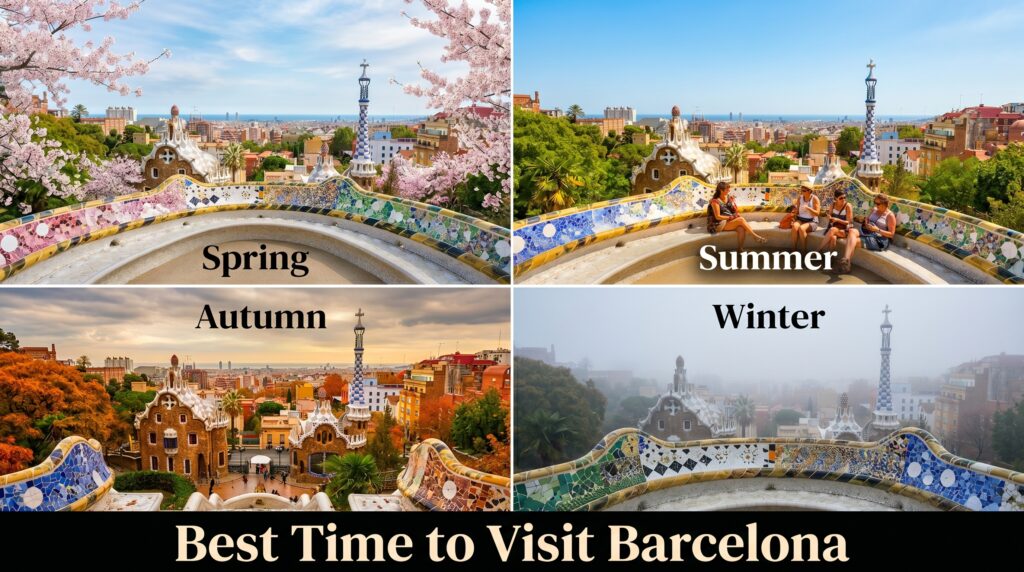
The best time to visit Barcelona is from April to June and September to October when the Mediterranean climate is at its most generous with warm sunny days, comfortable temperatures between 20 and 28 degrees Celsius and the summer crowds at their most manageable.
July and August are the hottest and most crowded months with temperatures regularly exceeding 32 degrees Celsius and the city becoming extremely busy especially along the Barceloneta waterfront and at the major tourist attractions. The Festa Major de Gràcia in mid August when the neighborhood decorates its streets with extraordinary handmade installations is one of the finest and most genuinely Barcelonin festival experiences of the entire year and is a wonderful reason to visit during this period despite the heat and crowds.
April brings the extraordinary Sant Jordi Day on April 23rd which is the Catalan equivalent of Valentine’s Day when the entire city fills with stalls selling books and roses in a celebration of culture, love and Catalan identity that is one of the most beautiful and most genuinely moving civic traditions in all of Europe.
Is Barcelona Safe for Tourists
Is Barcelona safe for tourists is a question that most first time visitors ask before planning their trip. Barcelona is a very safe city with a well developed tourism infrastructure and a visible police presence throughout the major tourist areas. Pickpocketing is the most significant concern for visitors and Barcelona has one of the highest rates of tourist pickpocketing of any city in Europe particularly on La Rambla, in the Gothic Quarter, on the Metro and at the Sagrada Família and Park Güell. Use a crossbody anti theft bag, keep your phone in your front pocket and be particularly alert in very crowded spaces. With these basic precautions Barcelona is a perfectly safe and genuinely wonderful city to visit.
Barcelona Travel Budget
Understanding your Barcelona travel budget before you arrive will help you plan a genuinely enjoyable experience of this extraordinary city. Barcelona is moderately expensive by Spanish standards but offers excellent value compared to Paris or London.
Budget travelers staying in hostels and eating at local markets and affordable tapas bars can manage on approximately 60 to 90 dollars per day. Mid-range travelers staying in comfortable hotels and dining at good restaurants should budget between 130 and 220 dollars per day. Luxury travel in Barcelona including boutique design hotels, tasting menu restaurants and private guided experiences starts from 350 dollars per day.
Budget travel in Barcelona is very achievable. The permanent collections of many municipal museums are free on the first Sunday of every month. The beaches of Barceloneta are completely free. Eating at the Mercat de Santa Caterina, drinking vermouth at a neighborhood bar in Gràcia and exploring the Gothic Quarter and El Born neighborhoods on foot are all completely free or very affordable ways to experience the very best of the city.
Barcelona Visa Requirements
Barcelona visa requirements follow the same rules as the broader Spanish and Schengen Area entry requirements. Citizens of the United States, Canada, Australia, the United Kingdom and many other countries can visit Barcelona and Spain without a visa for tourism stays of up to 90 days within any 180 day period. From 2025 onwards travelers from many previously visa exempt countries will be required to obtain an ETIAS travel authorization before visiting. Always verify the most current requirements for your specific nationality before booking your trip.
Closing Thoughts
Barcelona is a city that does something to you that very few cities in the entire world manage to do. It makes you feel that human creativity, human pleasure and human community are not occasional achievements or lucky accidents but the natural and inevitable products of a culture and a climate and a civic tradition that have been working together for a very long time toward exactly this extraordinary result. Whether you are standing before the Sagrada Família watching the morning light pour through its extraordinary stained glass windows in a cascade of color that Gaudí spent decades designing, eating the finest pa amb tomàquet of your life at a zinc bar in Gràcia at midnight, walking through the Gothic Quarter feeling the full extraordinary weight of two thousand years of continuous urban life pressing in from every side or watching the sun go down from the Bunkers del Carmel with the entire city spread below you all the way to the darkening sea, the things to do in Barcelona create experiences of beauty, creativity and genuine human joy that stay with you for the rest of your life.
This Barcelona travel guide has covered everything from the best places to visit in Barcelona and the Gaudi architecture Barcelona guide to the Gothic Quarter Barcelona, Park Güell Barcelona, Barcelona food, Barcelona nightlife, the Barcelona shopping guide, day trips from Barcelona and Barcelona visa requirements. Barcelona is waiting and it will not disappoint.
Frequently Asked Questions
What are the best things to do in Barcelona?
The best things to do in Barcelona include visiting the Sagrada Família, exploring the Gothic Quarter, discovering Gaudí’s architecture on the Passeig de Gràcia, wandering through El Born and watching the sunset from the Bunkers del Carmel.
How many days do I need in Barcelona?
A Barcelona itinerary of 3 days covers the essential highlights while a Barcelona itinerary of five or more days adds the Montserrat day trip, deeper neighborhood exploration and the finest museum collections.
What is the best time to visit Barcelona?
The best time to visit Barcelona is from April to June and September to October for the finest combination of warm weather, manageable crowds and the most beautiful Mediterranean light.
Is Barcelona safe for tourists?
Yes. Is Barcelona safe for tourists is a common concern and while pickpocketing is frequent in tourist areas using a crossbody bag and staying alert in crowded spaces is all that is required for a safe and wonderful visit.
What is the Barcelona travel budget?
Your Barcelona travel budget ranges from 60 dollars per day for budget travelers to 350 dollars or more per day for those seeking a luxury boutique hotel and tasting menu restaurant experience.
What is Park Güell Barcelona like?
Park Güell Barcelona is Gaudí’s extraordinary public park with a UNESCO listed monumental zone of mosaic terraces and sculptural architecture offering outstanding panoramic views over the city toward the Mediterranean Sea.
What is the Gothic Quarter Barcelona like?
The Gothic Quarter Barcelona is the most atmospheric and most historically significant neighborhood in the city, a remarkably preserved medieval urban fabric of narrow streets, Gothic churches and Roman ruins spanning over two thousand years of continuous urban history.
What are the best day trips from Barcelona?
The best day trips from Barcelona include Montserrat for spectacular mountain scenery and the Benedictine monastery, the Costa Brava for dramatic coastal beauty, Sitges for charming beach town atmosphere and Tarragona for outstanding Roman ruins.
What is Gaudi architecture Barcelona most famous for?
Gaudi architecture Barcelona is most famous for the Sagrada Família, the Casa Batlló, the Casa Milà and Park Güell, together forming one of the most extraordinary and most concentrated bodies of architectural genius produced by any single architect in the entire history of the discipline.
Do I need a visa to visit Barcelona?
Barcelona visa requirements follow Schengen Area rules and many nationalities can visit visa free for up to 90 days though ETIAS authorization may be required from 2025 onwards.