
Peru Travel Guide Best Places to Visit & Things to Do in Peru
From Machu Picchu rising above the Andean cloud forest to the floating islands of Lake Titicaca, this Peru travel guide covers the best places to visit in Peru and top Peru travel destinations across a country three ecosystems wide.
POPULAR TOURIST PLACES IN PERU
- Cusco
- Machu Picchu
- Lima
- Sacred Valley
- Arequipa
- Lake Titicaca
- Colca Canyon
- Nazca
- Huacachina
- Iquitos
WHY VISIT PERU
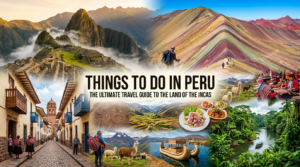
Why visit Peru? Peru compresses three entirely distinct ecosystems — Pacific coastal desert, Andean highlands, and Amazon rainforest — into one country, and the classic Inca circuit is only the beginning, a good starting point for anyone asking where to go in Peru. A proper Cusco travel guide starts with the former Inca capital itself, which sits at 3,400 meters and still stands on stone foundations so precisely fitted they’ve outlasted the Spanish colonial buildings built on top of them. From there, Sacred Valley Peru terraced ruins at Pisac and Ollantaytambo lead to a full Machu Picchu Peru tour, the 15th-century citadel that remained unknown to the outside world until 1911 — best reached via Inca Trail hiking Peru or the train from Aguas Calientes. Lima Peru attractions are now a destination in their own right rather than a mere transit stop, with the culinary capital where ceviche reaches its finest expression. Arequipa’s white volcanic-stone architecture opens onto Colca Canyon, twice as deep as the Grand Canyon and home to Andean condors gliding at eye level, while Rainbow Mountain Peru and Lake Titicaca’s floating reed islands near Puno offer two of South America’s most singular sights. Few countries let a single trip move this fluidly between empire, desert, and jungle, which is exactly what makes it such a strong source of Peru travel experiences and why most first-time visitors build a 10 to 14 day route around the Inca circuit with one or two additional regions layered on.

Six essential experiences
Machu Picchu
The 15th-century Inca citadel above the Urubamba River gorge — arrive on the first bus from Aguas Calientes or via the Inca Trail to beat the midday crowds. The essential answer to things to do in Machu Picchu.
Sacsayhuaman & Cusco's Inca Walls
A massive Inca fortress above Cusco built from stones weighing up to 200 tonnes, fitted so precisely a knife blade can't slip between them — the core of things to do in Cusco.
Sacred Valley
Ollantaytambo's still-inhabited Inca town, Pisac's hilltop ruins and Sunday market, and Moray's circular agricultural terraces make up Peru's fertile heartland, and cover the essentials for things to do in Sacred Valley Peru.
Colca Canyon
One of the world's deepest canyons, with the Cruz del Condor viewpoint offering the best odds anywhere of watching Andean condors ride thermals at eye level — the top result for things to do in Arequipa.
Lake Titicaca's Floating Islands
The Uros people's reed islands and Taquile Island's traditional weaving community make the world's highest navigable lake one of Peru's most distinctive cultural stops, and the anchor of things to do in Puno Peru.
Lima's Food Scene
A UNESCO Creative City of Gastronomy with multiple restaurants ranked among the world's best — ceviche, causa, and lomo saltado are essential, not optional, and central to things to do in Lima Peru.
Practical details
Plan your visit
Best time to visit Peru
May to October (dry season) is best for the Andes — Cusco, Machu Picchu, the Sacred Valley, Arequipa, and Puno all benefit from clear skies and dry trails. The Inca Trail closes every February for maintenance. The Amazon is best June to November; Lima and the coast (Nazca, Paracas) are enjoyable year-round. As for how many days in Peru is enough — a solid week covers Lima, Cusco, and Machu Picchu, while ten to fourteen days allows Arequipa or Puno as well.
Getting around
Domestic flights connect Lima to Cusco, Arequipa, and Iquitos efficiently. The only train route to Machu Picchu runs from Cusco or Ollantaytambo to Aguas Calientes via PeruRail or Inca Rail. Premium overnight buses (Cruz del Sur and similar) link coastal and highland cities affordably; Uber operates in Lima, Cusco, and Arequipa.
Where to stay
Cusco’s historic center puts you within walking distance of the main Inca sites, though book Machu Picchu tickets and any Inca Trail permit months ahead — both sell out. Aguas Calientes carries a location-monopoly premium for accommodation. In Lima, Miraflores and Barranco are the safest and most convenient bases. Altitude sickness is a real consideration at Cusco (3,400m) and Puno (3,827m) — plan at least one full acclimatization day before physical activity.
Continue exploring
From the journal
Latest Peru guide
A deeper dive into planning your trip — Machu Picchu, Cusco and the Amazon.
Frequently asked questions
Peru is best known for Machu Picchu and the Inca Empire, the Andes mountains, Lake Titicaca, the Amazon rainforest, and a culinary tradition centered on ceviche that’s earned Lima international recognition.
Most international visitors fly into Jorge Chavez International Airport in Lima, with onward domestic flights to Cusco or Arequipa. Citizens of the US, Canada, EU, UK, and Australia can enter visa-free for up to 90 days with a tourist card issued on arrival.
Seven days covers Lima, Cusco, the Sacred Valley, and Machu Picchu well. Ten days allows adding Arequipa or Puno; two to three weeks opens up the Amazon or Peru’s northern coast.
May through October for the Andes and Machu Picchu, with dry trails and clear skies. February brings the Inca Trail’s annual closure but also the spectacular Virgen de la Candelaria festival in Puno.
Machu Picchu, the Inca Trail, and Cusco’s historic center draw very heavy crowds in peak season (June–August). Arequipa, Trujillo’s Chan Chan ruins, and the northern coast stay considerably quieter for travelers looking to go beyond the main circuit.