
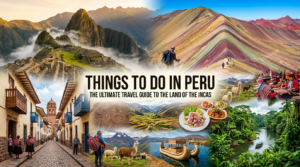
Peru is one of those rare countries that permanently redefines what you thought travel could be. It is a land where you stand in the footsteps of an empire that once stretched the length of a continent, where mountains rise so high they scrape the clouds, where the Amazon River begins its journey to the ocean, and where the food on your plate has been celebrated as some of the finest on Earth. Machu Picchu, the Sacred Valley, the floating islands of Lake Titicaca, the mysterious Nazca Lines drawn across a desert no one fully understands, and the extraordinary culinary capital of Lima — Peru packs a lifetime of wonder into every journey.
This complete Peru travel guide covers the best things to do in Peru, destination by destination, so you can plan a journey that will stay with you for the rest of your life — whether it is your first visit or your return to discover what you missed.
Why Visit Peru?
Why visit Peru? Because it is one of the most historically significant, naturally spectacular, and culturally layered countries on Earth. What is Peru famous for? Machu Picchu — the 15th-century Inca citadel perched high in the Andes and one of the New Seven Wonders of the World — is the answer most people give first. But Peru is so much more than its most famous landmark. It is home to over 3,000 distinct potato varieties cultivated in Andean terraces for thousands of years, to 1,800 species of birds found nowhere else on Earth, to the deepest canyon in the world (Colca Canyon, twice the depth of the Grand Canyon), and to a culinary tradition so innovative and vibrant that Lima has been named the World’s Leading Culinary Destination multiple times.
Peru travel destinations span three completely distinct ecosystems — the Pacific coastal desert, the Andean highlands, and the Amazon rainforest — each offering entirely different experiences, climates, and wildlife. This extraordinary geographic diversity makes Peru one of the most rewarding countries in the world for travelers with any type of interest.
Best Places to Visit in Peru
The best places to visit in Peru are anchored by the great Inca circuit — Cusco, Machu Picchu, and the Sacred Valley — which forms the core of any meaningful Peru itinerary. Lima, the Pacific capital, is the essential gateway and a world-class destination in its own right. Arequipa, the White City, offers colonial grandeur and the gateway to Colca Canyon. Puno opens the extraordinary world of Lake Titicaca and its floating reed islands. The northern coast holds Chan Chan and the Moche civilization’s remarkable heritage. The Nazca Desert preserves its mysterious geoglyphs. And the Amazon, accessed through Iquitos, delivers one of the planet’s great wildlife experiences.
For first-time visitors asking where to go in Peru, the Lima to Cusco to Machu Picchu circuit is the essential starting point. But the travelers who venture beyond it — to Arequipa, to Puno, to the Amazon — consistently report that these additional destinations deliver experiences as profound as the more famous sites.
Things to Do in Lima Peru
City Overview
Lima is Peru’s capital and its largest city — a sprawling Pacific coastal metropolis of nearly 11 million people that serves as the entry point for virtually every international visitor to the country. For decades, Lima was seen primarily as a transit city to be passed through quickly on the way to Cusco and Machu Picchu. That view has changed radically. Lima Peru attractions now include some of the finest restaurants in the world, an extraordinary archaeological heritage of pre-Inca civilizations, one of the most beautiful colonial historic centers in South America, and neighborhoods of creative energy and ocean-view glamour that have made the city a destination in its own right.
Top Things to Do in Lima Peru
Things to do in Lima Peru begin in the historic center — the Centro Historico, a UNESCO World Heritage Site that preserves one of the finest concentrations of Spanish colonial architecture in South America. The Plaza Mayor (Plaza de Armas) is the heart of Lima’s founding, flanked by the Cathedral of Lima (begun in 1535 on the orders of Francisco Pizarro), the Government Palace, and the Archbishop’s Palace. The Convent of San Francisco — a magnificent 17th-century complex with ornately carved baroque cloisters and a network of underground catacombs containing the remains of 70,000 people — is one of Lima’s most extraordinary and atmospheric historical sites.
Miraflores, the upscale clifftop district overlooking the Pacific, is Lima’s most visited neighborhood — with Parque Kennedy (full of cats that have become a beloved local institution), excellent restaurants and cafes, the Larcomar shopping and dining complex built into the cliffs above the ocean, and the Huaca Pucllana archaeological site: an ancient adobe pyramid of the Lima culture (500 AD) rising dramatically from the middle of the modern residential district. The Museo Larco in Pueblo Libre houses one of the world’s finest collections of pre-Columbian art — 45,000 objects spanning 5,000 years of Andean civilization, including the famous collection of pre-Columbian erotic ceramics that reveals the remarkably frank sensibility of ancient Moche culture.
Barranco — Lima’s bohemian artist neighborhood just south of Miraflores — is the city’s most charming district for an evening: colorful Victorian houses, the famous Bridge of Sighs (Puente de los Suspiros), independent galleries, craft pisco bars, and the street art that covers entire building facades with remarkable beauty.
Best Places to Visit in Lima
- Plaza Mayor and Centro Historico (UNESCO World Heritage Site)
- Convent of San Francisco and its catacombs
- Museo Larco — 5,000 years of Andean pre-Columbian art
- Huaca Pucllana — adobe pyramid of the Lima culture (500 AD)
- Miraflores clifftop district — Parque Kennedy, Larcomar
- Barranco neighborhood — Bridge of Sighs, street art, pisco bars
- Museo de Arte de Lima (MALI)
- Magic Water Circuit (Circuito Magico del Agua) — world’s largest water fountain complex
- Pachacamac ruins — major pre-Inca pilgrimage center 30km south of Lima
Historical Places in Lima
The Centro Historico is Lima’s most significant historical zone — established by Francisco Pizarro in 1535, it contains hundreds of buildings from the Spanish colonial period. The Palacio Torre Tagle (1735), the most beautiful colonial mansion in Lima, is now the Foreign Ministry. The Desamparados railway station — where trains once departed for the Andes — is a gorgeous Art Nouveau structure. Pachacamac, 31 kilometres south of the city, was one of the most important religious sanctuaries in the ancient Andean world for over a thousand years before the Inca conquest.
Best Time to Visit Lima
Lima has a peculiar climate — it sits in a coastal desert where rain is extremely rare, but a dense sea fog (called garua) shrouds the city from June through November, creating grey, overcast conditions. December through April is Lima’s summer — the fog lifts, revealing clear blue skies and warm temperatures that make beach activities possible. For the best weather, visit between December and April. However, Lima’s cultural and culinary attractions are fully rewarding year-round regardless of the weather.
Is Lima Safe?
Lima is safe for tourists who exercise appropriate urban awareness. Miraflores, Barranco, and San Isidro are the safest neighborhoods and where most tourists spend their time — they are well-patrolled and very welcoming for visitors. The Centro Historico is safe during daylight and early evening. Avoid less familiar neighborhoods at night, use Uber for all transport within the city, and keep valuables secure. Millions of international travelers visit Lima annually without incident.
Local Food in Lima
Lima is one of the world’s great food cities — a UNESCO Creative City of Gastronomy and home to multiple restaurants consistently ranked among the world’s 50 best. Peruvian food and cuisine in Lima reflects the country’s extraordinary biodiversity and cultural diversity. Ceviche — raw fish cured in lime juice with red onion, chili, and cilantro, served with corn and sweet potato — is Peru’s national dish and reaches its finest expression in Lima’s cevicherias. Causa (layered potato terrine with avocado, chicken, or tuna), lomo saltado (Peruvian-Chinese stir-fry of beef, tomato, and potato with rice), aji de gallina (shredded chicken in creamy walnut and chili sauce), and anticuchos (grilled beef heart skewers, a beloved Lima street food) are all essential experiences.
Lima Itinerary (3 Days)
- Day 1: Centro Historico — Plaza Mayor, Cathedral, Convent of San Francisco catacombs, Museo Larco
- Day 2: Miraflores — Huaca Pucllana, Parque del Amor, Larcomar, clifftop walk, ceviche lunch
- Day 3: Barranco — Bridge of Sighs, galleries, Pachacamac ruins day trip, farewell pisco sour
Lima Travel Cost
Lima spans a very wide range of travel costs. Budget travelers who stay in guesthouses in Miraflores or Barranco, eat at local markets and mid-range restaurants, and use public transport can manage very affordably. At the other end of the spectrum, Lima has some of the world’s most expensive tasting-menu restaurants where dining is an investment comparable to the finest restaurants in Europe or North America. Museum entrance fees and the Pachacamac excursion are modest costs. Your overall Lima budget will depend primarily on your accommodation choice and how many of the world-class restaurant experiences you choose to include.
Things to Do in Paracas and Huacachina
Region Overview
Paracas and Huacachina are two of the most rewarding stops on the Peruvian coastal route south of Lima. Paracas is a small coastal town on the edge of the Paracas National Reserve — a stunning desert peninsula where golden dunes tumble into a deep blue Pacific bay rich with marine wildlife. Huacachina is one of the most surreal and beautiful places in South America — a genuine desert oasis, a small lake surrounded by date palms and cafe terraces, cradled inside an amphitheater of massive sand dunes that rise 100 metres above the water. Both are accessible by bus from Lima and are typically combined in a 2-3 day excursion.
Top Things to Do in Paracas and Huacachina
Things to do in Paracas begin with the Ballestas Islands boat tour — a half-day excursion to spectacular rocky islands just offshore that are home to enormous colonies of Humboldt penguins, Peruvian boobies, Inca terns, sea lions, and the occasional condor. The sheer density of wildlife — with thousands of birds and sea mammals visible at close range — rivals anything in the Galapagos at a fraction of the cost and effort. The Paracas National Reserve itself, with its rust-red desert cliffs plunging into the Pacific and the extraordinary ochre and grey lunar landscape of the Candelabra geoglyph carved into a hillside visible from the boat tour, is one of Peru’s most dramatic natural environments.
At Huacachina, sandboarding down the enormous dunes and dune buggy excursions over the crests with sunset panoramas across the oasis are bucket-list experiences. The combination of the implausible oasis setting and the physical thrill of boarding and buggying creates a genuinely unique South American adventure.
Historical Places in Paracas
The Paracas culture (900 BC to 200 AD) was one of the most sophisticated textile-producing civilizations in the ancient Americas — their woven fabrics, excavated from desert tombs, show artistic mastery that astonishes textile scholars. The Regional Museum of Ica holds an important collection of Paracas textiles and Nazca ceramics that provides essential context for the region’s extraordinary pre-Columbian heritage.
Best Time to Visit
March through November is the best time for Paracas — dry, clear weather perfect for the boat tours and reserve exploration. December through February brings occasional coastal fog. Huacachina is excellent year-round, though summer (December-March) sees the largest crowds of domestic Peruvian tourists.
Is Paracas and Huacachina Safe?
Both Paracas and Huacachina are very safe and tourist-friendly destinations. Huacachina in particular is a relaxed, backpacker-friendly oasis town with a strong tourism infrastructure. Dune buggy operators should be licensed — choose reputable operators through your guesthouse.
Local Food
Ica wine and pisco from the surrounding desert vineyards — Peru’s wine country, where the dry, sunny desert conditions produce excellent grapes — are the regional culinary highlights. Seafood in Paracas is excellent and very fresh. The Ica region also produces exceptional teja candies (pecans or figs wrapped in chocolate or white fondant) that make excellent souvenirs.
Paracas and Huacachina Itinerary (2 Days)
- Day 1: Ballestas Islands boat tour, Paracas National Reserve drive, Candelabra geoglyph viewing
- Day 2: Travel to Huacachina — afternoon dune buggy and sandboarding, sunset from the dunes, oasis evening
Travel Cost
Paracas and Huacachina are among Peru’s most affordable tourist destinations. Budget guesthouses, affordable restaurants, and very reasonably priced boat tours and dune activities make this a particularly good value stretch of any Peru itinerary. The Ballestas Islands boat tour, dune buggy excursion, and reserve entry are the primary paid costs — all very modest by international standards.
Things to Do in Cusco
City Overview
Cusco was the capital of the Inca Empire — the greatest empire in pre-Columbian American history, stretching at its height from present-day Colombia to central Chile. Founded in the 11th or 12th century and built to represent the body of a puma, Cusco was the political, religious, and cultural center of an empire of 12 million people when the Spanish conquistadors arrived in 1532. They systematically built their colonial city on top of the Inca foundations — and those foundations, constructed from precisely fitted stone blocks without mortar, proved so superior to the Spanish construction above them that they have endured for centuries while the colonial additions above have crumbled in earthquakes. Walking Cusco’s streets means walking on Inca walls, and the effect is unlike any other city on Earth.
Top Things to Do in Cusco
Things to do in Cusco begin with simply being in the city — acclimatizing to its 3,400-metre altitude, walking its extraordinary cobblestone streets, and absorbing the layered history visible at every turn. Qorikancha — the Temple of the Sun, the most sacred temple of the Inca Empire — was entirely covered in gold when the Spanish arrived. They melted the gold and built the Santo Domingo Convent on top of the Inca structure. Today, the comparison between the perfect Inca stonework and the Spanish colonial construction above it is one of the most powerful statements about cultural collision in the Americas.
The Cusco travel guide highlights Sacsayhuaman — the massive Inca fortress above the city, where the walls are constructed from stones weighing up to 200 tonnes, fitted so precisely that a piece of paper cannot be slipped between them. The craftsmanship remains a genuine engineering mystery. The Plaza de Armas, Cusco’s main square, is one of the most beautiful in the Americas — surrounded by colonial arcades, the Cathedral (built on the foundations of the Inca palace of Viracocha), and the Church of La Compania, competing for the finest Baroque facade in the city.
The San Pedro Market is where Cusco’s daily life plays out — an extraordinary covered market of fresh produce, traditional food stalls, herbal medicine vendors, and woven textiles that is one of the most authentic market experiences in Peru. The Coricancha Museum, the Museum of Pre-Columbian Art (in a colonial mansion with a remarkable collection), and the Qhapaq Nan (Inca Road) exhibits in the historic center all deepen understanding of the civilization that built this city.
Best Places to Visit in Cusco
- Qorikancha — Temple of the Sun, the most sacred Inca site in Cusco
- Sacsayhuaman — massive Inca fortress with mystery-defying stonework
- Plaza de Armas — the heart of colonial and Inca Cusco
- Cathedral of Cusco — built on Inca palace foundations
- San Pedro Market — authentic daily life and traditional food
- Museum of Pre-Columbian Art — fine collection in a colonial mansion
- San Blas neighborhood — artisan workshops, whitewashed alleys
- Rainbow Mountain (Vinicunca) — day trip from Cusco
- Chinchero — traditional Andean weaving village
Historical Places in Cusco
Cusco’s entire historic center is a UNESCO World Heritage Site. The most significant historical layer is the Inca stonework visible throughout the city — particularly on Hatunrumiyoc Street, where the famous 12-angled stone demonstrates the extraordinary precision of Inca masonry. The Cathedral houses an important collection of Cusquena School paintings (a distinctive colonial art form blending Spanish and indigenous Andean aesthetics) and the famous Last Supper of Cusco — a colonial painting depicting Christ and the apostles eating cuy (guinea pig), a sacred Andean food, alongside potatoes and chicha beer.
Best Time to Visit Cusco
May through October (dry season) is the best time for Cusco and the surrounding region — clear skies, comfortable daytime temperatures, and minimal rain make this the optimal time for the Inca Trail hike and Machu Picchu visit. June and July are the busiest months. The June Inti Raymi festival (Festival of the Sun), held at Sacsayhuaman on June 24th, is one of the most spectacular cultural celebrations in the Americas. November through April brings the wet season — Cusco remains visitable but rain is frequent and the Inca Trail closes in February for maintenance.
Is Cusco Safe?
Cusco is generally very safe for tourists. The historic center is well-patrolled and very tourist-oriented. Exercise standard precautions with belongings in the San Pedro market area and avoid walking alone in unfamiliar areas at night. Altitude sickness (soroche) is the most significant health concern at 3,400 metres — plan for at least one full day of acclimatization on arrival before undertaking any physical activity.
Local Food in Cusco
Cusquena cuisine is hearty Andean mountain food. Cuy (guinea pig) — a pre-Columbian delicacy consumed in the Andes for 5,000 years — is the signature Cusco dish, typically roasted whole and served with potatoes and herbs. Alpaca steak (lean, mild, and extraordinarily tender) is excellent at local restaurants and is a genuinely delicious sustainable Andean protein. Chicha morada (purple corn drink) and chicha de jora (fermented corn beer, offered in homes with a white flag outside) are the traditional beverages. The Mercado de San Pedro serves the finest and most affordable traditional Cusquena food in the city.
Cusco Itinerary (3 Days)
- Day 1: Arrive, acclimatize — gentle walk to Plaza de Armas, Qorikancha, San Blas neighborhood
- Day 2: Sacsayhuaman, Tambomachay, Puca Pucara, Qenqo Inca sites — Sacred Valley afternoon
- Day 3: Rainbow Mountain Peru day trip at dawn, San Pedro Market, farewell cuy dinner
Cusco Travel Cost
Cusco offers a wide range of accommodation from budget hostels around the Plaza de Armas to luxury colonial hotels with Andean mountain views. The main costs are the Boleto Turistico (tourist ticket) which gives access to Sacsayhuaman and many Cusco and Sacred Valley sites — excellent value for what it covers. Guided tours to Rainbow Mountain and Sacred Valley sites are additional expenses. Street food and market meals are very affordable; upscale restaurants in the historic center command higher prices but are still good value by international standards.
Things to Do in Machu Picchu and Aguas Calientes
Site Overview
Machu Picchu Peru tour experiences begin with a simple fact: nothing in any photograph, film, or description fully prepares you for the actual experience of standing above the Urubamba River gorge and looking across at the 15th-century Inca citadel emerging from the cloud forest, its stone terraces and temples impossibly precise, its dramatic mountain backdrop of Huayna Picchu rising vertically behind. Built by the Inca emperor Pachacuti around 1450 AD, Machu Picchu was abandoned less than a century later and remained unknown to the outside world until American historian Hiram Bingham brought it to international attention in 1911. It is a UNESCO World Heritage Site, one of the New Seven Wonders of the World, and the single most visited and most impactful heritage site in South America.
Top Things to Do in Machu Picchu
Things to do in Machu Picchu begin with arriving before the main tour buses — either by hiking the Inca Trail to arrive at the Sun Gate (Intipunku) at dawn, or by taking the first bus from Aguas Calientes to be among the first visitors through the entrance gate as the morning mist swirls through the ruins. The citadel is divided into an agricultural sector (the magnificent terracing) and an urban sector (the temple complex, royal palace, and residential quarters). The Temple of the Sun — a curved stone tower with trapezoid windows aligned with the winter and summer solstices — is the most technically refined piece of Inca stonework in the complex. The Intihuatana Stone, the Room of the Three Windows, and the Temple of the Condor are all essential experiences within the site.
Inca Trail hiking Peru — the four-day, 43-kilometre classic route from the Sacred Valley to Machu Picchu through mountain passes, cloud forest, and past extraordinary intermediate Inca sites — is the most celebrated trekking experience in South America. Permits are strictly limited to 500 people per day and sell out months in advance. The alternative Salkantay Trek (5 days) passes beneath the 6,271-metre Salkantay glacier and is equally stunning. Huayna Picchu Mountain — the dramatic peak rising behind the citadel visible in every Machu Picchu photograph — can be climbed in 45 minutes for the most extraordinary overhead perspective of the ruins. Permits are extremely limited and must be booked well in advance along with site entry tickets.
Historical Places in Machu Picchu
Machu Picchu was a royal estate and religious retreat built by the Inca emperor Pachacuti in the mid-15th century. The precision of the stone construction — thousands of granite blocks fitted without mortar to withstand the earthquakes common in the Andes — represents the pinnacle of Inca engineering. The astronomical alignments built into the Intihuatana Stone and the Temple of the Sun demonstrate sophisticated astronomical knowledge. The site was not a military fortress (as early researchers assumed) but a place of worship, agriculture, and royal residence for the Inca elite.
Best Time to Visit Machu Picchu
April through October (dry season) is the most reliable time for clear views — morning cloud tends to clear by 10am, revealing the full citadel. May and September are particularly good — clear skies, manageable crowds relative to July and August peak. June through August is the busiest period with maximum visitor numbers. February sees the Inca Trail close for maintenance. The wet season (November through March) brings lush green vegetation and occasional dramatic mist effects, but rain can obscure views for extended periods.
Is Machu Picchu Safe?
Machu Picchu is very safe. The site is extremely well-managed with clear pathways, safety barriers, and a strong ranger presence. The main practical concerns are altitude (the site is at 2,430 metres — lower than Cusco but still significant), physical fitness for the mountain trails, and sun protection. Aguas Calientes — the small town below the ruins, accessible by train from Cusco — is very safe and entirely tourism-oriented.
Local Food in Aguas Calientes
Aguas Calientes exists almost entirely to serve Machu Picchu visitors — its restaurants cater primarily to international tourists and prices reflect the captive market. Fresh trout from the Urubamba River (trucha) is the best local food option — served grilled, fried, or in ceviche, it is genuinely excellent. The town’s natural hot springs (after which it is named) are a wonderful way to soak away the exertion of the day’s Machu Picchu visit.
Machu Picchu Itinerary (2 Days)
- Day 1: Arrive Aguas Calientes by train from Cusco, afternoon explore the town and hot springs
- Day 2: First bus to Machu Picchu at dawn, full morning at the ruins, afternoon Huayna Picchu mountain climb, return by train to Cusco
Machu Picchu Travel Cost
Machu Picchu is Peru’s most expensive attraction — entry tickets are strictly limited and tiered by circuit and time of entry, and prices have risen significantly in recent years. The Inca Trail guided hike requires a separate permit and is priced accordingly. The train from Cusco (the only motorized access to Aguas Calientes) ranges from affordable to expensive depending on train class and booking advance. Accommodation in Aguas Calientes is priced at a significant premium to other Peruvian towns due to location monopoly. Budget carefully for this section of your itinerary — it is the most significant single cost in any Peru journey.
Things to Do in Sacred Valley Peru
Region Overview
The Sacred Valley of the Incas — Valle Sagrado — is a 60-kilometre stretch of the Urubamba River valley between Cusco and Machu Picchu, lying at approximately 2,800 metres altitude (lower and warmer than Cusco), and containing some of the most important Inca archaeological sites outside of Machu Picchu itself. For the Inca Empire, this valley was both the agricultural heartland — its fertile terraced fields producing the corn and potatoes that fed the empire — and a sacred landscape dotted with temples, fortresses, and ceremonial centers dedicated to Inca cosmology.
Top Things to Do in Sacred Valley Peru
Things to do in Sacred Valley Peru begin with Ollantaytambo — the best-preserved Inca town in existence, where ancient Inca streets are still inhabited and the massive fortress-temple complex above the town features the most impressive surviving Inca stone construction outside Sacsayhuaman. The pink granite Sun Temple at Ollantaytambo was never completed — construction was interrupted by the Spanish conquest — but the massive stone blocks of the unfinished facade, some weighing over 50 tonnes and transported from a quarry across the valley, are extraordinary evidence of the empire’s engineering ambition.
Pisac, at the Sacred Valley’s eastern end, has one of the finest Inca ruins in the region — a hilltop complex of temples, agricultural terraces, and an astronomical observatory that rises dramatically above the modern town. The Sunday market at Pisac plaza is one of Peru’s most photogenic and authentic — with local Quechua-speaking vendors in traditional dress selling produce, pottery, and textiles, though it has grown increasingly tourist-oriented in recent years.
Moray — a remarkable series of concentric circular terraces believed to have been an agricultural laboratory where the Inca experimented with crop adaptation at different altitudes — and the salt pans of Maras (thousands of individual evaporation pools terracing a hillside, still harvested by local families as they have been for centuries) together make one of the Sacred Valley’s most extraordinary day trips.
Historical Places in the Sacred Valley
The Sacred Valley is essentially one continuous historical site. Chinchero — a village with a beautiful Inca plaza and the finest colonial church in the Cusco region (built directly on top of an Inca palace) — is particularly significant as a living Andean weaving community where traditional dyeing and weaving techniques passed down through generations can be observed and learned. The Inca Quarry Trail passes the granite quarries that supplied stone for Ollantaytambo and Machu Picchu.
Best Time to Visit the Sacred Valley
May through October is the optimal time. The valley is lower and warmer than Cusco — temperatures are more comfortable for cycling, hiking, and outdoor market visits. The Inti Raymi festival season in June is especially atmospheric throughout the valley.
Is the Sacred Valley Safe?
The Sacred Valley is very safe for tourists. The main towns of Pisac, Ollantaytambo, and Urubamba are peaceful and very accustomed to international visitors. The valley road between towns is well-maintained and safe for both independent drivers and tourist minibuses.
Local Food in the Sacred Valley
Sacred Valley cuisine is traditional Andean mountain food — potatoes in dozens of preparations (Peru has over 3,000 native potato varieties, many found only in the Andes), corn (choclo), quinoa, and various highland vegetables. Pachamanca — a traditional Andean cooking method where meats and vegetables are cooked underground on heated stones — is the most ceremonially significant local dish, typically prepared for special occasions and festivals.
Sacred Valley Itinerary (2 Days)
- Day 1: Pisac ruins and market, Moray circular terraces, Maras salt pans, overnight in Urubamba or Ollantaytambo
- Day 2: Ollantaytambo fortress-temple, Chinchero weaving demonstration, return to Cusco or continue to Aguas Calientes by train
Sacred Valley Travel Cost
The Sacred Valley is generally more affordable than Cusco for accommodation — quieter towns like Urubamba and Ollantaytambo have excellent guesthouses and lodges at reasonable prices. Some of Peru’s most beautiful luxury lodges are also located in the Sacred Valley at significant premiums. Day trips from Cusco by shared minibus are very affordable. The Boleto Turistico covers most of the major sites.
Things to Do in Arequipa
City Overview
Arequipa is Peru’s second-largest city and one of the most beautiful in South America — known as the Ciudad Blanca (White City) for the brilliant white sillar volcanic stone from which its colonial buildings are constructed. Sitting in a high-altitude valley (2,335 metres) dominated by the perfectly symmetrical snow-capped Misti volcano that looms over the city like a guardian, Arequipa has a distinctive character that combines graceful Spanish colonial architecture, a proud local identity (Arequipenos are famously independent-minded — they have jokingly declared their city an independent republic on several occasions), and the gateway to the Colca Canyon and Chivay’s high-altitude hot springs.
Top Things to Do in Arequipa
Things to do in Arequipa center on the extraordinary Santa Catalina Monastery — a 400-year-old convent so large it is essentially a city within a city. Covering 20,000 square metres of Arequipa’s historic center, Santa Catalina was a closed community of cloistered nuns until 1970 when it was opened to the public, revealing its labyrinth of brightly painted streets (named after Spanish cities like Sevilla and Cordoba), plazas, fountains, and rooms preserved exactly as they were centuries ago. It is one of the most remarkable historical sites in Peru and the single best thing to see in Arequipa.
The Plaza de Armas — one of the finest colonial plazas in South America, with its brilliant white sillar cathedral and symmetrical arcades — is the heart of the city. From Arequipa, the Colca Canyon tour is the essential excursion — a 3-4 hour drive through spectacular Andean scenery to one of the world’s deepest canyons, where the Cruz del Condor viewpoint offers the finest opportunity in the world to watch Andean condors — Earth’s largest flying birds — riding thermal currents at eye level with their three-metre wingspan spread wide.
The Museo Santuarios Andinos in Arequipa houses Juanita — the Ice Maiden — a 500-year-old Inca child mummy discovered in 1995 near the summit of the 6,288-metre Ampato volcano. Juanita was an Inca human sacrifice victim offered to the mountain gods, and her extraordinary state of preservation (due to the altitude and cold) makes her one of the most significant archaeological discoveries of the 20th century.
Historical Places in Arequipa
Arequipa’s colonial center — UNESCO World Heritage Site — is the finest in Peru after Cusco and Lima. The Cathedral of Arequipa (1656, destroyed by earthquake and rebuilt multiple times) is the most imposing building. The Jesuit Church of La Compania, with its elaborately carved sillar facade, and the many historic mansions (casonas) that line the center’s streets reveal the prosperity of colonial Arequipa as a major silver and trade hub between the coast and Bolivia.
Best Time to Visit Arequipa
Arequipa’s climate is famously stable — 300 days of sunshine per year with low humidity and mild temperatures year-round. May through November is the dry season and the best time for the Colca Canyon excursion. Condor sightings at Cruz del Condor are most reliable in the early morning hours (6-8am), particularly April through December.
Is Arequipa Safe?
Arequipa is one of Peru’s safest major cities for tourists. The historic center and Santa Catalina area are very well-patrolled. Exercise standard precautions as in any city — use licensed taxis or Uber, keep valuables secure, and avoid poorly lit areas at night.
Local Food in Arequipa
Arequipa has arguably the finest regional cuisine in Peru — a bold, spicy, and deeply satisfying tradition built around rocoto relleno (stuffed hot pepper — a fiercely spicy whole rocoto chili filled with minced meat, cheese, and herbs, baked in a clay pot), adobo arequipeno (pork stew with chicha and spices, traditionally eaten on Sunday mornings), ocopa arequipena (cold boiled potato with a walnut and huacatay herb sauce), and chupe de camarones (freshwater shrimp chowder from the Chili River). The picanterias — traditional Arequipa lunch restaurants — are cultural institutions as much as dining destinations.
Arequipa Itinerary (3 Days)
- Day 1: Santa Catalina Monastery, Plaza de Armas, Cathedral, La Compania Church, Museo Santuarios Andinos (Juanita)
- Day 2: Full day Colca Canyon tour — Cruz del Condor condor viewing at dawn, canyon villages, hot springs at Chivay
- Day 3: San Camilo Market, Yanahuara viewpoint with Misti volcano panorama, Sachaca countryside
Arequipa Travel Cost
Arequipa is one of Peru’s most affordable major cities for accommodation and dining. Excellent guesthouses and boutique hotels in the historic center are very reasonably priced. The Colca Canyon tour is the main significant cost — either as a day trip or a two-day overnight excursion, with transportation, guide, and park entry fees included in most organized tour prices. Picanteria lunches in Arequipa are very affordable and are the finest way to experience the local food tradition.
Things to Do in Puno Peru and Lake Titicaca
City Overview
Puno is a high-altitude city (3,827 metres above sea level) on the Peruvian shore of Lake Titicaca — the highest navigable lake in the world, sitting at the border between Peru and Bolivia in a landscape of extraordinary bleakness and beauty. Lake Titicaca holds immense cultural and spiritual significance in Andean cosmology — it is the birthplace of the sun, of the first Inca (Manco Capac), and of Andean civilization itself according to indigenous creation beliefs. The floating reed islands of the Uros people and the traditional communities of Taquile and Amantani Islands make Lake Titicaca one of Peru’s most culturally profound experiences.
Top Things to Do in Puno Peru
Things to do in Puno Peru and on Lake Titicaca are primarily focused on the lake itself and its unique human communities. The Uros Floating Islands are the most visited attraction — artificial islands constructed entirely from totora reeds, anchored in the shallows of the lake, where the Uros people have lived for centuries in a form of existence that has no parallel anywhere else on Earth. The islands, the boats, the houses, and even the food are made from the same reed. Whether the modern Uros community’s experience has been somewhat commercialized for tourism is a legitimate question — visiting with awareness of this adds depth to the encounter rather than diminishing it.
Taquile Island — a steep island a 2-3 hour boat ride into the lake — is a more genuinely traditional community, where the Quechua-speaking population maintains a sophisticated textile tradition recognized by UNESCO as Intangible Cultural Heritage of Humanity. Taquile men knit while walking — a skill passed down through generations. Staying overnight with a local family on Taquile or Amantani Island gives an intimate, authentic experience of traditional Andean island life that is one of Peru’s most memorable cultural encounters.
Historical Places in Puno
The Sillustani chullpas — tall cylindrical funerary towers of the pre-Inca Colla culture, rising from a peninsula in a smaller lake outside Puno — are among the most unusual and atmospheric archaeological sites in Peru. Some towers reach 12 metres in height and the mystery of how such structures were built without metal tools or the wheel remains a subject of archaeological debate.
Best Time to Visit Puno
May through October is the dry season and the most comfortable time — cold nights (temperatures can drop below freezing at 3,827 metres) but clear days perfect for lake excursions. The Virgen de la Candelaria festival in February is the most spectacular folk festival in Peru — two weeks of extraordinary masked dances, costumes, and music that is one of the most important Andean cultural celebrations in the Americas.
Is Puno Safe?
Puno is generally safe for tourists. Exercise caution at the bus terminal area and with your belongings in crowded market areas. The altitude is the primary challenge — acclimatize properly before any physical activity and ascend gradually from lower altitudes if possible. Altitude sickness medication (acetazolamide) should be discussed with a doctor before travel.
Local Food in Puno
Lake Titicaca’s altitude and climate produce distinctive local foods. Trucha (trout), introduced to the lake in the 1930s and now central to local cuisine, is served at every restaurant in numerous preparations. Chuño (freeze-dried potato — made by alternating frost exposure and sun-drying in a process developed by the Inca) is the ancient Andean food preservation technique that allowed the empire to store food for years. Quinoa — the protein-rich grain native to the Andes — grows abundantly at this altitude and appears in soups, stews, and as a rice substitute in local meals.
Puno and Lake Titicaca Itinerary (2 Days)
- Day 1: Morning boat to Uros Floating Islands, afternoon to Taquile Island, overnight homestay with local family
- Day 2: Sunrise on the lake, return to Puno, Sillustani chullpas afternoon, overnight in Puno
Puno Travel Cost
Puno and the Lake Titicaca experience are very affordable. Budget guesthouses in Puno are inexpensive. Boat tours to the islands are very reasonably priced. Overnight homestay experiences with local families on the islands are modest in cost and represent extraordinary cultural value. The primary cost variables are the quality of accommodation in Puno and whether you book island tours independently or through a tour operator.
Things to Do in Trujillo and Chan Chan
City Overview
Trujillo is Peru’s third-largest city and the capital of the La Libertad region on Peru’s northern coast — a vibrant, sun-drenched city with excellent colonial architecture, Peru’s finest beaches for surfing, and the gateway to Chan Chan and the extraordinary pre-Inca archaeological heritage of the Moche and Chimu cultures. Often overlooked by travelers who focus on the Inca circuit in the south, northern Peru contains some of the most significant and least-visited archaeological sites in the Americas.
Top Things to Do in Trujillo
Things to do in Trujillo and the surrounding region center on the extraordinary pre-Columbian heritage of this coastal desert. Chan Chan — the UNESCO World Heritage Site 5 kilometres west of Trujillo — was the capital of the Chimu Kingdom and the largest city in pre-Columbian America, covering 20 square kilometres and housing an estimated 60,000 people at its height around 1400 AD. The elaborate adobe architecture — walls covered in intricate geometric and marine-life relief carvings — represents one of the great artistic achievements of the ancient Americas, though ongoing erosion from El Nino rains threatens the site.
The Huaca del Sol and Huaca de la Luna (Temple of the Sun and Temple of the Moon) near Trujillo are the great monuments of the earlier Moche culture (100-800 AD). The Huaca de la Luna in particular is extraordinary — its interior walls are covered with brilliantly preserved murals depicting the Moche deity Ai-Apaec (the Decapitator) in scenes of ritual combat and sacrifice that reveal a sophisticated and complex religious cosmology. The Moche Archaeological Museum on site provides essential context.
Historical Places in Trujillo
Trujillo’s colonial center — the Plaza de Armas with its elaborate freedom monument and surrounding colonial mansions painted in vivid pastels — is one of the finest in northern Peru. The casona (colonial mansion) culture of Trujillo produced buildings of considerable elegance, and several are open to visitors. The El Brujo complex north of Trujillo — where the Moche Lady of Cao was discovered in 2006, one of the most important archaeological finds in the Americas (a female ruler of the Moche civilization, buried with full warrior regalia) — is one of the most significant emerging archaeological sites in Peru.
Best Time to Visit Trujillo
Trujillo’s coastal desert climate means warm, dry weather for most of the year. March through November is the clearest and most comfortable time. The Marinera dance festival in January — celebrating Peru’s national dance, the elegant Marinera Norteña — is one of the most beautiful cultural events in the country.
Is Trujillo Safe?
Trujillo’s tourist areas — the colonial center, Chan Chan, and the Huacas — are safe for visitors during daylight hours. Exercise standard urban awareness, particularly at night. Use registered taxis from your hotel or use Uber for transport between sites.
Local Food in Trujillo
Northern Peruvian coastal cuisine is among the country’s finest. Ceviche here uses different regional variants of chili and citrus than Lima’s version. Seco de cabrito (slow-cooked young goat in chicha and herb sauce) is the northern coast’s signature meat dish. Fresh seafood from the cold Humboldt Current waters — corvina, langoustines, and octopus — is exceptionally good throughout the region.
Trujillo Itinerary (2 Days)
- Day 1: Chan Chan archaeological complex, Chimu Museum, Huanchaco fishing village and beach
- Day 2: Huaca de la Luna and Moche murals, El Brujo complex and Lady of Cao Museum, Trujillo colonial center
Trujillo Travel Cost
Trujillo is one of Peru’s most affordable destinations for international travelers. Accommodation, food, and transport within the city are all very reasonably priced. Archaeological site entrance fees are modest. Being off the main tourist trail, Trujillo offers excellent value for the quality and significance of the historical experiences it delivers.
Things to Do in Nazca and the Nazca Lines
Region Overview
Nazca is a small desert town in southern Peru that has given its name to one of the world’s greatest archaeological mysteries. The Nazca Lines — a series of enormous geoglyphs etched into the surface of the Nazca Desert between 100 BC and 700 AD by the Nazca culture — cover an area of approximately 450 square kilometres and depict animals (hummingbird, spider, monkey, condor, whale, dog), plants, and abstract geometric patterns so large they can only be fully perceived from the air. The purpose of the lines — whether astronomical calendar, ritual landscape, or something else entirely — remains genuinely unknown and contested, and that mystery is a large part of their enduring fascination.
Top Things to Do in Nazca
Things to do in Nazca are dominated by the overflight experience. Small aircraft departing from Nazca airport carry passengers over the lines at low altitude for 30-35 minute flights that reveal the full scale and precision of the geoglyphs. The Hummingbird (96 metres), the Spider (46 metres), the Monkey (93 metres), and the Condor (134 metres) are the most celebrated figures. The flights can cause airsickness for some passengers — choose an early morning flight for the calmest air conditions.
The Mirador viewpoint on the Pan-American Highway allows ground-level views of the Tree and Hands geoglyphs without a flight — a useful but limited alternative. The Chauchilla Cemetery — an outdoor site where Nazca mummies and offerings remain in their original burial niches, 1,000 years old — is one of the most startling and thought-provoking archaeological sites in Peru. The Cantalloc Aqueducts, a remarkable system of underground spiral water channels (puquios) engineered by the Nazca to bring water to their desert settlements, are equally impressive evidence of the civilization’s sophistication.
Historical Places in Nazca
The Nazca Lines themselves are the most significant historical place in the region — created by removing the red-brown surface rocks to reveal the lighter desert beneath, a deceptively simple technique that has preserved the lines for over 2,000 years due to the extreme dryness and windlessness of the Nazca Desert plateau. The Antonini Museum in Nazca town provides excellent archaeological context and houses the collection of Italian archaeologist Giuseppe Orefici, who has worked at Nazca for decades.
Best Time to Visit Nazca
Nazca can be visited year-round — its desert location means consistently dry, clear weather. Morning flights are best for visibility and calmer air. October through April (summer) brings slightly warmer temperatures but no rain — the desert remains pristine regardless of season.
Is Nazca Safe?
Nazca town and the tourist sites around it are safe for visitors. The main safety consideration is choosing reputable, properly licensed flight operators for the overflight — stick to airlines operating from the main airport with properly certified aircraft and pilots.
Local Food in Nazca
Nazca’s regional cuisine reflects its coastal desert location. Fresh river shrimp from the Ica and Nazca rivers are a local specialty. Pisco from the nearby Ica valley — Peru’s finest pisco-producing region — is the essential beverage, and a pisco sour made with Ica pisco and fresh lime in the desert heat is a genuinely perfect experience.
Nazca Itinerary (1-2 Days)
- Day 1: Morning Nazca Lines overflight, Chauchilla Cemetery, Cantalloc Aqueducts, Antonini Museum
- Day 2: Cahuachi pyramid complex (the main Nazca ceremonial center), Paredones Inca ruins, continue to Arequipa or Puno
Nazca Travel Cost
The Nazca Lines overflight is the main cost — prices vary by airline and aircraft type but represent reasonable value for the experience. Accommodation in Nazca is inexpensive and the town has a small but adequate range of hotels and guesthouses. Nazca is most commonly visited as a stop between Lima/Paracas and Arequipa on the southern Peru circuit, making it easy to budget as part of a longer journey.
Things to Do in Iquitos and the Peruvian Amazon
City Overview
Iquitos is one of the most extraordinary cities in the world — the largest city on Earth that is completely inaccessible by road, reachable only by boat or plane, floating in the heart of the Peruvian Amazon rainforest. A city of nearly 500,000 people surrounded by hundreds of kilometres of unbroken jungle, Iquitos serves as the primary gateway to the Peruvian Amazon and, according to many wildlife biologists, offers superior Amazon jungle experiences to Brazil’s Manaus — the same extraordinary biodiversity in a less commercially developed environment, making wildlife encounters more intimate and authentic.
Top Things to Do in Iquitos
Things to do in Iquitos are centered on the Amazon rainforest itself. Lodge-based jungle experiences — staying in comfortable eco-lodges accessible by boat from Iquitos — deliver encounters with pink river dolphins (boto), giant river otters, caimans, anacondas, monkeys (howler, squirrel, and pygmy marmoset), sloths, and an extraordinary density of bird species including toucans, macaws, and countless Amazonian specialists. Night canoe expeditions to spot red-eyed caimans by torchlight, piranha fishing, dawn bird walks, and visits to indigenous Yagua and Bora communities who maintain traditional practices are all standard parts of well-designed Amazon lodge programs.
The Pacaya-Samiria National Reserve — the largest protected wetland in Peru, accessible from lodges near Iquitos — is one of the most biodiverse protected areas in the Amazon basin. During the wet season (November through April), the forest floods and river travel takes you through submerged trees where freshwater pink dolphins swim between the trunks. The Iquitos city itself — with its fascinating Iron House (a prefabricated mansion designed by Gustave Eiffel and imported during the rubber boom), the colourful waterfront malecon, and the atmospheric floating neighbourhood of Belen — is one of the most interesting and unusual cities in South America.
Historical Places in Iquitos
The rubber boom (1880-1914) transformed Iquitos from a small mission town into a wealthy trading city — the extravagant Azulejos tiles on the Casa Cohen and Morey buildings, imported from Portugal and installed by rubber barons, reflect this extraordinary period of jungle wealth. The Amazon rubber trade simultaneously created vast fortunes and caused the enslavement and death of countless indigenous people in one of history’s most brutal economic episodes, explored in the Casa de Fierro (Iron House) museum.
Best Time to Visit Iquitos and the Amazon
June through November (low water season) is the best time for jungle walks and wildlife spotting on land — trails are accessible and animals concentrate around rivers. December through May (high water season) raises river levels dramatically and creates the spectacular flooded forest (igapo) ecosystem where boat travel replaces walking and a completely different set of wildlife encounters becomes possible. Both seasons offer extraordinary experiences — low water is generally better for first-time visitors.
Is Iquitos Safe?
Iquitos is safe for tourists who use reputable lodge operators. The city itself requires standard urban precautions — the waterfront tourist area and lodge boat piers are safe, while some peripheral neighborhoods require more awareness. The jungle itself is completely safe within the framework of licensed lodge programs with experienced naturalist guides.
Local Food in Iquitos
Amazonian food culture is utterly distinct from anything else in Peru. Juane — rice cooked with chicken, eggs, and spices wrapped in bijao leaves and boiled, traditionally eaten at the Feast of Saint John (June 24) — is the signature Amazonian dish. Tacacho con cecina (fried green plantain balls with dried smoked meat) is a beloved street food. Exotic jungle fruits — camu camu (the world’s highest vitamin C fruit), aguaje, cocona, and mamey — are used in juices, ice creams, and desserts. Amazonian river fish — paiche (the giant arapaima), gamitana, and boquichico — are the protein foundations of the regional diet.
Iquitos and Amazon Itinerary (4 Days)
- Day 1: Fly Lima to Iquitos, Belen floating market, Iron House, malecon sunset
- Day 2: River transfer to Amazon lodge, afternoon wildlife walk, pink dolphin spotting
- Day 3: Dawn bird walk, giant river otter search, piranha fishing, night caiman spotting
- Day 4: Indigenous community visit, return to Iquitos, fly back to Lima
Iquitos and Amazon Travel Cost
The Amazon lodge experience requires careful budgeting — it is Peru’s most expensive travel component after Machu Picchu. Domestic flights Lima-Iquitos add significantly to overall costs. Lodge packages (which include accommodation, all meals, and guided excursions) vary from basic budget camps to luxury eco-lodges with private guides and naturalist-led experiences. The quality difference between basic and premium Amazon lodges is significant and worth research before booking. Even a basic Amazonian lodge experience, however, delivers genuinely extraordinary wildlife encounters.
Recommended First-Timer Peru Itinerary
Peru Itinerary 7 Days — Classic Inca Circuit
- Day 1-2: Lima — Centro Historico, Museo Larco, Miraflores, ceviche
- Day 3: Fly Lima to Cusco — acclimatize gently, Qorikancha, San Blas
- Day 4: Sacred Valley — Pisac ruins and market, Ollantaytambo fortress
- Day 5: Train to Aguas Calientes, afternoon explore town and hot springs
- Day 6: First bus to Machu Picchu at dawn — full morning at ruins, Huayna Picchu hike
- Day 7: Train back to Cusco — Sacsayhuaman, farewell dinner, fly Lima
Peru Itinerary 10 Days — Extended Peru
- Day 1-2: Lima — Museo Larco, ceviche tour, Barranco and Miraflores
- Day 3: Fly Lima to Cusco — acclimatize, Qorikancha, San Pedro Market
- Day 4: Rainbow Mountain Peru at dawn, Sacsayhuaman afternoon
- Day 5: Sacred Valley — Moray, Maras salt pans, Ollantaytambo
- Day 6: Train to Aguas Calientes — Machu Picchu afternoon visit
- Day 7: Machu Picchu sunrise, return to Cusco
- Day 8: Fly Cusco to Arequipa — Santa Catalina Monastery, Plaza de Armas
- Day 9: Colca Canyon — Cruz del Condor condor viewing, hot springs
- Day 10: Fly Arequipa to Lima — depart
First-Timer Tips: Book Machu Picchu entry tickets and the Inca Trail permit months in advance — both sell out rapidly. Acclimatize properly in Cusco for at least one full day before physical activities. Altitude sickness (soroche) can affect anyone regardless of fitness level — ascend slowly, drink coca tea (freely available throughout the Andes), avoid alcohol on your first day in Cusco, and carry acetazolamide after consulting a travel medicine doctor. Affordable travel in Peru is very achievable — the country has an excellent network of comfortable long-distance buses for budget-conscious travelers who have more time than money.
Peru Travel Tips and Practical Information
Visa Requirements
Do I need a visa for Peru? Citizens of the USA, Canada, EU, UK, Australia, and most developed nations can enter Peru visa-free for up to 90 days as tourists. You receive a tourist card (Tarjeta Andina de Migracion) on arrival. Always verify current requirements for your specific nationality through Peru’s official immigration authority before booking travel.
Best Time to Visit Peru
The best time to visit Peru depends on your destination. May through October (dry season) is the best overall period for the Andes region — Cusco, Machu Picchu, Sacred Valley, Arequipa, Colca Canyon, and Puno all benefit from clear skies and dry trails. The Inca Trail closes in February for maintenance. The Amazon is best June through November (low water season) for jungle walks and wildlife spotting. Lima is good year-round. The northeast coast (Trujillo) is good year-round. Nazca and Paracas are excellent year-round.
Currency and Payments
Peru uses the Peruvian Sol (PEN). US dollars are widely accepted at hotels, major restaurants, and tour operators — often at favorable rates. ATMs are readily available in all major cities and tourist towns. Smaller towns and markets require cash in Soles. Always carry small denomination Soles for markets, street food, and tips.
Getting Around Peru
Domestic flights connect Lima to Cusco, Arequipa, Iquitos, Juliaca (Puno gateway), and Trujillo efficiently. PeruRail and Inca Rail operate the only train route from Cusco/Ollantaytambo to Aguas Calientes (Machu Picchu). Cruz del Sur and other premium bus companies offer excellent overnight bus services between coastal and highland cities. Within cities, Uber operates in Lima, Cusco, Arequipa, and Trujillo — strongly recommended over street taxis for safety.
Altitude Sickness (Soroche)
Altitude sickness is the most significant health concern for Andean travel. Cusco (3,400m), Puno (3,827m), and Rainbow Mountain (5,200m) all carry real altitude risk. Symptoms include headache, nausea, fatigue, and shortness of breath. Prevention: ascend gradually, rest on arrival, drink coca tea or take acetazolamide (prescription medication, consult your doctor), avoid alcohol on your first day, and stay well hydrated. If symptoms are severe, descend immediately to lower altitude.
Is Peru Safe?
Peru is generally safe for tourists who travel with standard awareness. Lima’s tourist areas (Miraflores, Barranco, San Isidro), Cusco’s historic center, and the main Inca Trail sites are all very safe and well-managed for visitors. Use licensed taxis from your hotel, secure your belongings in markets and crowded areas, and follow current travel advisories. Petty theft is the most common issue, not violent crime in tourist areas.
How to Plan a Trip to Peru
This Peru travel planning guide recommends building your itinerary around your primary interest and working outward. If Machu Picchu is your priority, plan Lima as your entry and exit point, spend at least 3 nights in Cusco with Sacred Valley day trips, and dedicate 2 full days to Machu Picchu. How many days in Peru is enough? Ten days covers Lima, Cusco, Sacred Valley, and Machu Picchu with reasonable depth. Two weeks allows adding Arequipa, Colca Canyon, and/or Puno and Lake Titicaca. Three weeks allows the Amazon or the northern Peru circuit.
Peru trip ideas for different traveler types:
- History and archaeology lovers: Lima, Cusco, Sacred Valley, Machu Picchu, Trujillo (Chan Chan, Huaca de la Luna), Nazca
- Nature and adventure seekers: Colca Canyon, Inca Trail, Rainbow Mountain Peru, Amazon (Iquitos or Puerto Maldonado)
- Food lovers: Lima is the essential destination — no other city in the Americas offers this density of world-class culinary experience
- Budget travelers: Peru is one of South America’s most affordable destinations — the Inca Bus network, excellent hostels, and inexpensive market food make budget travel in Peru very achievable
- Spiritual and cultural travelers: Cusco, Sacred Valley, Puno, Lake Titicaca, Andean festival calendar
Peruvian Culture, Food and Traditions
Inca and Pre-Inca Civilizations
Peruvian culture is the product of over 5,000 years of continuous Andean civilization. The Caral culture (3000 BC) built the oldest known cities in the Americas. The Chavin culture (900-200 BC) established the first pan-Andean religious tradition. The Moche (100-800 AD) created extraordinary ceramic art and monumental architecture on the north coast. The Wari (600-1000 AD) built the first true Andean empire. The Tiwanaku civilization around Lake Titicaca developed sophisticated agriculture at extreme altitude. And the Inca Empire (1438-1533) unified all of these traditions into the greatest pre-Columbian civilization in the Americas — a rapidly constructed empire that built thousands of kilometres of road, engineered irrigation systems that still function, and created Machu Picchu.
Peruvian Food and Cuisine
Peruvian food and cuisine is internationally recognized as one of the world’s great culinary traditions — a fusion of indigenous Andean ingredients, Spanish colonial cooking, African influence, and the contributions of Japanese, Chinese, Italian, and Arab immigrants into something uniquely Peruvian and deeply delicious. Peru has more than 3,000 documented varieties of potato, over 650 native fruits, and one of the most biodiverse marine environments on Earth (courtesy of the Humboldt Current) providing extraordinary seafood. Ceviche, lomo saltado, aji de gallina, anticuchos, causa, tiradito, and chicharron are the dishes every visitor should try. Lima’s restaurant scene — led by visionary chefs like Virgilio Martinez (Central), Pia Leon (Kjolle), and Gaston Acurio (Astrid y Gaston) — has elevated Peruvian cuisine to global recognition.
Festivals and Traditions
Inti Raymi (Festival of the Sun) on June 24th at Sacsayhuaman in Cusco is the most spectacular cultural celebration in the Inca world — a theatrical recreation of the Inca winter solstice ceremony involving hundreds of performers in full Inca dress. The Virgen de la Candelaria in Puno (February) features weeks of extraordinary masked dances and costumes. Carnival (February) is celebrated with particular intensity in Cajamarca. The Corpus Christi procession in Cusco is one of the most moving Catholic religious events in the Americas.
Conclusion
Peru is a country that gives back everything you bring to it in curiosity and openness — and then gives you more. It is the kind of place that makes you feel genuinely small in the best possible way: small before the scale of Andean mountains, small before the mystery of Machu Picchu emerging from the morning mist, small before the incomprehensible biodiversity of the Amazon, and small before the accumulated weight of 5,000 years of Andean civilization that has left its fingerprints on every landscape, every market, and every plate of food you encounter.
This complete Peru travel guide has covered the country’s greatest destinations, most significant historical sites, finest food traditions, and practical information for travelers at every level. Whether your Peru journey begins at the ceviche bar in Lima’s Miraflores and ends at the Sun Gate above Machu Picchu at dawn, or takes you deeper into the Amazon, the Colca Canyon, the floating islands of Titicaca, or the mysteries of the Nazca Desert — Peru will not simply satisfy your expectations. It will transform them.
Book your Machu Picchu tickets. Pack your layers. Drink the coca tea. Peru is waiting.
FAQs — Things to Do in Peru
Is Peru good for first-time travelers?
Absolutely. The Inca circuit — Lima, Cusco, Sacred Valley, Machu Picchu — has excellent infrastructure, English-speaking guides, and accommodation at every price level. The main adjustment is altitude awareness in the Andes.
How much does it cost to travel to Peru?
Peru is one of South America’s most affordable destinations. The biggest costs to plan for are the Machu Picchu entry ticket, the PeruRail train to Aguas Calientes, and any Amazon lodge stay. Everything else — hostels, markets, buses — is very budget-friendly.
Is Peru safe for tourists?
Yes, with standard awareness. Miraflores, Barranco, and Cusco’s historic center are all very safe. The main concern is petty theft — keep valuables secure, use Uber over street taxis, and avoid poorly lit areas at night.
What is the best time to visit Peru?
May through October (dry season) is best for the Andes — clear skies and dry trails for Machu Picchu and the Inca Trail. The Amazon is best June through November. Lima is pleasant year-round. February brings spectacular festivals in Puno and Cajamarca.
Do I need a visa for Peru?
Citizens of the USA, Canada, EU, UK, and Australia can enter visa-free for up to 90 days with a tourist card on arrival. Always verify requirements for your specific nationality before travel.
How many days in Peru is enough?
Seven days covers Lima, Cusco, Sacred Valley, and Machu Picchu well. Ten days adds Arequipa or Puno. Two weeks opens up the Amazon or northern Peru. The country genuinely rewards longer stays.
What is Peruvian food culture like?
World-class. Ceviche is the national dish. Lima is a UNESCO Creative City of Gastronomy with multiple restaurants in the world’s top 50. Every region has its own distinct culinary identity — from Arequipa’s spicy picanterias to the Amazon’s river fish cuisine.
Is the Inca Trail the only way to reach Machu Picchu?
No. The train from Cusco or Ollantaytambo to Aguas Calientes is the most common route. The Inca Trail (4 days, permits needed months ahead) and Salkantay Trek (5 days, no permit) are the hiking alternatives.
What is Rainbow Mountain Peru?
A stunning 5,200-metre peak near Cusco with dramatic bands of red, yellow, green, and purple minerals exposed by receding snow since 2015. Access it via a 2-3 hour high-altitude hike — go on a weekday and arrive very early.
What should I pack for Peru?
Layers for all climates, a waterproof jacket, warm fleece for Cusco nights, hiking boots for ruins and trails, strong sunscreen (high-altitude UV is intense), insect repellent for the Amazon, and altitude sickness medication after consulting your doctor.