
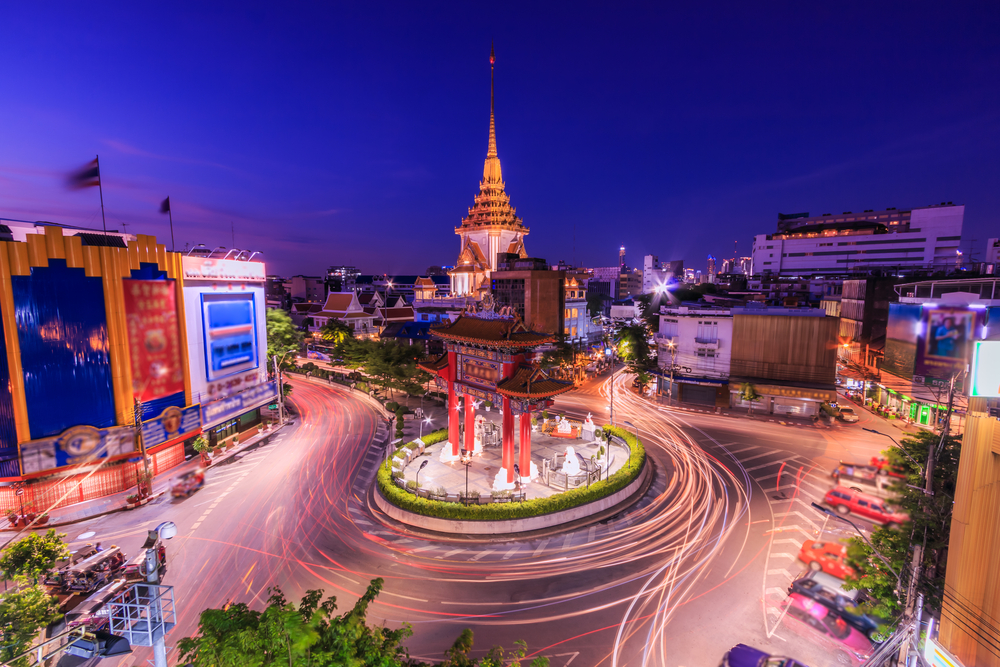
Bangkok’s Chinatown is loud, busy, colorful, and full of amazing food. Its main street, Yaowarat Road, is lined with gold shops, old shophouses, and glowing neon signs in Chinese and Thai. At night, the street turns into one of the best street food areas in the world.
But Chinatown is about more than food. It’s also home to a solid gold Buddha, peaceful Chinese temples, hidden alleys, and street art. This guide covers everything you need to know about visiting Chinatown in Bangkok, including what to see, what to eat, how to get there, and the best time to go.
Chinatown Bangkok: Quick Facts
- Main street: Yaowarat Road
- Best time for food: Evenings, from about 6:00 p.m.
- Best time for temples and markets: Mornings
- Closest MRT station: Wat Mangkon (Blue Line)
- Closest pier: Ratchawong Pier (Chao Phraya Express Boat)
- Time needed: Half a day to a full evening
A Short History of Bangkok’s Chinatown
Chinese traders have lived in Thailand for hundreds of years. In 1782, when King Rama I built the Grand Palace, the Chinese community living on that land moved a little further down the river. That new area grew into the Chinatown you see today.
Over time, Chinatown became Bangkok’s main business area, famous for its gold shops, markets, and trading houses. Many of the families who live and work here today are descendants of those early Chinese settlers. Walking through its streets feels like stepping into a different part of Asia.
Top Things to See in Chinatown
Wat Traimit (The Golden Buddha)
Wat Traimit is home to the world’s largest solid gold Buddha statue. It’s about 3 meters tall and weighs around 5.5 tons. For many years, the statue was covered in plaster, and no one knew it was gold. In 1955, the plaster cracked while workers were moving it, revealing the shining gold underneath.
The statue sits in a tall white-and-gold building near the edge of Chinatown. There’s a small entrance fee, and you can pay a little extra to visit the museum about Chinatown’s history in the same building. Dress respectfully, with your shoulders and knees covered.
Chinatown Gate
The large Chinatown Gate marks the start of Yaowarat Road. It was built in 1999 to celebrate the King’s birthday. It’s a popular photo spot and a good place to begin your walk.
Wat Mangkon Kamalawat
Also known as Wat Leng Noei Yi, this is the largest and most important Chinese Buddhist temple in Bangkok. It’s full of incense smoke, red lanterns, golden statues, and people praying for luck. Entry is free. It’s especially busy during Chinese New Year.
Yaowarat Road
Yaowarat Road is the heart of Chinatown. During the day, it’s busy with gold shops, Chinese medicine stores, and dried seafood sellers. At night, the neon signs light up and the street fills with food carts and tables. It’s one of the most exciting streets in Bangkok.
Sampeng Lane
Sampeng Lane is a long, narrow market street full of cheap goods sold in bulk, like toys, jewelry, fabric, and phone accessories. It’s very crowded, so keep your bag in front of you. It’s a fun place to experience local life, even if you don’t buy anything.
Talat Noi
Talat Noi is one of the oldest neighborhoods in Bangkok, right by the river. Its quiet lanes are full of old shophouses, auto parts shops, colorful street art, and trendy cafes. Don’t miss So Heng Tai Mansion, a beautiful old Chinese family house that’s more than 200 years old.
Song Wat Road
This old riverside street has become one of the coolest areas in Chinatown. You’ll find historic buildings mixed with small galleries, coffee shops, and design stores. It’s great for a slow walk and photos.
What to Eat in Chinatown
Chinatown is one of the best places to eat in Bangkok. Most street food stalls open in the evening and stay busy until late at night.
Must-try dishes:
- Kuay jab: A peppery soup with rolled rice noodles and pork. It’s a Chinatown classic.
- Grilled seafood: Big plates of prawns, crab, and fish cooked on the street.
- Dim sum: Small steamed dumplings and buns, perfect for sharing.
- Pad Thai and stir-fried noodles: Cooked fresh over high flames.
- Chinese doughnuts (pa tong go): Crispy fried dough, often served with sweet dipping sauce.
- Toasted bread with custard: A sweet, fluffy snack loved by locals.
- Fresh fruit: Including mango, durian, and pomelo from street carts.
Food tips:
- Look for stalls with long lines of locals. That usually means the food is good.
- Some stalls have Michelin Guide signs, a sign of great quality at street prices.
- Bring small cash. Most stalls don’t take cards.
- Many street food stalls close on Mondays, so plan your food night for another day.
Shopping in Chinatown
Chinatown is a great place to shop, especially if you like markets and bargains.
- Gold shops: Yaowarat Road has dozens of gold shops with bright red and gold signs. Prices are based on the daily gold price.
- Chinese medicine and herbs: Small shops sell dried herbs, roots, and traditional remedies.
- Dried foods and snacks: Buy dried fruit, nuts, tea, and sweets to take home.
- Wholesale goods: Sampeng Lane is full of cheap accessories, toys, and fabric.
Bargaining is normal at market stalls, but always stay polite and friendly.
How to Get to Chinatown
- By MRT: Take the Blue Line to Wat Mangkon Station, which drops you right in the middle of Chinatown. For Wat Traimit, get off at Hua Lamphong Station.
- By boat: Take the Chao Phraya Express Boat to Ratchawong Pier, then walk about 5 minutes to Yaowarat Road.
- By taxi or Grab: Easy, but traffic in Chinatown can be very slow, especially in the evening.
The MRT or boat is usually the fastest way to arrive.
Best Time to Visit Chinatown
- Morning: Best for temples, markets, and quieter streets. It’s also cooler.
- Evening: Best for street food and the famous neon lights. Arrive around 6:00 p.m. as the stalls start to open.
- Weekdays: Less crowded than weekends, except for Monday, when many stalls are closed.
For the weather, November to February is the most comfortable time to visit Bangkok.
Festivals in Chinatown
- Chinese New Year (January or February): Chinatown’s biggest celebration, with lion dances, red lanterns, fireworks, and huge crowds.
- Vegetarian Festival (usually September or October): Yellow flags appear on food stalls, which serve special plant-based dishes for about nine days.
A Simple Chinatown Walking Plan
- Late afternoon: Start at Wat Traimit to see the Golden Buddha.
- Next: Walk through the Chinatown Gate and along Yaowarat Road.
- Then: Visit Wat Mangkon Kamalawat and explore Sampeng Lane.
- Sunset: Wander through Talat Noi and Song Wat Road for street art and river views.
- Evening: Head back to Yaowarat Road for a street food dinner under the neon lights.
Tips for Visiting Chinatown
- Wear comfortable shoes. You’ll be walking a lot on busy streets.
- Watch your belongings. Crowded markets can attract pickpockets.
- Stay hydrated. It gets very hot, especially in the afternoon.
- Be patient. Sidewalks are narrow and busy, so take your time.
- Dress respectfully at temples. Cover your shoulders and knees.
- Try a little of everything. Share dishes so you can taste more.
What to See Nearby
- Pak Khlong Talat: Bangkok’s famous 24-hour flower market, a short walk west.
- Wat Pho and the Grand Palace: A quick ride away by MRT or boat.
- Chao Phraya River: Take a boat from Ratchawong Pier to explore more of the city.
Is Chinatown Bangkok Worth Visiting?
Yes. Chinatown is one of the most exciting and colorful parts of Bangkok. It has history, culture, beautiful temples, and some of the best street food in Thailand, all in one small area. Whether you come for the Golden Buddha, the busy markets, or a big street food dinner, Chinatown is a must on any Bangkok trip.
Frequently Asked Questions
What is Chinatown Bangkok famous for?
It’s famous for its street food, gold shops, neon-lit Yaowarat Road, and the Golden Buddha at Wat Traimit.
What is the best time to visit Chinatown in Bangkok?
Visit in the morning for temples and markets, and in the evening, from about 6:00 p.m., for street food. Avoid Mondays, when many food stalls are closed.
How do I get to Chinatown Bangkok?
Take the MRT Blue Line to Wat Mangkon Station, or take the Chao Phraya Express Boat to Ratchawong Pier.
Is the Golden Buddha really made of gold?
Yes. The Buddha at Wat Traimit is solid gold, about 3 meters tall, and weighs around 5.5 tons.
What food should I try in Chinatown Bangkok?
Try kuay jab (peppery rolled noodle soup), grilled seafood, dim sum, Chinese doughnuts, and toasted bread with custard.
Is Chinatown Bangkok safe at night?
Yes, it’s generally safe and very busy at night. Just watch your belongings in crowded areas.