
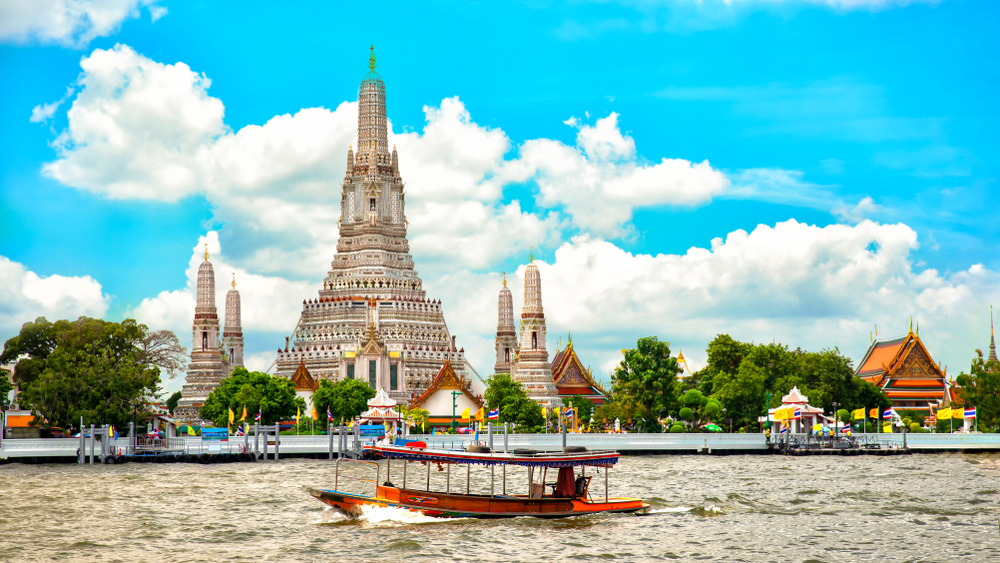
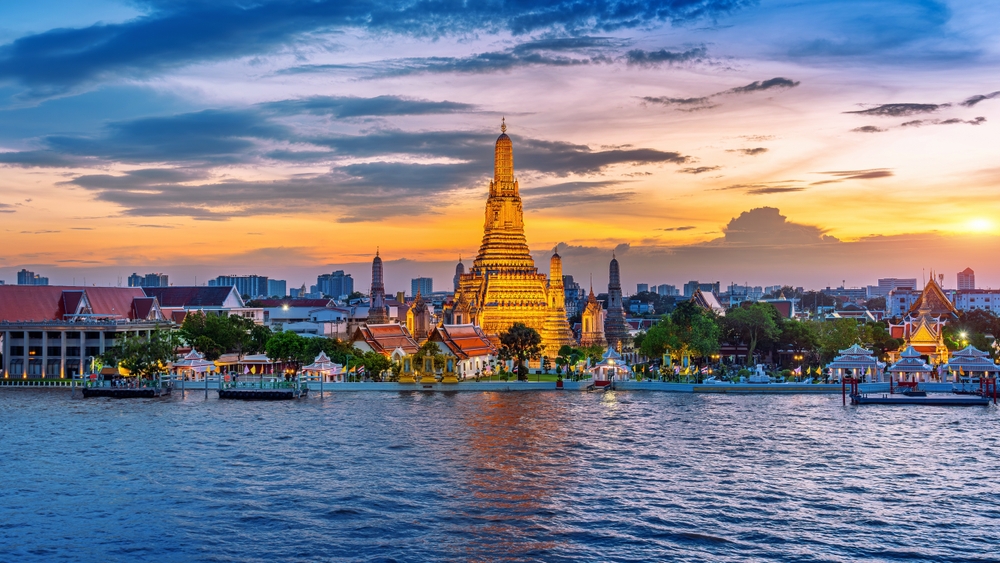
Wat Arun is one of the most beautiful temples in Bangkok. It rises from the west bank of the Chao Phraya River, with a tall central tower covered in colorful pieces of porcelain and seashells. In the late afternoon it glows in the sun, and at night it lights up like a golden jewel across the water.
Also called the Temple of Dawn, Wat Arun is easy to reach and often less crowded than the Grand Palace. This guide covers everything you need to know about visiting Wat Arun in Bangkok, including ticket prices, opening hours, what to wear, how to get there, and the best places to watch the sunset.
Wat Arun Bangkok: Quick Facts
- Opening hours: Daily, 8:00 a.m. to 6:00 p.m.
- Ticket price: About 200 baht for foreign visitors
- Time needed: About 1 hour
- Dress code: Cover your shoulders and knees
- How to get there: Cross-river ferry from Tha Tien Pier
- Best time to visit: Late afternoon
Prices and hours can change. Check the latest information before you go.
Why Is It Called the Temple of Dawn?
Wat Arun is named after Aruna, the Hindu god of the dawn. The temple is very old. It stood here long before Bangkok became Thailand’s capital.
According to local history, after the old capital of Ayutthaya fell in 1767, King Taksin sailed down the river and arrived at this temple just as the sun was rising. He made this area his new capital and gave the temple its new name. For a short time, Wat Arun was even home to the famous Emerald Buddha, before it was moved to the Grand Palace.
The tall central tower that you see today was built in the early 1800s under King Rama II and King Rama III. Wat Arun is so important to Thailand that it appears on the back of the 10-baht coin.
What to See at Wat Arun
The Central Prang
The main tower is called a prang, a style of tower that comes from ancient Khmer temples like Angkor Wat. It stands about 70 meters tall and is one of the most famous landmarks in Bangkok.
Look closely and you’ll see that the tower is covered in thousands of small pieces of colored porcelain and seashells, arranged into flowers and patterns. Much of this porcelain came from Chinese trading ships, which used it as heavy ballast on their long trips.
The tower also shows many figures from Thai and Hindu beliefs. Near the top, look for the god Indra riding his three-headed elephant. Around the base, you’ll find rows of demons, monkeys, and angels that seem to hold the tower up.
Climbing the Tower
You can climb part of the way up the central prang. The stairs are very steep and narrow, so take your time and hold the rail, especially when coming down. The upper levels are closed to protect the tower, but even the lower terraces give lovely views over the river toward the Grand Palace and Wat Pho.
The Four Smaller Prangs
Four smaller towers surround the main one, one at each corner. They’re decorated in the same colorful style and hold statues of Phra Phai, the Hindu god of the wind, riding a white horse.
The Ordination Hall (Ubosot)
This is the most sacred building at Wat Arun. Inside is a beautiful Buddha image, and the walls are covered in colorful murals. The front of the hall is guarded by two huge demon statues, one white and one green. These giants are said to protect the temple from evil spirits.
Chinese Stone Statues
As you walk around, you’ll spot old Chinese stone statues of soldiers and animals. Like the porcelain, many of them arrived on trading ships from China. They’re a fun reminder of the long history of trade between Thailand and China.
Dress Up in Traditional Thai Clothes
Just outside Wat Arun, you’ll find small shops that rent traditional Thai costumes. Many visitors, both Thai and foreign, dress up in colorful silk outfits and take photos in front of the temple. Some shops also offer makeup and hairstyling. It’s a fun, unique experience and makes for amazing pictures.
Wat Arun Dress Code
Wat Arun is an active Buddhist temple, so you need to dress respectfully:
- Cover your shoulders. No tank tops or crop tops.
- Cover your knees. Wear long pants, a long skirt, or a sarong.
- Avoid see-through or very tight clothing.
- Take off your shoes before entering the ordination hall.
If your clothes don’t cover enough, you can usually rent or buy a sarong near the entrance.
Wat Arun Ticket Price
Tickets cost about 200 baht for foreign visitors. Thai citizens can enter for free. Buy your ticket at the entrance near the pier.
Compared to the Grand Palace, Wat Arun is quite affordable. It’s also a lot quieter, so you’ll have more space to take photos and enjoy the details.
How to Get to Wat Arun
Wat Arun is on the Thonburi side of the river, across from Wat Pho and the Grand Palace.
- By cross-river ferry: This is the easiest and most fun way. Go to Tha Tien Pier near Wat Pho and take the short ferry across the river. The ride takes only a few minutes and costs just a few baht.
- By tourist boat: Some Chao Phraya tourist boats stop right at Wat Arun Pier.
- By MRT: Take the Blue Line to Itsaraphap Station, then walk about 15 minutes.
- By taxi or Grab: Possible, but traffic can be slow. The ferry is usually faster.
Best Time to Visit Wat Arun
The best time to visit Wat Arun is in the late afternoon, around 3:00 or 4:00 p.m. The heat is softer, the crowds are smaller, and the sunlight makes the porcelain sparkle.
If you want to see the temple at sunrise, arrive right at opening time. Early mornings are the quietest time of day.
For the weather, November to February is the most comfortable time to visit Bangkok. March to May is very hot, and June to October brings rain.
Where to Watch the Sunset Over Wat Arun
The temple closes at 6:00 p.m., so the best sunset views are actually from the other side of the river. As the sun goes down behind Wat Arun, the tower turns into a dark outline against an orange sky. After dark, it lights up and glows over the water.
Good places to watch include:
- Rooftop bars and restaurants near Tha Tien Pier, which face the temple directly.
- Tha Tien Pier itself, a free and simple option.
- A dinner cruise on the Chao Phraya River, which passes right by the lit-up temple.
Book a rooftop table in advance, as the best spots fill up fast.
Tips for Visiting Wat Arun
- Wear good shoes. You’ll need them for the steep stairs.
- Bring water and sunscreen. There’s little shade around the main tower.
- Carry small cash. You’ll need it for the ferry, snacks, and costume rentals.
- Go slowly on the stairs. Coming down is harder than going up.
- Be respectful. Keep your voice low, and don’t climb on statues.
- Plan your day well. Visit Wat Arun after the Grand Palace and Wat Pho, then watch the sunset from across the river.
Is Wat Arun Worth Visiting?
Yes. Wat Arun is one of the most unique temples in Thailand. Its tall, colorful tower looks completely different from other temples in Bangkok, and the river setting makes it very special. It’s affordable, easy to reach, and a great place for photos. Whether you visit during the day or admire it lit up at night, Wat Arun is a must on any Bangkok trip.
What to See Nearby
- Wat Pho: Home of the giant Reclining Buddha, just across the river by ferry.
- Grand Palace: Bangkok’s most famous landmark, a short walk from Wat Pho.
- Wat Kalayanamit: A quieter temple on the Thonburi side, home to a very large seated Buddha.
- Chao Phraya River boat ride: One of the best ways to see Bangkok’s riverside temples and old buildings.
Frequently Asked Questions
Why is Wat Arun called the Temple of Dawn?
It’s named after Aruna, the Hindu god of the dawn. Local history says King Taksin arrived at the temple at sunrise in 1767.
How much is the Wat Arun entrance fee?
Tickets cost about 200 baht for foreign visitors. Thai citizens enter for free.
What are Wat Arun’s opening hours?
Wat Arun is open every day from 8:00 a.m. to 6:00 p.m.
Can you climb Wat Arun?
Yes, you can climb partway up the central tower. The stairs are very steep, and the upper levels are closed to protect the temple.
How do you get to Wat Arun?
The easiest way is the short cross-river ferry from Tha Tien Pier, near Wat Pho. Some tourist boats also stop at Wat Arun Pier.
Where is the best place to see Wat Arun at sunset?
From across the river near Tha Tien Pier. Rooftop bars and restaurants there face the temple directly.