
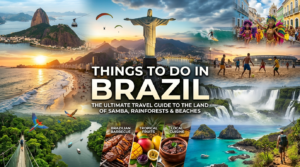
Brazil is one of the most extraordinary countries on Earth — a vast, vibrant, endlessly surprising nation that stretches from the Amazon River in the north to the subtropical vineyards of the south, from one of the world’s most famous cities to some of its most untouched wilderness. No single word, image, or idea can capture Brazil, because Brazil contains multitudes: it is the thundering power of Iguazu Falls and the gentle sway of bossa nova in a beachside bar; it is the electric energy of Rio Carnival and the absolute silence of the Amazon at dawn; it is feijoada cooking slowly on a Saturday morning and jaguars hunting in the Pantanal at dusk.
This complete Brazil travel guide covers the best things to do in Brazil, destination by destination, so you can plan an adventure that matches your dreams — whether you are visiting for the first time or returning to discover something new.
Why Visit Brazil?
Why visit Brazil? Because nowhere else in the world can you find this combination — the world’s greatest rainforest, the world’s most exuberant carnival culture, some of the finest beaches on any continent, cities of pulsing creative energy, and a warmth of human welcome that is genuinely unlike anywhere else. What is Brazil famous for? Christ the Redeemer standing with open arms above Rio de Janeiro, the roar of Iguazu Falls, the green infinity of the Amazon, the samba rhythms of Salvador’s streets, and the extraordinary diversity of a country where 200 million people represent indigenous, African, Portuguese, Italian, Japanese, German, and Lebanese heritage — all blended into a uniquely Brazilian identity.
Brazil travel destinations span every type of experience a traveler could seek. The famous landmarks in Brazil — from the Maracana Stadium to the colonial streets of Ouro Preto — are matched by natural wonders that exist nowhere else on Earth. Brazil beaches and coastline stretch for 7,400 kilometres of Atlantic Ocean, offering everything from the urban glamour of Copacabana to the deserted tropical perfection of Fernando de Noronha.
Best Places to Visit in Brazil
The best places to visit in Brazil are spread across a country larger than the continental United States. Rio de Janeiro is the essential starting point — iconic, beautiful, and endlessly stimulating. Sao Paulo is South America’s greatest metropolis for food, art, and culture. Salvador brings the richest expression of Afro-Brazilian heritage. The Amazon and the Pantanal offer wildlife experiences found nowhere else on Earth. Iguazu Falls is simply one of the greatest natural wonders on the planet. And the colonial gem of Ouro Preto, the beaches of Florianopolis, and the futurist capital of Brasilia each add their own completely different character to what Brazil travel experiences can be.
For first-time visitors asking where to go in Brazil, Rio de Janeiro combined with either the Amazon or Iguazu Falls represents the most impactful and manageable circuit. Brazil is the fifth-largest country in the world and requires clear decisions about which regions to prioritize — trying to cover too much ground leads to exhausting flights and insufficient time in each place.
Things to Do in Rio de Janeiro
City Overview
Rio de Janeiro is the most visited city in Brazil and one of the most naturally beautiful cities on Earth. Spread between granite mountains and the Atlantic Ocean, with the Tijuca rainforest pressing green fingers into the urban fabric, Rio is a city of extraordinary drama — visual, cultural, and emotional. Known as the Marvelous City (Cidade Maravilhosa), Rio is simultaneously glamorous and raw, sophisticated and joyful, with a beach culture that has defined global ideas of what a perfect urban coastal life looks like.
Top Things to Do in Rio de Janeiro
Things to do in Rio de Janeiro begin with the two experiences that have defined the city’s global image. Christ the Redeemer Brazil — the towering 30-metre Art Deco statue standing on the 710-metre Corcovado Mountain with arms spread wide over the city — is one of the New Seven Wonders of the World and one of the most emotionally powerful human-made structures on Earth. Take the cog railway through the Tijuca Forest to the summit for the full experience — the moment the statue appears through the trees is genuinely breathtaking. The Sugarloaf Mountain (Pao de Acucar) cable car takes you in two stages to the 396-metre granite monolith jutting into Guanabara Bay, with panoramic views over the city, the beaches, and the surrounding mountains that are equally spectacular at sunset.
Brazil beaches Rio de Janeiro are legendary worldwide. Copacabana Beach — 4 kilometres of white sand, mosaic sidewalks, and non-stop beach volleyball, music, and coco gelado vendors — is one of the most famous urban beaches in the world. Adjacent Ipanema Beach, more fashionable and slightly calmer, offers equally beautiful water and the famous sunset views from Arpoador Rock where crowds gather every evening to applaud as the sun drops behind the Two Brothers mountains. The Santa Teresa neighborhood — accessible by historic tram — is Rio’s bohemian artistic heart, with cobblestone streets, colonial buildings, art galleries, and restaurants that capture a completely different, more intimate face of the city.
Carnival in Brazil experience reaches its most spectacular expression in Rio. Held annually in February or March, Rio Carnival is the world’s largest festival — a week of parades, samba school competitions at the Sambodromo, street parties (blocos) throughout every neighborhood, and an atmosphere of collective joy that has no equivalent anywhere on Earth. If your travel dates allow, planning your visit around Carnival is one of the greatest travel decisions you can make.
Best Places to Visit in Rio de Janeiro
- Christ the Redeemer statue — Corcovado Mountain
- Sugarloaf Mountain (Pao de Acucar) — cable car experience
- Copacabana Beach — iconic mosaic promenade and urban beach
- Ipanema Beach and Arpoador sunset point
- Santa Teresa neighborhood — bohemian art district
- Lapa neighborhood — colonial aqueduct and samba clubs
- Tijuca National Park — world’s largest urban forest
- Maracana Stadium — legendary football cathedral
- Museum of Tomorrow (Museu do Amanha) — waterfront science museum
- Selarón Steps — famous mosaic stairway by artist Jorge Selarón
Historical Places in Rio de Janeiro
Rio was the capital of Brazil from 1763 to 1960 and of the entire Portuguese Empire from 1808 to 1821, giving it a remarkable colonial and imperial heritage. The Imperial Museum in Petropolis (a day trip north of Rio) was the summer palace of Emperor Dom Pedro II. The National Museum (currently being rebuilt after a devastating 2018 fire) housed one of Latin America’s most important natural history collections. The historic Lapa district, with its 18th-century Roman-style aqueduct converted into a tram viaduct, is the heart of Rio’s samba culture.
Best Time to Visit Rio de Janeiro
April through October is generally the best time — drier weather, lower humidity, and comfortable temperatures for outdoor activities. February and March bring Carnival — extraordinary but extremely crowded and expensive. December through March is Rio’s summer — hot, humid, and rainy, though the beaches are at their most vibrant. Book accommodation months in advance for Carnival period.
Is Rio de Janeiro Safe?
Rio requires more active safety awareness than most major tourist destinations. Stick to well-known tourist areas — the beaches, Ipanema and Leblon neighborhoods, Santa Teresa, and the Zona Sul in general. Avoid displaying expensive electronics or jewelry. Use Uber rather than street taxis. Do not walk to the Christ the Redeemer summit trail without a guide group. The tourist areas are very actively visited by millions of visitors annually — with awareness and common sense, Rio is very manageable and rewarding.
Local Food in Rio de Janeiro
Brazil food and cuisine in Rio centers on the famous feijoada — a rich, slow-cooked black bean and pork stew served with rice, collard greens, farofa (toasted cassava flour), and orange slices, traditionally eaten on Saturdays. Pao de queijo (warm, chewy cheese bread made from cassava flour) is the essential Brazilian snack, available everywhere. Caipirinhas — Brazil’s national cocktail of cachaca spirit, lime, and sugar — are best at a beachside barraca (kiosk) as the sun sets over Ipanema. The kilo restaurant culture (pay by weight of food on your plate) allows affordable and excellent Brazilian meals across the city.
Rio de Janeiro Itinerary (4 Days)
- Day 1: Christ the Redeemer cog railway, Santa Teresa neighborhood, Lapa Selarón Steps and evening samba
- Day 2: Sugarloaf Mountain cable car, Copacabana Beach afternoon, sunset at Arpoador
- Day 3: Tijuca Forest hike, Ipanema Beach, Museum of Tomorrow waterfront
- Day 4: Maracana Stadium tour, Santa Marta favela community tour, farewell caipirinhas at Ipanema
Rio de Janeiro Travel Cost
Rio de Janeiro offers accommodation across a very wide range — from budget hostels in Botafogo and Santa Teresa to ultra-luxury hotels in Leblon and Ipanema with ocean views that carry significant premiums. The beaches are free. Kilo restaurants provide excellent value for Brazilian food. Cable car, cog railway, and major attraction tickets are the primary paid costs. Your overall Rio budget will depend primarily on neighborhood and accommodation choice — Ipanema and Leblon are significantly more expensive than Flamengo or Botafogo for equivalent quality.
Things to Do in Sao Paulo
City Overview
Sao Paulo is South America’s largest city — a staggering, relentless metropolis of 22 million people that functions as the continent’s financial, cultural, and gastronomic capital. It is not conventionally beautiful in the way Rio is, but it is endlessly fascinating — a city of extraordinary cultural energy where the world’s largest Japanese community outside Japan lives alongside one of the largest Italian, Lebanese, and Korean communities in the Americas. Paulistanos are passionate about food, art, and football with a cosmopolitan sophistication that has made Sao Paulo one of the great world cities.
Top Things to Do in Sao Paulo
Things to do in Sao Paulo center on culture, food, and art. The Pinacoteca do Estado — Sao Paulo’s finest art museum, housed in a magnificent 1905 brick building — contains the most important collection of Brazilian art in the country, from colonial-era painting through to contemporary installation. The Museu de Arte de Sao Paulo (MASP), housed in a remarkable modernist building on Paulista Avenue suspended on red concrete pillars above a public plaza, houses one of the finest art collections in the Southern Hemisphere, including works by Van Gogh, Rembrandt, and Velazquez alongside Brazilian masters.
Ibirapuera Park — Sao Paulo’s Paulista answer to Central Park, designed in part by Oscar Niemeyer — is a 1.6-square-kilometre green oasis containing the Museum of Contemporary Art, the Museum of the Universe, and the Afro-Brazil Museum alongside jogging paths, lakes, and open-air concert stages. The Mercado Municipal (Mercadao), a magnificent 1933 neo-Gothic market hall, is Sao Paulo’s great food temple — the sandwich of mortadella on fresh bread here is one of the city’s most beloved food experiences. The Vila Madalena neighborhood, with its street art, indie boutiques, bohemian bars, and the famous Beco do Batman alley of murals, captures Sao Paulo’s creative spirit most vividly.
Historical Places in Sao Paulo
The historic Luz neighborhood contains the Pinacoteca, the Sala Sao Paulo concert hall (built inside a renovated 1900 railway station — one of the world’s most beautiful concert venues), and the Museu da Lingua Portuguesa. The Se Cathedral, completed in 1954 in neo-Gothic style, dominates the city’s historic center. The Liberdade neighborhood — the heart of Sao Paulo’s Japanese community since the early 20th century — has temples, Japanese supermarkets, and a Sunday street market that is one of the most atmospheric in the city.
Best Time to Visit Sao Paulo
Sao Paulo is a year-round city — its inland plateau location at 760 metres altitude moderates temperatures relative to coastal Brazil. March through May and August through October offer the most comfortable conditions. The Sao Paulo Art Biennial (held in even-numbered years at Ibirapuera Park) is one of the most important contemporary art events in the world. The Sao Paulo Fashion Week, Gay Pride Parade (one of the world’s largest), and Formula 1 Brazilian Grand Prix are all major annual events.
Is Sao Paulo Safe?
Sao Paulo requires the same urban awareness as Rio — stick to the well-developed tourist neighborhoods of Paulista, Vila Madalena, Pinheiros, and Jardins. Use Uber for transport. Avoid the historic center at night. The cultural and restaurant areas are well-patrolled and very welcoming for visitors.
Local Food in Sao Paulo
Sao Paulo is Brazil’s undisputed food capital — a city where you can eat brilliantly from almost every culinary tradition on Earth. With 17 Michelin-starred restaurants (2025), extraordinary Japanese cuisine in Liberdade, outstanding Lebanese food in Bixiga, and the full range of regional Brazilian cuisines represented, eating in Sao Paulo is one of the great international food experiences. The traditional Brazilian padaria (bakery) for breakfast — strong coffee, pao de queijo, and a fresh fruit juice — is a daily ritual worth joining.
Sao Paulo Itinerary (3 Days)
- Day 1: MASP on Paulista Avenue, Ibirapuera Park museums, Vila Madalena evening and Beco do Batman
- Day 2: Mercado Municipal (Mercadao), historic Luz neighborhood, Pinacoteca art museum, Sala concert hall tour
- Day 3: Liberdade Japanese neighborhood, Museu do Futebol at Pacaembu Stadium, rooftop dinner in Jardins
Sao Paulo Travel Cost
Sao Paulo is the most expensive city in Brazil for accommodation, particularly in the upscale Jardins neighborhood and around Paulista Avenue. Budget hostels are available in Pinheiros and Vila Madalena at much more accessible prices. Dining ranges from the extraordinary value of padaria breakfast and kilo restaurant lunches to very expensive tasting menus at celebrated restaurants. Many of Sao Paulo’s greatest cultural institutions — Ibirapuera Park, the Beco do Batman street art — are entirely free.
Things to Do in Ouro Preto
City Overview
Ouro Preto — meaning Black Gold in Portuguese — is one of the most beautiful and historically significant cities in Brazil, a remarkably preserved Baroque colonial city in the mountains of Minas Gerais state that served as the epicenter of Brazil’s 18th-century gold rush. At its 18th-century peak, Ouro Preto had a population of 110,000 — larger than New York or London at the time — funded by the extraordinary gold and diamond wealth of its surrounding mines. It was declared a UNESCO World Heritage Site in 1980 and remains one of the finest examples of Baroque architecture in the world.
Top Things to Do in Ouro Preto
Things to do in Ouro Preto are centered entirely on walking its extraordinary steep cobblestone streets, visiting its remarkable churches, and understanding the extraordinary story of Brazil’s colonial gold era. The city contains 23 Baroque churches — each more lavishly decorated than the last with gilded altars, painted ceilings, and the carved soapstone work of Aleijadinho (Antonio Francisco Lisboa), Brazil’s greatest sculptor, who created his masterpieces despite severe physical disability. The Church of Sao Francisco de Assis is widely considered the finest example of Brazilian Baroque architecture in existence.
The Museu do Oratório houses an important collection of portable altarpieces that tell the story of Brazilian Catholic devotion across 400 years. The Mina do Chico Rei — a colonial gold mine open to tours — takes visitors underground to understand the brutal conditions under which enslaved African workers extracted the wealth that funded Baroque splendor above ground.
Historical Places in Ouro Preto
Every street and building in Ouro Preto is essentially a historical place. The Casa dos Contos — a former gold smelting house converted to prison during the Inconfidencia Mineira (1789 independence conspiracy) — is one of the most important sites of pre-independence Brazilian history. Tiradentes, the martyr of the Inconfidencia Mineira (whose real name was Joaquim Jose da Silva Xavier), was a local dentist who became the symbol of Brazilian independence — his story saturates the city’s atmosphere and museum collections.
Best Time to Visit Ouro Preto
Ouro Preto is pleasant year-round at its mountain altitude. Carnival and Holy Week (Semana Santa) bring spectacular processions and festivals. July brings the Winter Festival of the Arts — one of the most important cultural events in Minas Gerais. June through August is cool and dry — comfortable for the steep walking the city demands.
Is Ouro Preto Safe?
Ouro Preto is one of the safest cities in Brazil for tourists. Its small size, strong university presence, and tourism-based economy create a relaxed and welcoming environment.
Local Food in Ouro Preto
Minas Gerais has the most beloved regional cuisine in Brazil. Comida mineira — a hearty, satisfying tradition of feijao tropeiro (beans with pork, eggs, and cassava flour), tutu de feijao (bean puree), couve mineira (shredded collard greens with garlic), linguica sausage, and queijo minas (fresh white cheese) — is served with pride in restaurants throughout Ouro Preto. The cachaça from Minas Gerais is considered the finest in Brazil.
Ouro Preto Itinerary (2 Days)
- Day 1: Church of Sao Francisco de Assis, Museu do Oratório, Praça Tiradentes, colonial gold mine tour
- Day 2: Multiple Baroque church visits, Aleijadinho sculpture trail, day trip to Mariana or Congonhas
Ouro Preto Travel Cost
Ouro Preto is one of Brazil’s most affordable tourist destinations. Pousada (guesthouse) accommodation is excellent value. Local comida mineira restaurants serve hearty, delicious food at very reasonable prices. Church entrance fees are modest. Ouro Preto is easily reached by bus from Belo Horizonte (2 hours) or as a day trip from there.
Things to Do in Salvador
City Overview
Salvador da Bahia is the soul of Afro-Brazilian culture — a city of extraordinary energy, beauty, and historical importance on the northeastern coast of Brazil. Founded by the Portuguese in 1549 as Brazil’s first capital, Salvador was the entry point for over 1.5 million enslaved Africans brought to work the sugar plantations of Bahia — making it the city with the largest African-descended population outside Africa. That heritage saturates everything — the food, the music, the religion, the dance, and the architecture of one of the most vibrant and culturally rich cities in the Americas.
Top Things to Do in Salvador Brazil
Things to do in Salvador Brazil begin in the Pelourinho — the UNESCO-listed historic center on the upper city, a labyrinth of 17th and 18th-century colonial buildings painted in vivid pastels, with cobblestone plazas, Baroque churches, and the constant rhythm of Afro-Brazilian music drifting from every corner. The Church of Sao Francisco — covered inside with 800 kilograms of gold gilding in an explosion of Baroque excess that must be seen to be believed — is the most visited church in Brazil.
Capoeira — the uniquely Brazilian martial art-dance-music form created by enslaved Africans as a form of covert combat training disguised as dance — is practiced openly in the Pelourinho and can be learned at local academies. Candomble terreiro visits — ceremonies of the Afro-Brazilian spiritual tradition that blends Yoruba religion with Brazilian elements — offer a profound experience of living African heritage. Salvador’s Carnival, held in February, is often considered an even more authentic and participatory festival than Rio’s — the trio eletrico system, where musicians perform from enormous mobile sound trucks followed by crowds of thousands in a moving street party, was invented here.
Historical Places in Salvador
The entire Pelourinho is one enormous historical site. The Museu Afro-Brasileiro explores the African cultural heritage that defines Salvador. The Forte de Santo Antonio da Barra — a 17th-century Portuguese fortress on the headland — was the first fortification built in the Americas and now houses a lighthouse museum with extraordinary views over All Saints Bay.
Best Time to Visit Salvador
December through March is high season — hot, vibrant beach weather and Carnival. June through August is drier with cooler temperatures more comfortable for walking the Pelourinho. Festa Junina (June folk festival) is one of Salvador’s most charming cultural events, with traditional forró music, quadrilha dancing, and food.
Is Salvador Safe?
Salvador requires standard Brazilian urban precautions. The Pelourinho is generally safe during daytime tourist hours and early evening. Avoid isolated areas at night, do not display valuables, and use Uber for transport between neighborhoods.
Local Food in Salvador
Bahian cuisine is one of Brazil’s most distinctive and celebrated regional food traditions. Moqueca baiana — a rich, fragrant seafood stew of fish or shrimp cooked in coconut milk, dende palm oil, onions, tomatoes, and coriander — is Salvador’s signature dish. Acaraje (deep-fried black-eyed pea fritters stuffed with shrimp, vatapa, and caruru, sold by Baianas in traditional white dress at street stalls) is a UNESCO-recognized cultural heritage food and an absolute must-try. Dendê palm oil, coconut milk, and African-origin spices characterize a cooking tradition unlike anything else in Brazil.
Salvador Itinerary (3 Days)
- Day 1: Pelourinho walking tour, Church of Sao Francisco gold interior, acaraje street food
- Day 2: Capoeira class or performance, Museu Afro-Brasileiro, Porto da Barra beach sunset
- Day 3: Forte de Santo Antonio, Bonfim Church (famous for wish ribbons), day trip to Ilha de Itaparica
Salvador Travel Cost
Salvador is one of Brazil’s more affordable major cities. Pousada accommodation in and around the Pelourinho is excellent value. Street food — particularly acaraje and fresh seafood at local restaurants — is very inexpensive. The main costs are museum entrances and any organized tours. Overall, Salvador delivers an exceptionally rich cultural experience at a relatively modest daily budget.
Things to Do in Fortaleza
City Overview
Fortaleza is the capital of Ceara state in northeastern Brazil — a large, vibrant coastal city with some of the finest beaches in the country, a strong tradition of forró music and lace-making craftsmanship, and a warm, welcoming character typical of the Brazilian northeast. It is the gateway city for the spectacular beaches and dune landscapes of Ceara, including the extraordinary Jericoacoara Beach — consistently ranked among the world’s most beautiful beaches — and the red-cliff coastline of Morro Branco.
Top Things to Do in Fortaleza
Things to do in Fortaleza begin at the beaches — Iracema and Meireles beaches in the city have an excellent beachfront infrastructure of restaurants, bars, and the famous Beira-Mar craft market that comes alive every evening with local artisans selling lacework, embroidery, and Ceara handicrafts. The Mercado Central (Central Market) is one of the finest craft markets in Brazil — four floors of regional products including Ceara lace, leather goods, cachaça, and hammocks.
Jericoacoara — accessible by 4WD buggy across the dunes from Fortaleza, or by combination of bus and boat — is one of the world’s great beach destinations. A small, car-free town where sandy streets meet the ocean and windswept dunes tower above, Jericoacoara is famous for windsurfing, kitesurfing, and the unforgettable experience of watching the sunset from the top of the main dune with a caipirinha in hand as the ocean glows gold below.
Historical Places in Fortaleza
The Fortaleza de Nossa Senhora da Assuncao — a Dutch fort built in 1649 and now a military museum — is the historical heart of the city. The Theatro Jose de Alencar, a magnificent Belle Epoque theatre completed in 1910 with gorgeous cast-iron structure imported from Scotland, is one of the most beautiful buildings in northeastern Brazil.
Best Time to Visit Fortaleza
July through January is the best time for beaches — sunny, dry, and with consistent trade winds perfect for water sports. Fortaleza’s rainy season runs February through June, though showers are typically brief. The city enjoys warm temperatures year-round.
Is Fortaleza Safe?
Fortaleza’s tourist areas — Meireles and Iracema beachfronts and the Beira-Mar promenade — are generally safe for visitors during daylight and early evening. Standard precautions apply after dark and outside tourist areas.
Local Food in Fortaleza
Northeastern Brazilian cuisine is distinctive and delicious. Carne de sol (sun-dried, lightly salted beef served with beans, rice, and cassava) is the defining dish. Baiao de dois (black-eyed peas cooked with rice, cream cheese, and dried meat) is a comforting northeastern classic. Fresh lobster from the Ceara coastline is extraordinarily good value at local restaurants and one of the great affordable seafood experiences in Brazil.
Fortaleza Itinerary (3 Days)
- Day 1: Mercado Central, Beira-Mar evening craft market, Iracema Beach
- Day 2: Theatro Jose de Alencar, Dragao do Mar Cultural Center, Meireles Beach
- Day 3: Day trip to Morro Branco red cliffs and Canoa Quebrada beach
Fortaleza Travel Cost
Fortaleza is one of Brazil’s most affordable major cities for international visitors. Accommodation, food, and beach activities are all very reasonably priced. The day trips to Morro Branco and Canoa Quebrada require transport costs. Jericoacoara, while more expensive than Fortaleza itself, remains excellent value compared to international beach resort destinations.
Things to Do in Manaus and the Amazon
City and Region Overview
Manaus is a city of nearly 2.2 million people in the heart of the Amazon rainforest — the largest urban center in the Brazilian Amazon and the primary gateway for Amazon rainforest Brazil tour experiences. It sits at the confluence of the Rio Negro and Amazon River, surrounded by hundreds of kilometres of unbroken jungle on every side. The Amazon rainforest covers over 5.5 million square kilometres and contains 10% of all species on Earth — it is the single greatest reservoir of biodiversity in human knowledge, and a visit to experience it represents one of the most significant travel experiences available anywhere on the planet.
Top Things to Do in Manaus and the Amazon
Things to do in Manaus begin with the Amazon itself — accessed from the city through river lodge stays and guided jungle excursions that take you into the forest to spot pink river dolphins (boto-cor-de-rosa), caimans, giant otters, anacondas, and hundreds of bird species. Night canoe rides through flooded igapo forest, dawn birding walks, piranha fishing, and visits to riverside indigenous communities are all profound experiences that lodge operators arrange. The Meeting of the Waters — where the dark-stained Rio Negro meets the brown-silt Amazon River and flows alongside it for kilometres without mixing, due to the difference in water temperature and density — is one of the most extraordinary natural phenomena in South America and visible on a half-day river tour from Manaus.
The Teatro Amazonas Opera House in Manaus — a magnificent pink and gold Baroque theatre completed in 1896 at the height of the Amazon rubber boom, with tiles imported from Alsace, iron structures from England, and marble from Italy — is one of the most astonishing buildings in South America, rising incongruously from the jungle city.
Historical Places in Manaus
Teatro Amazonas was built during the rubber boom (1879-1912), when Manaus was one of the wealthiest cities in the world due to its monopoly on rubber production. The Palacete Provincial (Provincial Palace) and the Mercado Municipal (modeled on Les Halles in Paris, with iron structures imported from Glasgow) are both products of this extraordinary period of jungle-generated wealth. The INPA (National Institute for Amazon Research) botanical garden offers insights into Amazon ecology and conservation.
Best Time to Visit the Amazon
May through September (dry season) is the most comfortable time for jungle walks, as trails are drier and wildlife concentrates around permanent water sources. June through August offers particularly good jaguar-spotting conditions in accessible areas. October through April is the rainy season — river levels rise dramatically, flooding igapo forests and creating the extraordinary flooded forest ecosystem, while water-based activities remain excellent. The Amazon is a year-round destination with different experiences each season.
Is the Amazon Safe?
Amazon jungle experiences are very safe when conducted with reputable, licensed lodge operators and guides. Never enter the forest independently without an expert guide. Manaus city requires standard urban precautions. Malaria prophylaxis is recommended for jungle stays — consult a travel medicine doctor before departure.
Local Food in Manaus
Amazon cuisine is unlike anything else in Brazil. Freshwater fish from the Amazon River — particularly pirarucu (the world’s largest freshwater scaled fish), tambaqui, and tucunare — are the foundation of the regional diet. Tacacá (a shrimp soup served in a gourd bowl with jambu leaves that create a unique tingling sensation in the mouth) is the most distinctive local dish. Açai — the Amazonian superfruit consumed by indigenous peoples for millennia, served as a thick cold puree — is available fresh and in a completely different form from the internationally marketed version.
Amazon Itinerary (3-4 Days)
- Day 1: Arrive Manaus — Teatro Amazonas tour, Mercado Municipal, riverside afternoon
- Day 2: River transfer to jungle lodge — Meeting of the Waters, afternoon wildlife walk
- Day 3: Dawn birding, pink dolphin spotting, night caiman search by canoe
- Day 4: Return to Manaus — indigenous community visit, depart
Amazon Travel Cost
The Amazon experience is one of Brazil’s more significant investments — jungle lodge packages vary enormously in price from basic budget lodges to ultra-luxury eco-resorts with private guides. The all-inclusive nature of most lodge packages (accommodation, meals, guided excursions) makes budgeting more predictable. Domestic flights to Manaus add to overall cost. Your Amazon budget will depend primarily on lodge quality and package length — even basic lodge experiences deliver genuinely extraordinary wildlife encounters.
Things to Do in the Pantanal
Region Overview
The Pantanal is the world’s largest tropical wetland — an extraordinary 150,000-square-kilometre ecosystem spanning parts of Brazil, Bolivia, and Paraguay, recognized as a UNESCO World Heritage Site and Biosphere Reserve. While the Amazon is denser in species, the Pantanal is actually the better wildlife-watching destination — its open grasslands, gallery forests, and seasonal flood plains make animals far easier to spot than in the dense Amazon canopy. The Pantanal is the best place in the world to see jaguars in the wild, and its populations of caiman (estimated at 10 million), giant otters, giant anteaters, tapirs, marsh deer, hyacinth macaws, and hundreds of bird species make it one of Earth’s great wildlife experiences.
Top Things to Do in the Pantanal
Things to do in the Pantanal center entirely on wildlife and nature. Jaguar safaris along the Rio Cuiaba are the most sought-after experience — boats drift slowly along the riverbanks while expert guides spot jaguars resting in the riverside vegetation. Success rates for jaguar sightings in peak season (July through October) are extraordinarily high by the standards of any wildlife destination. Giant river otter family groups, yacare caimans by the thousand, capybaras grazing in enormous herds, and the extraordinary hyacinth macaw — the world’s largest flying parrot — are all commonly encountered.
Best Time to Visit the Pantanal
July through October (dry season) is the prime time for wildlife watching — animals concentrate around permanent water sources and vegetation thins enough to enable clear sightings. Jaguar spotting peaks August through October. The wet season (November through March) floods the savannah, creating the spectacular wetland landscape, but wildlife is dispersed and more difficult to spot.
Is the Pantanal Safe?
The Pantanal is very safe for visitors on organized lodge-based safaris. Always follow guide instructions around wildlife — particularly caimans, which are numerous. The nearest major city gateway is Cuiaba in Mato Grosso or Campo Grande in Mato Grosso do Sul, both accessible by domestic flight.
Local Food and Pantanal Itinerary (3 Days)
Pantanal lodges serve excellent traditional food — freshwater fish, grilled meats, rice, beans, and local fruit are the staples. The mochica (dried salt fish), pacu (a delicious local river fish), and surubim are regional specialties.
- Day 1: Arrive by boat along the Transpantaneira, afternoon wildlife drive
- Day 2: Dawn jaguar boat safari along Rio Cuiaba, giant otter spotting, afternoon caiman walk
- Day 3: Hyacinth macaw nesting sites, return journey with final wildlife stops
Pantanal Travel Cost
Pantanal lodge experiences range from very basic budget camps to excellent mid-range lodges to genuinely luxurious wildlife lodges with private guides and gourmet meals. The all-inclusive package nature of Pantanal trips makes costs predictable. Domestic flights to Cuiaba or Campo Grande are the main additional cost. Overall, even a mid-range Pantanal experience represents remarkable value compared to equivalent African safari pricing.
Things to Do in Iguazu Falls and Foz do Iguacu
Region Overview
Iguazu Falls Brazil is simply one of the greatest natural wonders on Earth — and that is not a statement made lightly. The Iguazu Falls system — 275 individual waterfalls stretching nearly 3 kilometres across the Iguazu River where Brazil, Argentina, and Paraguay meet — creates a wall of water, mist, and sound of incomprehensible power and beauty. The Brazilian side offers the most panoramic views of the full horseshoe of falls. The Argentine side, accessible by a short international bridge crossing from Foz do Iguacu, offers the most intimate experience — walkways that take you directly above and beside the cataracts, and the Devil’s Throat (Garganta del Diablo) viewpoint above the most powerful single cataract is an experience that rewires your sense of geological scale.
Top Things to Do in Iguazu Falls
Things to do in Iguazu Falls and Foz do Iguacu require at minimum two days to do justice to both sides. The Brazilian Cataratas trail takes you along the cliff edge above the falls for the panoramic perspective — the view of the Devil’s Throat and the rainbow-filled mist clouds from the Brazilian viewing platform is the most photographed natural scene in South America. Helicopter flights over the falls are available from the Brazilian side and offer an extraordinary aerial perspective.
The Bird Park (Parque das Aves) adjacent to the Brazilian side of the falls is one of the finest bird parks in the world — walk-through aviaries with toucans, parrots, macaws, and raptors at arm’s reach. The Itaipu Dam — the world’s largest hydroelectric dam by energy production, visible from Foz do Iguacu — offers free public tours of an engineering feat on a scale that rivals the falls themselves.
Historical Places in the Iguazu Region
The Jesuit Missions of Paraguay — accessible on day trips from Foz do Iguacu — are UNESCO World Heritage Sites where 17th and 18th-century Jesuit missionaries created remarkably sophisticated cooperative communities of indigenous Guarani people. The ruins of San Ignacio Mini across the Argentine border are particularly impressive.
Best Time to Visit Iguazu Falls
The falls are spectacular year-round. August through October and March through May offer the most comfortable temperatures. The rainy season (November through March) swells the rivers and dramatically increases the power of the falls — extraordinary for impact but platforms can close due to high water. July (school holiday season in Brazil and Argentina) is the busiest period.
Is Iguazu Falls Safe?
The Iguazu Falls national parks on both sides of the border are very safe and extremely well-managed. Foz do Iguacu city requires standard precautions. Border crossings between Brazil and Argentina are straightforward and routinely done by tourists.
Local Food in Foz do Iguacu
Foz do Iguacu is a tri-border city with strong Lebanese, Chinese, and Argentine culinary influences alongside Brazilian staples. Excellent Argentine-style parrilla (wood-fire grilled meats) is readily available. Local restaurants serve solid Brazilian standards at affordable prices.
Iguazu Falls Itinerary (2 Days)
- Day 1: Brazilian side — Cataratas trail, panoramic falls views, Devil’s Throat platform, Bird Park
- Day 2: Argentine side (day trip) — Upper and Lower Circuit walkways, Devil’s Throat up close, return to Brazil
Iguazu Falls Travel Cost
Both the Brazilian and Argentine national park entry fees are the primary costs. Accommodation in Foz do Iguacu city ranges from budget hostels to mid-range hotels at reasonable prices, with luxury lodges within the park boundary commanding premium rates. The Argentine day trip requires a shared shuttle or taxi plus Argentine park entry. Overall, Iguazu Falls is achievable at a wide range of budget levels.
Things to Do in Florianopolis
City Overview
Florianopolis — Floripa to locals — is a Brazilian island city off the southern coast of Santa Catarina state that has become one of the most livable cities in Brazil and one of its most popular beach destinations. The island has over 40 beaches of extraordinary variety — from the surf breaks of Praia Mole and Joaquina to the calm lagoon beaches of Lagoa da Conceicao, the secluded coves of the north coast, and the windswept Atlantic expanse of Praia da Joaquina. Florianopolis is also one of Brazil’s safest cities and has an outdoor lifestyle culture that attracts digital nomads, surfers, and families in equal measure.
Top Things to Do in Florianopolis
Things to do in Florianopolis are primarily outdoor and beach-focused. Praia da Joaquina hosts major national and international surf competitions. Lagoa da Conceicao — a large brackish lagoon connected to the sea and surrounded by dunes and forest — is the lifestyle heart of the island, with excellent restaurants, bars, kite-surfing, and the famous sand dunes of Joaquina accessible from its shores. The Rib ecotour — a high-speed boat tour around the island — is an exhilarating way to see dolphins and experience the diversity of Floripa’s coastline. The historic Ribeirão da Ilha fishing village on the south of the island has one of Brazil’s finest oyster farming traditions — fresh oysters eaten overlooking the bay are one of Florianopolis’s greatest simple pleasures.
Best Time to Visit Florianopolis
December through March is peak summer beach season — warm, vibrant, and busy. January and February attract large crowds of Argentine and Uruguayan tourists, filling the island to capacity. April through June and September through November offer excellent weather with fewer crowds and lower prices. Winter (July and August) is cool but mild enough for outdoor activities.
Is Florianopolis Safe?
Florianopolis is consistently ranked as one of the safest cities in Brazil for tourists and residents. Its island geography, strong local economy, and community character make it very comfortable for all types of travelers including solo women and families.
Local Food in Florianopolis
Florianopolis has outstanding seafood — the oyster culture of Ribeirão da Ilha produces some of the finest Pacific oysters in South America. Fresh fish, shrimp, and crab from the surrounding waters are served in restaurants throughout the island. The Lagoa da Conceicao area has excellent restaurants with everything from traditional Brazilian fish stews to contemporary international cuisine.
Florianopolis Itinerary (3 Days)
- Day 1: Lagoa da Conceicao, Joaquina dunes and surf beach, lakeside evening dining
- Day 2: North coast beaches (Praia da Lagoinha, Praia do Santinho), dolphins at Barra da Lagoa
- Day 3: Ribeirão da Ilha oyster farm visit and lunch, historic Ribeiro village, sunset at Praia do Campeche
Florianopolis Travel Cost
Florianopolis ranges from budget-friendly in the shoulder seasons to expensive in peak January and February when accommodation prices on the island spike significantly. The beaches and natural attractions are free. Restaurants and activities are moderate in price throughout most of the year. Overall, Florianopolis is excellent value for the quality of beach and outdoor experience it delivers outside of peak summer season.
Things to Do in Brasilia
City Overview
Brasilia is one of the most unique cities in the world — Brazil’s planned federal capital, designed from scratch on an empty central plateau and built in just 41 months (1956-1960) as a modernist vision of what the perfect 20th-century city could be. Designed by urban planner Lucio Costa and architect Oscar Niemeyer — one of the greatest architects of the 20th century — Brasilia is a UNESCO World Heritage Site and a living museum of International Style modernist architecture on a scale found nowhere else on Earth. Shaped like a bird or airplane in plan view (the Pilot Plan), the city’s Monumental Axis contains an unbroken sequence of extraordinary public buildings.
Top Things to Do in Brasilia
Things to do in Brasilia are entirely centered on the extraordinary architecture of the Monumental Axis. The National Congress — with its two contrasting dome shapes (one convex for the Senate, one concave for the Chamber of Deputies) flanking the twin 28-storey administrative towers — is Niemeyer’s masterpiece and the most photographed building in Brazil after Christ the Redeemer. The Presidential Palace (Palacio do Planalto), the Supreme Court, the Itamaraty Palace (Foreign Ministry), and the National Cathedral — a circular structure of 16 curved concrete ribs rising like praying hands above ground with the main worship space entirely underground, filled with blue stained glass — are all Niemeyer designs of extraordinary originality.
The TV Tower observation deck offers the best panoramic view of the city’s distinctive planned layout. Paranoá Lake, surrounding three sides of the urban center, has excellent restaurants, water sports, and an evening promenade culture that reveals a relaxed, social side of Brasilia far removed from its governmental reputation.
Historical Places in Brasilia
Brasilia’s entire Pilot Plan is a historical place — designed and built in the late 1950s under President Juscelino Kubitschek’s bold vision of relocating the capital from Rio de Janeiro to the country’s geographic center, bringing development to the interior. The JK Memorial Museum celebrates the president’s life and the extraordinary achievement of building a city in the wilderness. Niemeyer’s own home — the Catetinho, built in 96 hours as Kubitschek’s first residence during construction — is now a small museum.
Best Time to Visit Brasilia
May through September (dry season) is ideal — clear blue skies make the white concrete and glass architecture most spectacular. The rainy season (October through April) brings lush green landscapes around the city but occasional very heavy afternoon downpours.
Is Brasilia Safe?
Brasilia’s government and diplomatic quarter is among the most secure public spaces in Brazil. The tourist areas along the Monumental Axis and Paranoá Lake are very safe. Standard urban awareness applies in other parts of the satellite cities.
Local Food in Brasilia
Brasilia’s food scene reflects its character as the national capital — a gathering of Brazilian regional cuisines from every state in one city. Restaurants representing Bahian moqueca, Minas Gerais comida mineira, Amazonian river fish, and contemporary Brazilian cuisine all compete on the shores of Paranoá Lake and in the commercial sectors of the Pilot Plan.
Brasilia Itinerary (2 Days)
- Day 1: National Congress, Presidential Palace, Supreme Court, National Cathedral, Itamaraty Palace
- Day 2: TV Tower panoramic view, JK Memorial Museum, Paranoá Lake evening, Niemeyer route walking tour
Brasilia Travel Cost
Brasilia is a business-oriented capital city with accommodation priced accordingly — mid-range and business hotels dominate. Budget accommodation is limited but available. Most of the architectural attractions are free to view from outside and many government buildings offer free guided tours. Dining around Paranoá Lake tends toward the mid-range and above.
Recommended First-Timer Brazil Itinerary
Brazil Itinerary 10 Days — Classic First Visit
- Day 1-3: Rio de Janeiro — Christ the Redeemer, Sugarloaf, Copacabana, Ipanema, Lapa samba
- Day 4: Fly to Iguazu — check in at Foz do Iguacu
- Day 5: Brazilian side of Iguazu Falls, Bird Park
- Day 6: Argentine side of Iguazu Falls (day trip), return to Foz
- Day 7: Fly to Manaus
- Day 8-9: Amazon jungle lodge — Meeting of Waters, wildlife, night safari
- Day 10: Return to Manaus, depart or fly to Sao Paulo for onward travel
Brazil Itinerary 10 Days — Culture and Northeast
- Day 1-3: Rio de Janeiro — classic circuit
- Day 4: Fly to Sao Paulo — MASP, Ibirapuera, Vila Madalena
- Day 5: Sao Paulo — Mercadao, Pinacoteca, Sala Sao Paulo
- Day 6: Fly to Salvador
- Day 7-8: Salvador — Pelourinho, acaraje, capoeira, beach
- Day 9: Fly to Fortaleza
- Day 10: Fortaleza beaches, Mercado Central, evening forró
First-Timer Tips: Brazil is enormous — domestic flights are essential between regions and should be booked well in advance. LATAM and GOL airlines serve all major routes. Learn basic Portuguese phrases — unlike Spanish-speaking South America, English is limited outside major hotels and tourist areas. The Brazilian Real fluctuates — check current exchange rates before travel. Affordable travel in Brazil is very achievable in northeastern cities (Salvador, Fortaleza, Recife) and Ouro Preto, while Rio and Sao Paulo require more careful budgeting.
Brazil Travel Tips and Practical Information
Visa Requirements
Do I need a visa for Brazil? As of April 2025, Brazil reintroduced visa requirements for US, Canadian, and Australian citizens — an e-visa ($80.90 USD) valid for 90 days and 10 years can be applied for online. EU citizens, UK citizens, and citizens of many South American and Asian countries continue to enter visa-free. Always verify current requirements on Brazil’s official visa portal before booking travel.
Best Time to Visit Brazil
The best time to visit Brazil depends on your destination. For Rio de Janeiro and Carnival, February to March is peak, while April through October is more comfortable for sightseeing. For the Amazon, May through September (dry season) offers the best wildlife conditions. For the Pantanal, July through October is prime jaguar season. The northeast (Salvador, Fortaleza) is best July through January. Iguazu Falls is spectacular year-round.
Currency and Payments
Brazil uses the Brazilian Real (BRL). ATMs are widely available in cities and major towns. Credit cards are accepted at most tourist-facing businesses. Cash is important for street food, smaller restaurants, and market vendors. The Real’s exchange rate provides generally favorable value for visitors from North America and Europe.
Getting Around Brazil
Domestic flights are essential for covering Brazil’s enormous distances efficiently. LATAM and GOL are the main carriers, with frequent services between all major cities. Buses (particularly comfortable executive-class coaches) connect cities and towns effectively for shorter routes. Uber is available in all major Brazilian cities and is significantly preferable to street taxis for safety and reliability.
Health and Safety
Yellow fever vaccination is recommended (and in some cases required) for visits to the Amazon and Pantanal — check requirements based on your nationality. Malaria prophylaxis is recommended for Amazon jungle stays. Travel insurance with medical coverage is essential. Is Brazil safe for tourists? Yes, with appropriate awareness — stick to tourist areas, use Uber, avoid displaying valuables, and follow current travel advisories for specific cities and regions.
How to Plan a Trip to Brazil
This Brazil travel planning guide recommends building your trip around two to three anchor destinations rather than attempting to cover the entire country. How many days in Brazil is enough? Ten days allows you to explore two or three regions well. Two weeks covers a fuller circuit including cities, nature, and beaches. Brazil rewards longer stays — even three weeks barely scratches the surface.
Brazil trip ideas for different traveler types:
- Nature and wildlife lovers: Amazon lodge + Pantanal jaguar safari
- Beach lovers: Rio + Florianopolis + Fortaleza (Jericoacoara)
- Culture lovers: Rio + Salvador + Ouro Preto + Sao Paulo
- Adventure seekers: Iguazu Falls + Amazon + Pantanal
- Budget travelers: Northeast Brazil (Salvador, Fortaleza, Recife, Olinda) offers the best combination of culture, beaches, and affordability
Brazilian Culture and Traditions
Carnival, Samba, and Music
Brazilian culture and traditions are inseparable from music. Samba — born in the African communities of Rio de Janeiro at the beginning of the 20th century — is not just a dance form but a complete cultural system of community, composition, and collective expression. The samba schools that compete at Rio Carnival spend the entire year rehearsing and building spectacular floats and costumes for a single night of performance. Bossa nova — born in the apartment in Ipanema where Joao Gilberto, Tom Jobim, and Vinicius de Moraes created a new musical language in the late 1950s — gave the world The Girl from Ipanema and remains one of the most influential popular music forms ever created.
Football (Futebol) Culture
Football in Brazil is not a sport — it is a religion, a language, and a national identity. Brazil has won the FIFA World Cup five times — more than any other country. The Maracana in Rio, the Arena Corinthians in Sao Paulo, and the legendary stadiums of every Brazilian city are temples of collective passion. Attending a Brazilian league game is one of the most intense and joyful crowd experiences anywhere in the world.
Brazil Food and Cuisine
Brazil food and cuisine is one of the most diverse and satisfying in South America, drawing on indigenous, African, Portuguese, Italian, Japanese, German, and Lebanese culinary traditions. Churrasco (Brazilian barbecue, served at rodizio restaurants where waiters bring skewers of grilled meat continuously to your table) is one of the great meat-eating experiences on Earth. Acai, now known worldwide as a superfood, is consumed daily in Brazil in its fresh whole-fruit form. Pao de queijo, pastel, coxinha, and brigadeiro (a truffle-like chocolate sweet) are beloved everyday foods that define Brazilian snacking culture.
Conclusion
Brazil is one of those countries that changes you. It is too large to fully know, too diverse to summarize, and too alive to capture in a single trip — which is precisely what makes it one of the world’s great travel destinations. The country that gave the world samba, bossa nova, the Amazon, and the most joyful celebration on Earth lives at an intensity that leaves its mark on every visitor who arrives with an open heart.
Whether you come for the electric beauty of Rio de Janeiro, the primal power of Iguazu Falls, the haunting silence of the Amazon before dawn, the golden churches of Ouro Preto, the Afro-Brazilian rhythms of Salvador’s streets, or the extraordinary wildlife of the Pantanal — Brazil will give you more than you expected and leave you wanting to return for what you missed.
Book your flights. Learn a few words of Portuguese. Come ready to be surprised. Brazil is waiting.
FAQs — Things to Do in Brazil
Is Brazil good for first-time travelers?
Yes — start with Rio de Janeiro for its iconic landmarks, beaches, and excellent tourist infrastructure. Add Iguazu Falls and the Amazon for a classic first-timer circuit that covers the very best of the country.
How much does it cost to travel to Brazil?
It varies widely. Rio and São Paulo are pricier for accommodation. Northeast cities like Salvador and Fortaleza are much more affordable. Amazon and Pantanal lodge packages are a significant investment but deliver extraordinary wildlife value. Your budget depends primarily on destination and accommodation choices.
Is Brazil safe for tourists?
Yes, with awareness. Use Uber, stick to tourist areas, and avoid displaying valuables in Rio, São Paulo, and Salvador. Smaller cities like Ouro Preto and Florianópolis are very relaxed. Nature destinations (Amazon, Pantanal, Iguazu) are very safe within organized tour frameworks. Travel insurance with medical coverage is essential.
What is the best time to visit Brazil?
It depends on your destination. Carnival in Rio is February–March (book a year ahead). Amazon wildlife is best May–September. Pantanal jaguar spotting peaks July–October. Northeast beaches shine July–January. Iguazu Falls is spectacular year-round.
Do I need a visa for Brazil?
As of April 2025, US, Canadian, and Australian citizens need a Brazil e-visa ($80.90 USD, valid 90 days over 10 years) — applied online before travel. EU and UK citizens generally enter visa-free. Always verify through Brazil’s official government portal.
What are the most famous landmarks in Brazil?
Christ the Redeemer, Iguazu Falls, Sugarloaf Mountain, the Amazon rainforest, the Pantanal, Salvador’s Pelourinho, Maracanã Stadium, Niemeyer’s buildings in Brasília, Teatro Amazonas in Manaus, and Ouro Preto’s Baroque churches.
How many days in Brazil is enough?
Ten days covers two or three regions well — Rio, Iguazu, and the Amazon fit perfectly. Two weeks allows for adding Salvador or São Paulo. Brazil truly rewards longer stays.
What is Brazilian food culture like?
Incredibly diverse. Feijoada is the national dish. Churrasco (barbecue) is a national institution. Bahian moqueca, Minas Gerais comida mineira, and Amazonian river fish are distinct regional traditions. Açaí, pão de queijo, and caipirinha are Brazil’s most beloved food exports.
What are Brazil’s best beaches?
Copacabana and Ipanema in Rio are world-famous. Fernando de Noronha is consistently rated among the world’s finest beaches. Jericoacoara is a breathtaking sand-dune paradise. Praia do Rosa draws surfers and whale watchers. Bahia’s northern coast offers turquoise water and deserted stretches.
What should I pack for Brazil?
Light clothing for coastal and jungle areas, a rain jacket for the Amazon and Rio’s summer, strong sunscreen, insect repellent, neutral-colored clothes for wildlife safaris, comfortable walking shoes, a Portuguese phrasebook, and your yellow fever vaccination certificate for jungle regions.