
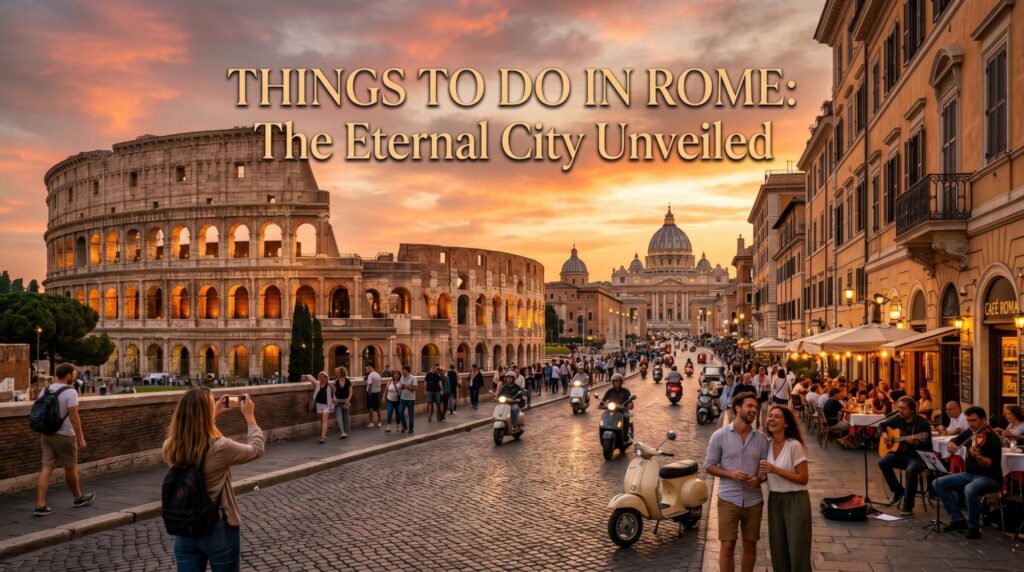
Rome: A City That Belongs to Every Era
There is no city on earth quite like Rome. It is a place where 2,500 years of human civilization exist not in museums behind glass but alive and breathing in the streets, the squares and the everyday fabric of city life. Where else in the world can you eat a gelato while leaning against an ancient Roman temple, watch children play football in the shadow of a Renaissance basilica or drink an espresso in a piazza that has been the beating heart of a neighborhood for three thousand years. The things to do in Rome are as layered, as rich and as endlessly rewarding as the city itself and no single visit can hope to exhaust them.
This Rome travel guide is designed to help every type of traveler navigate and genuinely experience one of the greatest cities ever built. Whether you are arriving for the first time with a list of unmissable landmarks or returning to discover the quieter and more personal corners of the city that most tourists never find, Rome will meet you where you are and give you something extraordinary in return.
The Greatest Attractions Rome Has to Offer
The best places to visit in Rome span thousands of years of history and encompass some of the most significant and beautiful landmarks in the entire world. Understanding what to prioritize and how to structure your time is the key to making the most of a city that can feel overwhelming in its sheer abundance of unmissable experiences.
Rome rewards those who look beyond the obvious. Yes the Colosseum, the Vatican and the Trevi Fountain are absolutely essential and deserve every moment of attention they receive. But Rome also rewards the traveler who wanders without a map through the cobblestone lanes of Trastevere at dusk, who discovers a forgotten courtyard behind a medieval church or who sits at a neighborhood bar drinking the finest espresso of their life while locals argue passionately about football at the counter beside them.
Top Attractions and Things to Do in Rome
Things to do in Rome begin with the landmarks that have defined human civilization for millennia and extend outward into neighborhoods, food markets, hilltop views and neighborhood trattorias that reveal the real and living character of this extraordinary city.
The Colosseum
The Colosseum Rome guide begins with a simple acknowledgment that no photograph, film or description can fully prepare you for the experience of standing before this structure in person. Built between 70 and 80 AD, the Colosseum is the largest amphitheater ever constructed in the ancient world with a capacity of up to 80,000 spectators. Book your tickets well in advance online as the queues for walk up visitors can be extremely long especially during peak season. The combined ticket that includes the Roman Forum and Palatine Hill is excellent value and allows you to spend a full and deeply rewarding day exploring the ancient heart of Rome.
Vatican City
The Vatican city guide covers what is technically the smallest independent state in the entire world but contains within its walls some of the greatest artistic and architectural achievements in all of human history. The Vatican Museums house an extraordinary collection assembled by the Popes over centuries including the Raphael Rooms, the Gallery of Maps and most importantly the Sistine Chapel where Michelangelo’s ceiling and The Last Judgment together constitute the most celebrated painted space in the entire world. St. Peter’s Basilica is freely accessible and its scale and beauty are genuinely overwhelming. Book Vatican Museum tickets many weeks in advance as they sell out very quickly throughout the year.
The Roman Forum
The Roman forum guide introduces what was once the very center of the ancient world. Walking through the Roman Forum is one of the most remarkable and moving experiences available in Rome as you literally walk in the footsteps of Julius Caesar, Cicero and Augustus through the ruins of temples, government buildings and public spaces that shaped the entire trajectory of Western civilization. The view from the Palatine Hill overlooking the Forum is one of the finest panoramas in all of Rome.
The Pantheon
The Pantheon Rome is one of the most remarkably preserved ancient buildings in the entire world. Built in its current form by Emperor Hadrian between 118 and 125 AD, it has been in continuous use for nearly 2,000 years and its unreinforced concrete dome remains the largest in the world. Entry is now ticketed so book in advance. The Pantheon is particularly magical in the rain when water falls through the oculus opening at the center of the dome and drains through the ancient drainage system in the floor below.
The Trevi Fountain
The Trevi fountain guide covers Rome’s most theatrical and beloved public monument. Completed in 1762, the Trevi Fountain is the largest baroque fountain in Rome and one of the most famous fountains in the entire world. Visit very early in the morning before the crowds arrive to experience the fountain in something approaching the peace and grandeur it deserves. The tradition of throwing a coin over your left shoulder with your right hand to ensure a return to Rome is one that most visitors happily participate in regardless of whether they believe in it.
Best Neighborhoods in Rome
Understanding the best neighborhoods in Rome is essential for getting beyond the surface of the city and experiencing its genuine living character.
Trastevere
The Trastevere rome guide introduces what many visitors and locals alike consider the most atmospheric and authentically Roman neighborhood in the entire city. Located across the Tiber River from the historic center, Trastevere is a neighborhood of narrow cobblestone lanes, ivy covered medieval buildings, neighborhood trattorias and a warm and genuine community spirit that feels completely removed from the tourist bustle just across the river. Visit in the evening when the neighborhood comes alive with locals dining, drinking and socializing in the squares and lanes of this magical and irreplaceable corner of Rome.
Prati
Prati is the elegant and prosperous neighborhood immediately north of the Vatican, characterized by wide tree lined boulevards, excellent restaurants and some of the finest independent food shops in Rome. It is a wonderfully authentic and local neighborhood that sees relatively few tourists despite being within easy walking distance of St. Peters Square.
Testaccio
Testaccio is widely regarded as the most authentic working class neighborhood in Rome and the true spiritual home of Roman cuisine. The Testaccio Market is outstanding and the neighborhood is home to some of the finest and most honest trattorias in the city where traditional Roman dishes including cacio e pepe, carbonara and coda alla vaccinara have been prepared with pride and skill for generations.
Rome Food Guide
The Rome food guide is an absolutely essential companion to any visit to this extraordinary city. Roman cuisine is one of the most distinctive, honest and satisfying regional food traditions in all of Italy, built on simple ingredients of exceptional quality prepared with generations of accumulated skill and pride.
Essential Roman Dishes to Experience
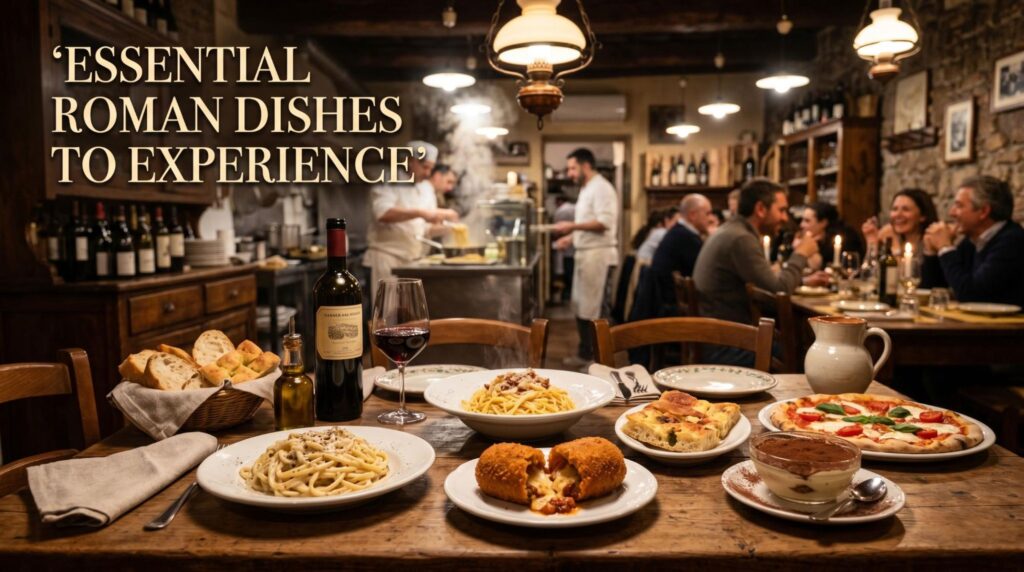
Cacio e Pepe is the most iconic Roman pasta dish, a seemingly simple combination of Pecorino Romano cheese and black pepper that requires genuine skill to execute perfectly. Carbonara in Rome is made with eggs, Pecorino Romano, guanciale and black pepper and absolutely never with cream, a fact that Romans feel very strongly about. Supplì are fried rice balls filled with ragù and melted mozzarella that are the quintessential Roman street food snack, best eaten hot from a friggitoria. Artichokes prepared alla giudia in the Jewish style are fried whole until crispy and golden and are one of the most delicious and uniquely Roman things you can eat anywhere in the city. The maritozzo is a soft sweet bun split open and filled with an extravagant quantity of fresh whipped cream and is the most beloved Roman breakfast pastry.
Where to Eat in Rome
Always walk at least two streets away from any major tourist attraction before sitting down to eat as the quality of food and value for money improves dramatically with even a small amount of distance from the most visited sites. The neighborhoods of Testaccio, Trastevere, Prati and Pigneto offer the most consistently excellent and authentic dining experiences in Rome. Never accept a table at a restaurant where a tout is standing outside trying to persuade you to come in as this is universally a sign of a tourist trap restaurant with mediocre food and inflated prices.
Best Museums in Rome
The best museums in Rome extend far beyond the Vatican Museums to encompass an extraordinary range of collections that reveal the full depth and breadth of Roman history, art and culture.
The Capitoline Museums on Capitoline Hill are the oldest public museums in the entire world and house an outstanding collection of ancient Roman sculpture including the original equestrian statue of Marcus Aurelius and the iconic bronze She-Wolf. The Borghese Gallery in the beautiful Villa Borghese park is home to one of the finest collections of baroque sculpture and painting in the world including extraordinary works by Bernini, Caravaggio and Raphael but requires advance booking as visitor numbers are strictly limited. The Palazzo Altemps and Palazzo Massimo alle Terme house outstanding collections of ancient Greek and Roman sculpture and are among the most rewarding and least crowded major museums in Rome.
Rome Day Trips
The Rome day trips available from the city are an excellent way to extend your experience of the region beyond the city itself.
Ostia Antica is the ancient port city of Rome located just 30 minutes by train from the city center and offers one of the most remarkably preserved and least visited ancient Roman urban sites in the entire world, comparable in scale and interest to Pompeii but far less crowded. Tivoli contains two UNESCO World Heritage Sites including the extraordinary Villa d’Este with its famous Renaissance gardens and hundreds of spectacular fountains and the ancient ruins of Hadrian’s Villa which was the largest and most elaborate private residence ever built in the ancient Roman world. Castelli Romani is a beautiful area of volcanic hills and lakes south of Rome famous for its wine, its food and the charming historic towns of Frascati, Castel Gandolfo and Ariccia.
Getting Around Rome
Getting around Rome is best accomplished on foot for the historic center as the most important landmarks are concentrated within a relatively compact area and walking between them allows you to experience the city in the most direct and rewarding way possible. The Rome Metro has only two lines that serve the historic center but is useful for reaching destinations further from the center. Buses cover the entire city but can be slow and confusing for first time visitors. Taxis are metered and reliable. Always validate your transport ticket before boarding to avoid fines.
Rome for First Time Visitors
Rome for first time visitors can feel overwhelming given the sheer quantity and significance of what the city has to offer. The most important advice for first time visitors is to slow down and resist the temptation to try to see everything in a single visit. Choose three or four priorities for each day, book the major attractions in advance, wear comfortable shoes and allow yourself to get lost in the side streets and neighborhoods between the landmarks. The moments of unexpected discovery in Rome are often just as memorable as the famous sights themselves.
Rome Itinerary
Rome Itinerary 3 Days
A Rome itinerary of 3 days is the minimum amount of time needed to experience the essential highlights of this extraordinary city without feeling completely rushed.
Day 1 covers Ancient Rome beginning with the Colosseum followed by the Roman Forum and Palatine Hill in the afternoon finishing the evening with dinner in the Testaccio neighborhood.
Day 2 covers Vatican Rome beginning with an early entry to the Vatican Museums and Sistine Chapel followed by St. Peter’s Basilica and the afternoon spent exploring the elegant Prati neighborhood.
Day 3 covers the historic center beginning with the Pantheon followed by the Piazza Navona, a walk to the Trevi Fountain and an afternoon and evening exploring the lanes and trattorias of Trastevere.
Rome Itinerary Extended
For those with more time available, a Rome itinerary of five to seven days allows for a much more relaxed and deeply rewarding exploration of the city including the Borghese Gallery, the Capitoline Museums, day trips to Ostia Antica or Tivoli and extended time in the neighborhood restaurants and food markets that reveal the true character of Roman daily life.
Rome Accommodation Guide
The Rome accommodation guide begins with the advice that location matters enormously in Rome. Staying within the historic center or in the neighborhoods of Trastevere, Prati or Monti puts you within walking distance of the major attractions and allows you to experience the city at its most atmospheric in the early morning and evening hours when the crowds of day visitors have not yet arrived or have already departed.
Budget travelers will find excellent hostels concentrated around the Termini railway station area though this neighborhood has less character than the historic center. Mid range hotels are found throughout the historic center with the best value typically found slightly away from the most famous squares and landmarks. Luxury hotels including some of the finest in the entire world are concentrated along the Via Veneto and around the Spanish Steps area.
Best Time to Visit Rome
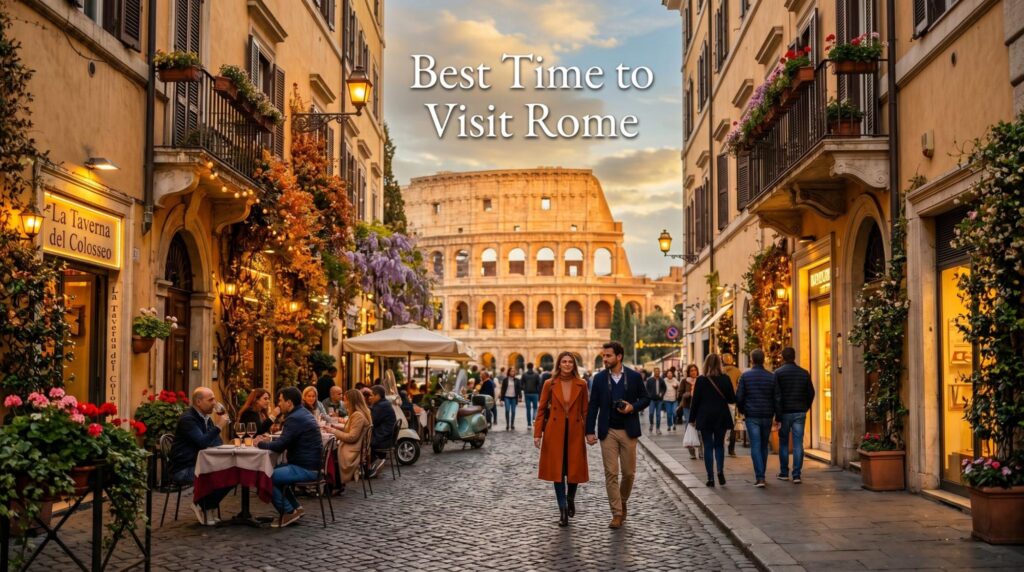
The best time to visit Rome is from April to June and September to October when the weather is warm and pleasant, the light is extraordinary and the summer crowds have not yet arrived or have begun to thin. July and August are the hottest and most crowded months with temperatures regularly exceeding 35 degrees Celsius and the major attractions becoming uncomfortably busy. November to March offers the quietest and most affordable experience of the city with mild temperatures and very short queues at major attractions, though some outdoor sites are less enjoyable in cold or rainy weather.
Rome Travel Budget
Understanding your Rome travel budget before you arrive will help you plan a realistic and genuinely enjoyable experience of this magnificent city.
The cost of visiting Rome varies considerably depending on your travel style and choices. Budget travelers staying in hostels, eating at local trattorias and markets and taking advantage of free attractions can manage comfortably on 60 to 80 dollars per day. Mid-range travelers staying in comfortable hotels and dining at good restaurants should budget between 120 and 200 dollars per day. Luxury travel in Rome including five star hotels, fine dining and private guided tours starts from 350 dollars per day and can go significantly higher.
Budget travel in Rome is very achievable with smart choices. Many of Rome’s greatest attractions are completely free including the Pantheon exterior, the Trevi Fountain, all the major piazzas, the churches which contain some of the most extraordinary art in the world including works by Michelangelo, Caravaggio and Bernini and the magnificent Villa Borghese park. Eating at a neighborhood bar for breakfast, a local trattoria for lunch and picking up supplies from the Testaccio or Campo de Fiori markets for evening snacks are all excellent ways to eat very well in Rome without spending a great deal of money.
Luxury travel in Rome offers some of the finest hotel and dining experiences in Europe. The Hotel de Russie, the Hotel Hassler above the Spanish Steps and the Waldorf Astoria Rome Cavalieri with its extraordinary hilltop views are among the most celebrated luxury properties in the entire city.
Is Rome Safe for Tourists
Is Rome safe for tourists is a question that most first time visitors ask before planning their trip. Rome is a very safe city for tourists with a well developed tourism infrastructure and a genuinely welcoming local population. The most common concern is pickpocketing which can occur on busy public transport routes particularly on buses serving the major tourist areas and in crowded spaces around the Colosseum, Trevi Fountain and Vatican. Keep your belongings secure, use a crossbody bag and be particularly alert in very crowded spaces. With basic precautions Rome is an extremely safe and welcoming city for all types of travelers.
Rome Visa Requirements
Rome visa requirements are the same as those for Italy and the broader Schengen Area. Citizens of the United States, Canada, Australia, the United Kingdom and many other countries can visit Rome and Italy without a visa for stays of up to 90 days within any 180 day period for tourism purposes. From 2025 onwards travelers from many previously visa exempt countries will need to obtain an ETIAS travel authorization before visiting. Always check the most current requirements based on your specific nationality before booking your trip.
Rome Packing List
A thoughtful Rome packing list will ensure you are fully prepared for everything Rome has to offer. Comfortable walking shoes are absolutely essential as Rome is best explored on foot and the cobblestone streets can be hard on feet that are not properly supported. Modest clothing including items that cover your shoulders and knees is required for entry to the Vatican, St. Peter’s Basilica and many of Rome’s churches. A compact crossbody or anti theft bag is strongly recommended for keeping your valuables secure in crowded tourist areas. Sunscreen and a refillable water bottle are essential for summer visits as Rome has an excellent network of free drinking water fountains known as nasoni located throughout the city.
Final Thoughts
Rome is a city that changes you. No traveler leaves Rome exactly as they arrived. Whether you are standing inside the Colosseum imagining the roar of 80,000 spectators, gazing upward at Michelangelo’s Creation of Adam in the Sistine Chapel, eating the finest cacio e pepe of your life in a Testaccere trattoria or simply sitting in a sunlit piazza watching Roman life flow past you with the unhurried confidence of a city that has seen everything, the things to do in Rome create experiences of such depth, beauty and human significance that they stay with you for a very long time.
This Rome travel guide has covered the essential landmarks, neighborhoods, food culture, museums, day trips, accommodation, budgeting and practical information you need to plan an extraordinary visit to one of the greatest cities in human history. Rome is waiting and it will not disappoint.
Frequently Asked Questions
What are the best things to do in Rome?
The best things to do in Rome include visiting the Colosseum and Roman Forum, exploring the Vatican Museums and Sistine Chapel, visiting the Pantheon and Trevi Fountain and wandering through the atmospheric lanes of Trastevere.
How many days do I need in Rome?
A Rome itinerary of 3 days covers the essential highlights comfortably though five to seven days allows for a much more relaxed and complete experience of the city including day trips and deeper neighborhood exploration.
What is the best time to visit Rome?
The best time to visit Rome is from April to June and September to October for the finest combination of pleasant weather, manageable crowds and the most beautiful light for experiencing and photographing the city.
Is Rome safe for tourists?
Yes. Is Rome safe for tourists is a common concern but Rome is a very safe city. The main advice is to keep belongings secure in crowded tourist areas and on busy public transport routes.
What is the Rome travel budget?
Your Rome travel budget can range from 60 dollars per day for budget travelers to 350 dollars or more per day for those seeking a luxury hotel and fine dining experience in the eternal city.
Do I need a visa to visit Rome?
Rome visa requirements follow the Italian and Schengen Area rules. Many nationalities can visit visa free for up to 90 days though ETIAS authorization may be required from 2025 onwards.
What should I pack for Rome?
A good Rome packing list includes comfortable walking shoes, modest clothing for churches and the Vatican, a crossbody anti theft bag, sunscreen and a refillable water bottle for use at Rome’s excellent free drinking fountains.
What are the best day trips from Rome?
The best Rome day trips include Ostia Antica for ancient Roman ruins, Tivoli for the extraordinary Villa d’Este gardens and Hadrian’s Villa and the Castelli Romani hills for wine, food and beautiful landscapes.