Switzerland: Where Every View Feels Like a Painting
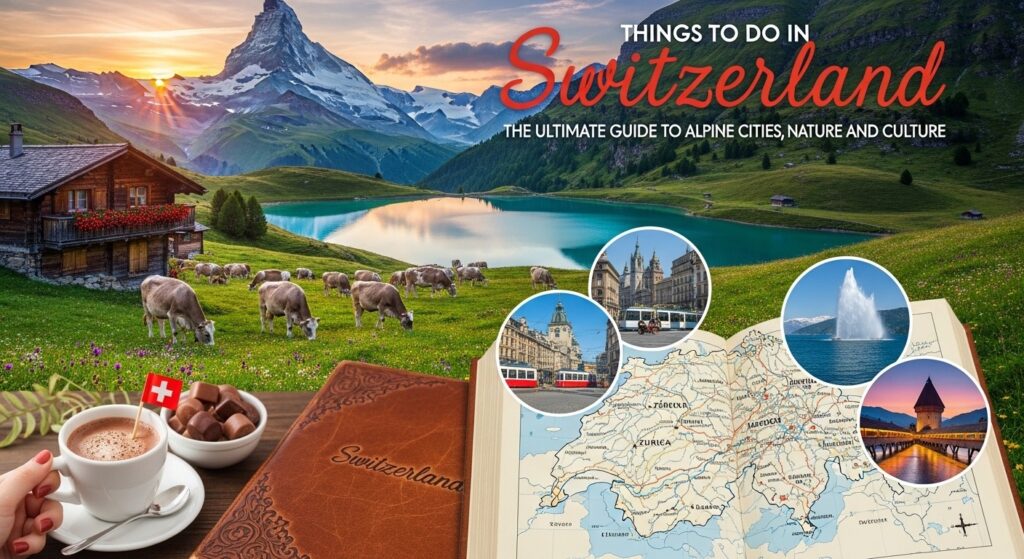
There are very few countries in the world that can genuinely claim to be breathtaking in every direction. Switzerland is one of them. From the moment you arrive, whether by train gliding through snow dusted mountain passes, by road winding along the shores of crystal clear lakes or by air descending toward a city framed by the most spectacular mountain backdrop imaginable, Switzerland announces itself as a place entirely apart from anywhere else on earth. The things to do in Switzerland span an extraordinary range of experiences from world class skiing and alpine hiking to Renaissance art museums, ancient medieval old towns, legendary scenic train journeys and a food and chocolate culture that is celebrated around the entire world.
This Switzerland travel guide is designed to be your most comprehensive and trustworthy companion for exploring one of the most remarkable countries in Europe. Switzerland is a nation of four official languages, four distinct cultural regions and an extraordinary diversity of landscapes and experiences packed into a relatively small geographic area. Understanding this richness and knowing how to navigate it is the key to planning a trip that reveals the true depth and wonder of this extraordinary country.
Whether you are drawn by the iconic Matterhorn rising above Zermatt, the medieval fountains and arcaded streets of Bern, the cosmopolitan energy of Zurich and Geneva, the breathtaking mountain panoramas above Interlaken or the perfectly preserved lakeside beauty of Lucerne, the best places to visit in Switzerland will exceed your expectations at every single turn.
Charting Switzerland’s Greatest Destinations
The best places to visit in Switzerland fall across a compact but extraordinarily diverse country where world class cities, dramatic Alpine landscapes and serene lake districts sit within easy reach of one another. The best cities in Switzerland to visit include Zurich, Geneva, Lucerne, Bern, Interlaken, Basel, Lausanne and Zermatt, each offering a completely different atmosphere, architectural character and set of experiences.
Beyond the cities, Switzerland rewards those who venture into its legendary natural landscapes. The Swiss Alps dominate the southern and central portions of the country with some of the most dramatic and awe inspiring mountain scenery anywhere in the world. The Swiss Plateau stretching between the Alps and the Jura mountains is home to the majority of the country’s population and its most important cities. The Ticino region in the south offers a taste of Italian culture and Mediterranean warmth beneath Alpine peaks. The Swiss lakes including Lake Geneva, Lake Zurich, Lake Lucerne, Lake Thun and Lake Constance are among the most beautiful stretches of water in all of Europe.
Zurich Travel Guide
Zurich is the largest city in Switzerland and one of the most consistently livable, culturally vibrant and surprisingly exciting cities in all of Europe. It is a city of elegant lakeside promenades, outstanding art museums, a beautifully preserved medieval old town, a world famous financial district and one of the most dynamic and creative food and nightlife scenes on the continent. This Zurich travel guide will help you discover a city that consistently surprises visitors with just how much it has to offer beyond its reputation as a global financial center.
Discovering Zurich
Things to do in Zurich include wandering through the enchanting lanes and squares of the Altstadt old town on both banks of the Limmat River, visiting the magnificent Grossmünster cathedral with its stunning Romanesque towers that have dominated the Zurich skyline for nearly a thousand years, exploring the outstanding Kunsthaus Zurich which is the largest art museum in Switzerland housing an extraordinary collection spanning from medieval masterpieces to cutting edge contemporary works, strolling along the elegant Bahnhofstrasse which is one of the world’s most exclusive and prestigious shopping streets, relaxing along the shores of Lake Zurich and swimming in the crystal clear lake water during summer at one of the city’s beloved Badis, exploring the vibrant and creative Langstrasse and Kreis 5 neighborhoods, visiting the Swiss National Museum to discover the full sweep of Swiss history and culture and taking a short trip by boat or train to explore the beautiful surrounding lake villages of Rapperswil and Stein am Rhein.
Zurich’s Most Remarkable Places
- Grossmünster: The most iconic landmark of Zurich, a magnificent Romanesque cathedral with twin towers overlooking the Limmat River
- Kunsthaus Zurich: The finest and most comprehensive art museum in Switzerland with an extraordinary collection spanning seven centuries
- Bahnhofstrasse: One of the world’s most prestigious shopping streets stretching from the main railway station to the shores of Lake Zurich
- Altstadt: Zurich’s beautifully preserved medieval old town divided by the Limmat River into two charming and distinctive halves
- Lake Zurich: A stunning Alpine lake on the southern edge of the city offering swimming, sailing, boat trips and breathtaking mountain views
- Swiss National Museum: An outstanding museum housed in a magnificent castle-like building presenting the complete history and culture of Switzerland
- Langstrasse: Zurich’s most diverse and creatively vibrant street lined with independent restaurants, bars and cultural venues
- Lindenhügel Hill: A peaceful hilltop garden offering some of the finest panoramic views over the city, lake and distant Alps
Getting the Most from Zurich
The Zurich Card offers unlimited travel on all public transport and free or discounted entry to over 40 museums and attractions and is outstanding value for visitors staying two or more days. Many of Zurich’s finest experiences are completely free including the Altstadt, the lakeside promenades and the city’s magnificent churches. Explore the city on foot as Zurich’s compact center is wonderfully walkable and full of hidden courtyards, fountains and architectural gems that you will miss entirely from public transport.
Geneva Travel Guide
Geneva is one of the most cosmopolitan, elegant and internationally significant cities in the entire world. Sitting at the southwestern tip of Lake Geneva beneath the snow capped peaks of the Alps and the Jura mountains, it is a city of extraordinary natural beauty, deep diplomatic importance and a cultural richness that reflects its unique position at the intersection of French, Swiss and international influences. This Geneva travel guide will help you experience everything that makes this magnificent city so utterly distinctive and endlessly fascinating.
Experiencing Geneva
Things to do in Geneva include visiting the iconic Jet d’Eau water fountain which shoots a spectacular column of water 140 meters into the air above Lake Geneva and has become the most recognized symbol of the city, exploring the magnificent St. Peters Cathedral in the heart of the beautifully preserved Old Town, visiting the extraordinary Palais des Nations which is the European headquarters of the United Nations and one of the most important diplomatic buildings in the entire world, strolling along the stunning Quai du Mont-Blanc promenade with its breathtaking views across the lake toward the snow capped Alps, exploring the outstanding Museum of Art and History which houses the finest art collection in the French speaking part of Switzerland, discovering the fascinating International Red Cross and Red Crescent Museum, visiting the beautiful Parc des Bastions with its impressive Reformation Monument and enjoying the extraordinary range of world class restaurants and chocolatiers that line the streets of this supremely cosmopolitan city.
Geneva’s Defining Landmarks and Neighborhoods
- Jet d’Eau: The most iconic symbol of Geneva, one of the tallest water fountains in the world shooting water 140 meters into the air above Lake Geneva
- Old Town: Geneva’s beautifully preserved historic heart with steep cobblestone streets, medieval buildings and the magnificent St. Peters Cathedral
- Palais des Nations: The European headquarters of the United Nations, one of the most historically and diplomatically significant buildings in the world
- Quai du Mont-Blanc: The most elegant and scenic promenade in Geneva offering breathtaking views across the lake toward the French Alps
- CERN: The European Organization for Nuclear Research on the outskirts of Geneva, the largest particle physics laboratory in the world offering fascinating public tours
- Parc des Bastions: A beautiful park in the heart of Geneva famous for its giant chess sets and the impressive Reformation Monument
- Carouge: A charming and bohemian neighborhood on the southern edge of Geneva with an Italian influenced architecture and a wonderfully relaxed atmosphere
- Bains des Pâquis: A beloved lakeside bathing establishment that serves as one of the most authentic and atmospheric gathering places in the entire city
Lucerne Travel Guide
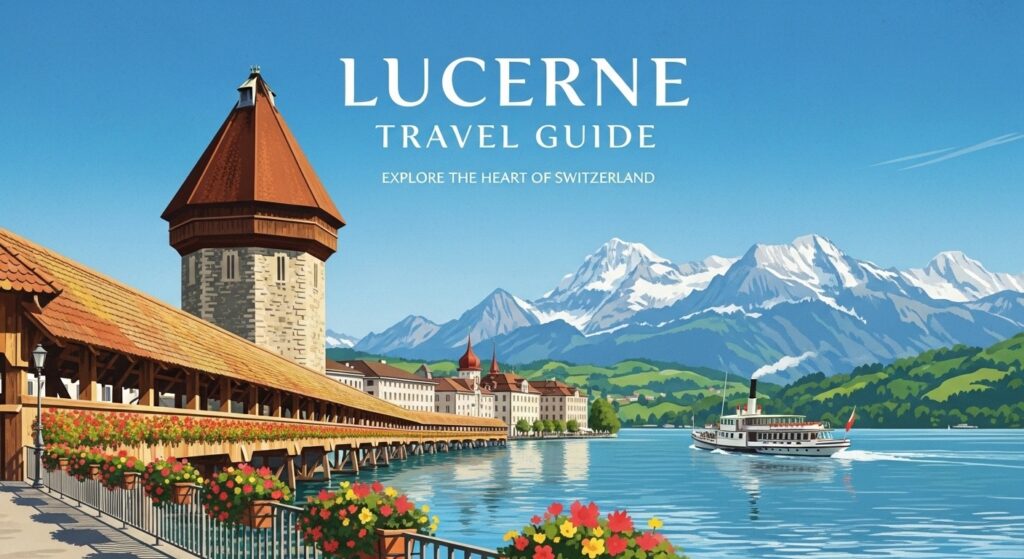
Lucerne is widely considered one of the most beautiful cities in the entire world and it is very easy to understand why. Perfectly positioned on the shores of its own shimmering lake with the snow capped peaks of Mount Pilatus and Mount Rigi rising dramatically in the background, it is a city of extraordinary natural beauty combined with a remarkably well preserved medieval old town that gives it a character and charm that is completely unmatched anywhere in Switzerland. This Lucerne travel guide will help you make the very most of this truly magical destination.
Falling in Love with Lucerne
Things to do in Lucerne include walking across the magnificent Chapel Bridge which is the oldest wooden covered bridge in Europe and the most photographed landmark in all of Switzerland, visiting the deeply moving Lion Monument carved directly into a natural rock face to commemorate the Swiss Guards who died during the French Revolution, exploring the beautifully preserved medieval Altstadt old town with its painted facades, covered bridges and charming cobblestone squares, taking a scenic boat cruise on Lake Lucerne surrounded by a breathtaking panorama of Alpine peaks and emerald green hillsides, ascending Mount Pilatus by the world’s steepest cogwheel railway for truly spectacular views across the Alps and the Swiss Plateau, visiting the outstanding Swiss Museum of Transport which is the most visited museum in Switzerland, ascending Mount Rigi by cogwheel railway for panoramic sunset views that have inspired artists and travelers for centuries and exploring the charming lakeside towns of Weggis, Vitznau and Brunnen by boat.
Lucerne’s Most Treasured Highlights
- Chapel Bridge: The oldest wooden covered bridge in Europe, Lucerne’s most iconic landmark and one of the most photographed sights in all of Switzerland
- Lion Monument: A profoundly moving sculpture carved directly from a natural rock face, described by Mark Twain as the most mournful and moving piece of stone in the world
- Lake Lucerne: One of the most dramatically beautiful lakes in Switzerland, surrounded by an extraordinary panorama of Alpine mountains and green hillsides
- Mount Pilatus: A dramatic rocky mountain above Lucerne accessible by the world’s steepest cogwheel railway offering breathtaking Alpine panoramas
- Mount Rigi: Known as the Queen of the Mountains, offering extraordinary sunrise and sunset panoramas across the Alps and the Swiss Plateau
- Swiss Museum of Transport: The most visited museum in Switzerland presenting the complete history of transportation in an engaging and interactive way
- Musegg Wall: A remarkably well preserved section of medieval city wall with nine towers offering excellent views over the old town and lake
Interlaken Travel Guide
Interlaken is the undisputed adventure capital of Switzerland and one of the most spectacularly situated towns anywhere in the entire world. Nestled between the turquoise waters of Lake Thun and Lake Brienz with the three mighty peaks of the Eiger, Mönch and Jungfrau towering above it on the southern horizon, Interlaken serves as the gateway to the Bernese Oberland region and the starting point for some of the most extraordinary mountain and outdoor experiences available anywhere in Europe. This Interlaken travel guide covers everything you need to know to make the most of this breathtaking destination.
Adventures and Experiences in Interlaken
Things to do in Interlaken include taking the legendary train journey to Jungfraujoch which at 3,454 meters above sea level is the highest railway station in Europe and one of the most extraordinary travel experiences on the entire continent, paragliding above the Lauterbrunnen Valley for a perspective on the Swiss Alps that very few people ever experience, white water rafting on the wild Lütschine and Simme rivers, skydiving with breathtaking Alpine views, exploring the extraordinarily beautiful Lauterbrunnen Valley with its 72 magnificent waterfalls including the thundering Staubbachfall, hiking to the legendary Schilthorn peak made famous by the James Bond film On Her Majesty’s Secret Service, visiting the charming car free mountain villages of Mürren and Wengen accessible only by cable car and mountain railway, exploring the stunning turquoise shores of Lake Thun and Lake Brienz by boat and visiting the Trümmelbach Falls which are the only glacial waterfalls in the world accessible from inside a mountain.
Interlaken’s Greatest Experiences
- Jungfraujoch: The highest railway station in Europe offering one of the most extraordinary Alpine experiences available anywhere in the world
- Lauterbrunnen Valley: One of the most spectacular and photogenic valleys in Switzerland with 72 waterfalls cascading down sheer cliff faces
- Schilthorn: A dramatic 2,970 meter peak offering a 360 degree panorama of over 200 Alpine summits and a James Bond themed mountain experience
- Paragliding: One of the finest paragliding destinations in the entire world with breathtaking launch sites above the Lauterbrunnen and Grindelwald valleys
- Lake Thun: A stunning turquoise Alpine lake with charming historic towns, medieval castles and breathtaking mountain reflections
- Grindelwald: A charming Alpine village at the foot of the North Face of the Eiger offering outstanding hiking, skiing and mountain scenery
- Mürren: A magical car free mountain village accessible only by cable car, offering some of the finest views of the Eiger, Mönch and Jungfrau
Bern Travel Guide
Bern is the federal capital of Switzerland and one of the best kept secrets in European travel. Unlike the more internationally famous Swiss cities of Zurich and Geneva, Bern has maintained a wonderfully unhurried, authentic and deeply Swiss character that makes it one of the most genuinely charming and rewarding cities to explore in the entire country. Its UNESCO listed medieval old town is one of the finest and most complete examples of medieval urban planning anywhere in Europe. This Bern travel guide will introduce you to a city that deserves far greater recognition than it typically receives.
Uncovering the Swiss Capital
Things to do in Bern include wandering through the extraordinary UNESCO listed Altstadt old town with its six kilometers of covered arcaded walkways known as Lauben which have protected shoppers and pedestrians from the elements for over 700 years, climbing the magnificent Bern Münster cathedral tower for panoramic views across the city and toward the distant Alps, visiting the Zytglogge astronomical clock tower which has been marking time in the heart of Bern since the 13th century, exploring the fascinating Einstein Museum dedicated to Albert Einstein who developed his Special Theory of Relativity while living and working in Bern, visiting the charming Bear Park on the banks of the Aare River where the city’s heraldic animals have been kept for centuries, swimming in the remarkably clean and fast flowing Aare River which curves around the old town peninsula in a stunning natural loop and exploring the outstanding Zentrum Paul Klee museum dedicated to one of the greatest artists of the 20th century.
Bern’s Most Captivating Attractions
- UNESCO Altstadt: One of the finest and most complete medieval old towns in Europe with six kilometers of covered arcaded walkways
- Bern Münster: Switzerland’s largest cathedral with a magnificently decorated Gothic portal and a tower offering breathtaking panoramic views
- Zytglogge: A magnificent medieval astronomical clock tower that has been the symbol and the beating heart of Bern for over 700 years
- Einstein Museum: A fascinating museum telling the extraordinary story of Albert Einstein’s life and revolutionary scientific achievements
- Zentrum Paul Klee: An outstanding museum dedicated to Paul Klee, one of the most original and influential artists of the entire 20th century
- Aare River Loop: The stunning natural river loop that curves around Bern’s old town peninsula creating one of the most beautiful urban landscapes in Switzerland
- Bear Park: A landscaped riverside park where Bern’s famous heraldic bears live in a naturalistic habitat beside the Aare River
- Rose Garden: A beautiful terraced garden above the old town offering the finest panoramic views of Bern’s UNESCO listed skyline
Swiss Alps Travel Guide
The Swiss Alps travel guide introduces the most iconic and awe inspiring mountain landscape in the entire world. The Swiss Alps cover approximately 60 percent of Switzerland’s total land area and encompass some of the most dramatic peaks, deepest glaciers, most spectacular mountain passes and most extraordinary natural scenery anywhere on the planet. For millions of travelers every year, experiencing the Swiss Alps is a life defining journey that they return to again and again throughout their lives.
The Greatest Alpine Experiences in Switzerland
The Swiss Alps offer an extraordinary and almost overwhelming range of experiences across every season of the year. In winter the Alps transform into one of the world’s premier skiing and winter sports destinations with world class resorts including Zermatt, Verbier, St. Moritz, Davos, Gstaad and Saas-Fee offering everything from beginner slopes to extreme off-piste adventures for the most experienced skiers. In summer the same mountains become a paradise for hikers, mountain bikers, climbers and paragliders with thousands of kilometers of marked trails offering access to some of the most breathtaking scenery on earth.
Switzerland’s Most Iconic Alpine Destinations
- Zermatt: The most famous mountain resort village in Switzerland, completely car free and dominated by the iconic pyramid shaped Matterhorn
- Verbier: One of the finest and most extensive ski resorts in the entire world, also outstanding for summer hiking and mountain biking
- St. Moritz: The most glamorous and prestigious Alpine resort in Switzerland, famous for luxury, winter sports and a sophisticated international clientele
- Grindelwald: A magnificent valley village beneath the North Face of the Eiger offering outstanding skiing, hiking and some of the finest mountain scenery in the Bernese Oberland
- Saas-Fee: A beautiful car free Alpine village surrounded by 13 four-thousand meter peaks offering year round skiing on one of Europe’s highest glaciers
- Davos: The highest city in Europe and home to the World Economic Forum, also one of Switzerland’s most important and well equipped ski resorts
Switzerland’s Legendary Scenic Train Journeys
Switzerland is home to some of the most spectacular and celebrated scenic railway journeys in the entire world. The Glacier Express connecting Zermatt and St. Moritz over eight hours through the heart of the Alps is widely regarded as the most beautiful train journey on earth. The Bernina Express crossing the UNESCO listed Rhaetian Railway between Chur and Tirano in Italy offers breathtaking views of glaciers, viaducts and Alpine peaks. The Golden Pass Line connecting Montreux on Lake Geneva to Lucerne passes through some of the most classically beautiful Swiss landscapes imaginable. The Gotthard Panorama Express combining a historic steam ship cruise on Lake Lucerne with a scenic train journey through the historic Gotthard massif provides a completely unique and unforgettable Swiss travel experience.
Switzerland Itinerary 10 Days
Planning a thoughtful Switzerland itinerary for 10 days is the foundation of experiencing the extraordinary breadth and depth of this remarkable country without feeling rushed or missing out on its greatest highlights.
- Day 1 to 2: Zürich (Altstadt, Grossmünster, Kunsthaus, Bahnhofstrasse, Lake Zurich)
- Day 3: Stein am Rhein and Rhine Falls day trip from Zurich (medieval town, Europe’s largest waterfall)
- Day 4: Lucerne (Chapel Bridge, Lion Monument, Mount Pilatus excursion)
- Day 5 to 6: Interlaken and Bernese Oberland (Jungfraujoch, Lauterbrunnen Valley, paragliding)
- Day 7: Bern (UNESCO Altstadt, Münster, Zytglogge, Einstein Museum)
- Day 8: Lausanne and Montreux (Lavaux vineyards, Chillon Castle, Lake Geneva)
- Day 9 to 10: Geneva (Jet d’Eau, Old Town, Palais des Nations, CERN, lake promenade)
This itinerary delivers an outstanding and genuinely comprehensive experience of Switzerland covering its greatest cities, most iconic Alpine landscapes and most extraordinary natural and cultural experiences.
When to Visit Switzerland
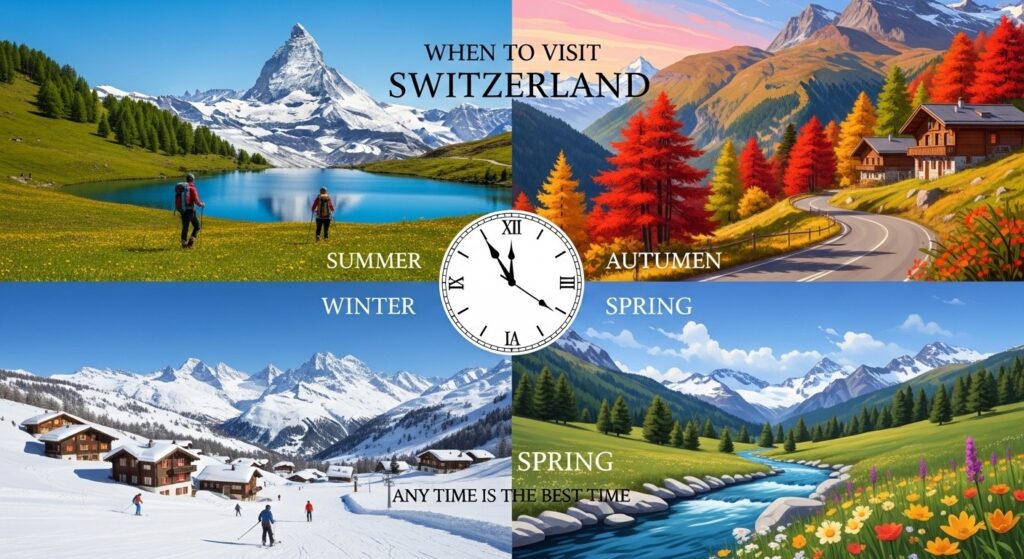
The best time to visit Switzerland depends entirely on the type of experience you are seeking and which regions of the country you plan to explore.
Spring from April to May is one of the finest and most beautiful times to visit Switzerland. The Alpine meadows come alive with wildflowers, the lakes shimmer in the fresh spring light, the crowds have not yet arrived in force and prices for accommodation and travel are significantly more affordable than in the peak summer and winter seasons. The snow is still present on the higher Alpine peaks creating a stunning contrast of green valleys and white summits that is particularly beautiful for photography.
Summer from June to August is the peak season for outdoor activities and Alpine exploration. The hiking trails are fully open, the cable cars and mountain railways are running to their highest points, the lake swimming is excellent and the long days provide up to 16 hours of daylight for exploration. Popular destinations like Interlaken, Zermatt and Lucerne are very busy during peak summer weeks so book accommodation well in advance.
Autumn from September to October is an exceptional time to visit Switzerland. The Alpine forests turn extraordinary shades of gold, amber and red, the summer crowds thin considerably, prices begin to fall and the weather remains pleasantly warm especially in the lower lying cities and lake districts. The wine harvest season in the Lavaux vineyards above Lake Geneva and in the Valais region adds a wonderful cultural dimension to any autumn visit.
Winter from December to March transforms Switzerland into one of the world’s most spectacular and celebrated ski destinations. The Alpine resorts are at their most magical with snow covered landscapes, cozy mountain chalets and world class skiing and snowboarding across thousands of kilometers of perfectly groomed and challenging runs. Cities like Zurich, Geneva, Basel and Bern host beautiful Christmas markets during December creating a wonderfully festive atmosphere in the weeks leading up to the holidays.
Switzerland Visa Requirements
Understanding Switzerland visa requirements is an important first step in planning your visit. Switzerland is not a member of the European Union but it is a member of the Schengen Area which means a Schengen visa allows entry into Switzerland alongside all other participating European countries.
Citizens of the United States, Canada, Australia, the United Kingdom and many other countries can visit Switzerland without a visa for stays of up to 90 days within any 180 day period for tourism purposes. However from 2025 onwards travelers from many visa exempt countries will be required to obtain an ETIAS travel authorization before visiting Switzerland and other Schengen countries. This is a simple and affordable online process but must be completed before departure.
Citizens of countries not covered by the visa free agreement will need to apply for a Schengen visa through the Swiss embassy or consulate in their home country. Always verify the current entry requirements based on your specific nationality before booking your trip as regulations and bilateral agreements can change.
Is Switzerland Safe for Tourists
Is Switzerland safe for tourists is a question that virtually every first time visitor asks. Switzerland is consistently ranked as one of the safest countries in the entire world and is an extraordinarily secure and welcoming destination for international travelers of all backgrounds and nationalities.
Switzerland has an extremely low crime rate, excellent public services, outstanding healthcare infrastructure and a deeply ingrained culture of order, cleanliness and respect that makes it one of the most comfortable and reassuring countries in the world to travel through. The public transport system is extraordinarily safe and reliable at all hours. Even in the major cities of Zurich and Geneva petty crime is very rare by European standards and the overall atmosphere is one of security and ease.
The only genuine safety considerations in Switzerland relate to outdoor activities in the Alps. Always check weather forecasts and trail conditions before hiking at altitude, respect avalanche warnings during winter and ensure you have appropriate equipment and experience before attempting challenging mountain routes. With proper preparation and respect for the mountain environment, Switzerland is a completely safe and enormously rewarding destination for outdoor adventure.
Understanding the Cost of Switzerland
Switzerland is widely known as one of the most expensive countries in the world and this reputation is largely deserved. However understanding your Switzerland travel budget properly before you depart will help you plan a realistic and genuinely enjoyable trip without unwanted financial surprises.
- Budget: 120 to 160 dollars per day covering hostels, supermarket meals from Migros and Coop, free attractions and the Swiss Travel Pass for transport
- Mid Range: 200 to 350 dollars per day covering comfortable hotels, restaurants and paid mountain excursions
- Luxury: 500 dollars and above per day covering five star Alpine resorts, fine dining and private guided experiences
Budget Travel in Switzerland
Budget travel in Switzerland requires careful planning and smart choices but is entirely achievable. The single most important tool for budget travelers is the Swiss Travel Pass which offers unlimited travel on the entire Swiss public transport network including trains, buses, boats and many mountain railways and cable cars for a fixed daily price. Shopping at the excellent Migros and Coop supermarkets for breakfast and lunch while eating out only for dinner can dramatically reduce daily food costs. Many of Switzerland’s greatest natural attractions including the lakes, the Altstadt old towns of Bern and Lucerne and countless hiking trails are completely free to enjoy.
Switzerland Packing List
A thoughtfully prepared Switzerland packing list will ensure you are fully ready for the extraordinary diversity of experiences, climates and altitudes that Switzerland offers across its different regions and seasons.
- Sturdy and waterproof hiking boots for Alpine trails, mountain excursions and cobblestone city streets
- Warm layers including a quality fleece and a down jacket as temperatures at altitude can be very cold even in summer
- A waterproof and windproof outer shell jacket as mountain weather in Switzerland can change very rapidly
- Sunscreen with a high SPF factor as UV radiation is significantly stronger at altitude especially on snow and glaciers
- Quality sunglasses with UV protection for snow and high altitude environments
- Comfortable city shoes for exploring the elegant streets of Zurich, Geneva and Bern
- A reusable water bottle as Switzerland has some of the purest and most delicious tap and fountain water in the entire world
- A Swiss Travel Pass or pre booked train tickets for intercity and mountain travel
- All necessary travel documents including passport, ETIAS authorization if required and travel insurance with mountain activity coverage
Final Reflections
Switzerland is a country that transcends expectations at every turn. Whether you are gazing across the mirror still waters of Lake Lucerne as the first snow of autumn dusts the surrounding peaks, walking the medieval arcades of Bern in golden afternoon light, standing at the top of Jungfraujoch with the entire Alpine world spread out beneath you or simply sitting at a lakeside cafe in Geneva watching the Jet d’Eau catch the setting sun, the things to do in Switzerland create moments and memories of a quality and beauty that you will carry with you for the rest of your life.
This Switzerland travel guide has covered everything from the best places to visit in Switzerland and detailed city guides for Zurich, Geneva, Lucerne, Interlaken and Bern to the Swiss Alps travel guide, Switzerland visa requirements, safety advice and comprehensive budget planning. Whether you are following a carefully crafted Switzerland itinerary of 10 days across the country’s greatest destinations or taking a slower and more immersive approach to a single region, Switzerland will reward your curiosity, your sense of adventure and your love of beauty with experiences that are simply unlike anything else in the world.
Frequently Asked Questions
What are the best things to do in Switzerland?
The best things to do in Switzerland include riding the cogwheel railway to Jungfraujoch, walking the Chapel Bridge in Lucerne, exploring Zurich’s Altstadt, discovering Geneva’s Old Town and Jet d’Eau, paragliding above Interlaken and hiking the extraordinary trails of the Swiss Alps.
What are the best cities in Switzerland to visit?
The best cities in Switzerland to visit include Zurich for culture and lakeside elegance, Geneva for cosmopolitan sophistication, Lucerne for fairy tale beauty, Interlaken for Alpine adventure and Bern for its extraordinary UNESCO listed medieval old town and authentic Swiss character.
What is the best time to visit Switzerland?
The best time to visit Switzerland is from late April to June for spring wildflowers and mild weather, June to August for summer hiking and lake swimming, September to October for autumn foliage and December to March for world class skiing in the Swiss Alps.
Is Switzerland safe for tourists?
Yes. Is Switzerland safe for tourists is a common question but Switzerland is one of the safest countries in the entire world with an extremely low crime rate, outstanding public services and a deeply ingrained culture of security and order throughout the country.
What is the Switzerland travel budget?
Your Switzerland travel budget can range from 120 dollars per day for budget travelers using the Swiss Travel Pass and shopping at supermarkets to 500 dollars or more per day for those seeking a luxury Alpine resort experience in destinations like Zermatt, Verbier or St. Moritz.
Do I need a visa to visit Switzerland?
Check Switzerland visa requirements based on your nationality. Many nationalities can visit Switzerland visa free for up to 90 days under the Schengen Agreement though ETIAS authorization may be required from 2025 onwards.
What should I pack for Switzerland?
A good Switzerland packing list includes waterproof hiking boots, warm layers, a waterproof jacket, high SPF sunscreen, quality sunglasses, a reusable water bottle and all necessary travel documents including ETIAS authorization and travel insurance with mountain activity coverage.
What does the Swiss Alps travel guide cover?
The Swiss Alps travel guide covers the most iconic and awe inspiring mountain landscape in the world including Zermatt and the Matterhorn, Verbier, St. Moritz, the legendary Jungfraujoch railway, the spectacular Lauterbrunnen Valley and Switzerland’s extraordinary scenic train journeys including the Glacier Express and Bernina Express.
What is budget travel in Switzerland like?
Budget travel in Switzerland is achievable with smart planning. The Swiss Travel Pass for unlimited public transport, shopping at Migros and Coop supermarkets and taking advantage of the country’s many free natural attractions including lakes, hiking trails and UNESCO old towns are the most effective strategies for exploring Switzerland without overspending.
What are the best things to do in Interlaken?
Things to do in Interlaken include riding the extraordinary Jungfraujoch railway to the Top of Europe, paragliding above the Lauterbrunnen Valley, exploring the 72 waterfall valley of Lauterbrunnen, visiting the car free mountain villages of Mürren and Wengen and taking boat cruises on the stunning turquoise waters of Lake Thun and Lake Brienz.