
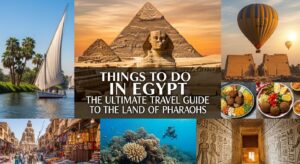
Egypt is one of those destinations that stays with you forever. From the moment you set eyes on the Pyramids of Giza rising from the golden desert, to the first time you sail the legendary Nile River at sunset, this ancient land has a way of making every traveler feel like they have stepped into another world entirely. Whether you are a history lover, an adventure seeker, or someone who simply wants to relax by turquoise waters, Egypt has something extraordinary waiting for you.
So, what is Egypt famous for? The answer is almost everything — ancient pyramids, sprawling temples, royal tombs, vibrant bazaars, desert oases, and world-class beaches. It is a country where 5,000 years of civilization unfold before your eyes at every turn. This guide covers the best things to do in Egypt, city by city, so you can plan the perfect Egyptian adventure.
Why Visit Egypt?
Egypt is not just a travel destination — it is a once-in-a-lifetime experience. Where else in the world can you stand before the only surviving Wonder of the Ancient World in the morning, cruise a legendary river in the afternoon, and dine under a star-filled desert sky at night? Egypt history and landmarks are woven into its streets, temples, and landscapes so deeply that simply walking around feels like reading a living history book.
The country is also incredibly diverse. The north offers Mediterranean charm in Alexandria, the south reveals Nubian culture in Aswan, the Sinai Peninsula gives you world-class diving, and the Western Desert holds secret oases like Siwa. Egypt travel experiences range from the deeply historic to the purely adventurous, making it a destination that works for every kind of traveler.
Things to Do in Cairo
City Overview
Cairo is Egypt’s beating heart — a massive, energetic megacity where ancient wonders sit alongside modern neighborhoods. Known as “Um al-Dunya” or the Mother of the World, Cairo is home to over 20 million people and serves as the country’s cultural, political, and economic center. It is often the first city travelers arrive in, and for good reason. Cairo holds some of the most important Egypt tourist attractions on the planet.
Top Things to Do in Cairo
The most iconic thing to do in Cairo is visiting the Pyramids of Giza and the Great Sphinx. The Pyramid of Khufu, built over 4,500 years ago, is the last standing Wonder of the Ancient World and nothing you have read or seen on screen can fully prepare you for seeing it in person. Go early in the morning to beat the crowds and the heat.
Right beside the pyramids sits the Grand Egyptian Museum, one of the most significant museums ever built. With over 100,000 artifacts — including the complete treasures of Tutankhamun — this world-class museum is a full-day experience on its own. The Royal Mummies Hall alone is worth the visit.
Islamic Cairo is another unmissable experience. Spend a morning wandering Al-Muizz Street, one of the oldest streets in the world, lined with medieval mosques, palaces, and traditional workshops. End your walk at Khan el-Khalili, Cairo’s famous 14th-century bazaar, where you can shop for spices, perfume, papyrus, gold jewelry, and handcrafted souvenirs while sipping mint tea at a centuries-old café.
Coptic Cairo, home to the Hanging Church, the Coptic Museum, and the Babylon Fortress, offers a fascinating look at Egypt’s Christian heritage that dates back to the first century AD. At the end of the day, take a sunset felucca ride on the Nile River — a quiet, beautiful contrast to the city’s chaos.
Best Places to Visit in Cairo
- Pyramids of Giza and the Great Sphinx
- Grand Egyptian Museum (GEM)
- Egyptian Museum at Tahrir Square
- Khan el-Khalili Bazaar
- Islamic Cairo and Al-Muizz Street
- Coptic Cairo (Hanging Church, Coptic Museum)
- Cairo Citadel and Muhammad Ali Mosque
- Al-Azhar Mosque and Park
- Cairo Tower (Zamalek)
- Saqqara and the Step Pyramid of Djoser
Historical Places in Cairo
The Cairo Citadel, built by Saladin in the 12th century, served as Egypt’s seat of government for nearly 700 years. Inside is the stunning Alabaster Mosque of Muhammad Ali, modeled after Istanbul’s Blue Mosque. Saqqara, located 30 km south of Cairo, is home to Egypt’s oldest pyramid — the Step Pyramid of Djoser, built around 2650 BC. The nearby ancient capital of Memphis was once the greatest city in the ancient world.
Best Time to Visit Cairo
The best time to visit Cairo is between October and April, when temperatures are comfortable for outdoor sightseeing. Winters (December to February) are peak tourist season with mild, pleasant weather. Avoid the summer months of June through August when temperatures can reach 40°C or higher.
Is Cairo Safe?
Cairo is generally safe for tourists. The government maintains strong security around tourist areas, and millions of visitors travel there without incident each year. As with any large city, be aware of your surroundings, use reputable transport like Uber, and be prepared for enthusiastic vendors near major attractions.
Local Food in Cairo
Cairo’s street food scene is world-class. Try koshary — Egypt’s beloved national dish of rice, lentils, macaroni, and spiced tomato sauce. For breakfast, fuul medames (stewed fava beans with garlic and lemon) is a Cairo staple eaten by locals for centuries. Ta’amiya (Egyptian falafel made from fava beans) and feteer (a flaky, layered pastry) are other must-tries. For a sit-down experience, Khufu’s Restaurant near the pyramids offers incredible views alongside traditional Egyptian dishes.
Cairo Itinerary (3 Days)
- Day 1: Pyramids of Giza, Sphinx, Grand Egyptian Museum
- Day 2: Islamic Cairo, Al-Muizz Street, Khan el-Khalili, Cairo Citadel
- Day 3: Coptic Cairo, Egyptian Museum, Nile felucca ride at sunset
Cairo Travel Cost
Travel costs in Cairo depend entirely on your travel style and preferences. Budget travelers who use local transport, eat street food, and stay in guesthouses will spend far less compared to those who prefer private guided tours, luxury hotels near the pyramids, and fine dining by the Nile. Museum entrance fees, particularly for the Grand Egyptian Museum and Giza Plateau, are additional costs to factor in. Overall, your Cairo budget will vary based on the comfort level and experiences you choose.
Things to Do in Luxor
City Overview
If Cairo is the heart of Egypt, Luxor is its soul. Built on the site of ancient Thebes, once the most powerful city in the world, Luxor is often called the world’s greatest open-air museum. Sitting along the Nile in Upper Egypt, this city is home to more ancient monuments than anywhere else on Earth, containing roughly one-third of all the world’s antiquities.
Top Things to Do in Luxor
The Valley of the Kings is the crown jewel of Luxor — a royal necropolis on the West Bank where over 60 pharaohs were buried, including Tutankhamun. Walking into these elaborately decorated royal tombs, deep within the desert cliffs, is one of the most awe-inspiring Egypt travel experiences imaginable.
Karnak Temple is another absolute must. One of the largest religious complexes ever built, Karnak took over 2,000 years to construct and covers an area so vast it contains several temples, chapels, and obelisks. The Great Hypostyle Hall, with 134 massive columns, is one of the most photographed spaces in all of Egypt. Visit in the evening for the stunning sound-and-light show.
Luxor Temple, beautifully lit at night, stands right in the heart of the modern city and was dedicated to the god Amun. The Temple of Hatshepsut (Deir el-Bahri) on the West Bank is one of ancient Egypt’s most architecturally remarkable temples, built for Egypt’s most powerful female pharaoh.
A hot air balloon ride over Luxor at sunrise is one of the most magical things you can do in Egypt. As the early light reveals the temples, tombs, and the Nile below you, the experience becomes truly unforgettable.
Best Places to Visit in Luxor
- Valley of the Kings
- Karnak Temple Complex
- Luxor Temple
- Temple of Queen Hatshepsut
- Valley of the Queens
- Colossi of Memnon
- Medinet Habu Temple
- Luxor Museum
- Mummification Museum
Historical Places in Luxor
Luxor temples Egypt are ancient on a scale that is hard to comprehend. Karnak was first built around 2055 BC and expanded by nearly every pharaoh for over 2,000 years. The Valley of the Kings was used as a royal burial ground from the 16th to 11th century BC. Medinet Habu, built by Ramesses III around 1150 BC, contains some of the best-preserved painted reliefs in Egypt.
Best Time to Visit Luxor
November through March is the ideal time to visit Luxor. Temperatures are cooler and pleasant for exploring the outdoor temples and tombs. Summers in Luxor are extremely hot, with temperatures often reaching 45°C, making sightseeing very difficult.
Is Luxor Safe?
Luxor is considered very safe for tourists. The West Bank and East Bank areas are well-patrolled and welcoming. Tourist police are visible at major attractions. It is one of the most visited cities in Egypt and travelers consistently report positive, trouble-free experiences.
Local Food in Luxor
Luxor’s restaurants serve delicious Egyptian classics. Try molokhia (a rich green soup made from jute leaves), grilled Nile fish, and ful mudammas. The East Bank corniche has several restaurants with Nile views. For a casual bite, local bread (aish baladi) with hummus and cheese is a simple, satisfying meal you will find at every street corner.
Luxor Itinerary (2–3 Days)
- Day 1: West Bank — Valley of the Kings, Hatshepsut Temple, Colossi of Memnon
- Day 2: East Bank — Karnak Temple, Luxor Temple (evening), hot air balloon at dawn
- Day 3: Medinet Habu, Valley of the Queens, Luxor Museum
Luxor Travel Cost
The cost of visiting Luxor varies based on your choices. A budget traveler can manage comfortably by using shared taxis and local restaurants, while those who prefer private guides, entry to multiple tombs with special tickets, and Nile cruise upgrades will spend more. Accommodation ranges from simple guesthouses to luxury Nile-view hotels, each offering very different pricing.
Things to Do in Aswan
City Overview
Aswan is Egypt’s most relaxed and scenic city, sitting on the Nile’s edge in the far south of the country near the Sudanese border. It has a slower, more peaceful rhythm than Cairo or Luxor, and is deeply connected to Nubian culture and heritage. The Nile here is at its most beautiful — wide, calm, and dotted with granite islands and felucca sails.
Top Things to Do in Aswan
The Philae Temple, dedicated to the goddess Isis, sits on an island and can only be reached by boat. It was moved in its entirety from its original location to save it from the rising waters of Lake Nasser after the construction of the Aswan High Dam — one of the greatest feats of archaeological preservation in history. A boat ride to the temple at sunset is especially magical.
The Unfinished Obelisk, still lying in its quarry where ancient workers abandoned it, gives a rare glimpse into how ancient Egyptian monuments were actually made. The Aswan High Dam, completed in 1970, is an engineering marvel that transformed Egypt’s agriculture and electricity supply. A visit to a traditional Nubian Village is also a highlight — the brightly painted houses, warm hospitality, and unique culture make it an unforgettable experience.
From Aswan, many travelers take a day trip to Abu Simbel, one of Egypt’s most dramatic ancient Egypt attractions.
Best Places to Visit in Aswan
- Philae Temple (Island of Agilkia)
- Nubian Village
- Unfinished Obelisk
- Aswan High Dam
- Elephantine Island
- Kitchener’s Island (Botanical Garden)
- Aga Khan Mausoleum
- Komombo Temple (day trip)
Historical Places in Aswan
Aswan has been a trading post since ancient times, sitting at the crossroads of Egypt and sub-Saharan Africa. The granite quarries here supplied stone for countless ancient Egyptian monuments. Elephantine Island was once a major border city of ancient Egypt. The Temple of Khnum on Elephantine is one of the oldest religious sites in the country.
Best Time to Visit Aswan
October to March is the ideal time. Aswan is one of the driest and sunniest places on Earth, and summer temperatures can be brutal — regularly exceeding 45°C. Winter evenings in Aswan are beautifully cool and perfect for Nile felucca rides.
Is Aswan Safe?
Aswan is one of the safest cities in Egypt for tourists. The local Nubian community is known for its warmth and hospitality. Security is present at all tourist sites and the city has a very low crime rate. Travelers with families regularly choose Aswan as one of their favorite stops in Egypt.
Local Food in Aswan
Aswan’s food culture is influenced by Nubian cuisine. Try bamia (okra stew), grilled Nile perch, and ta’amiya. Nubian restaurants serve dishes with a distinctive spice profile, using fenugreek, tamarind, and local herbs. Sitting by the Nile and watching feluccas drift past while enjoying a fresh meal is one of Aswan’s greatest simple pleasures.
Aswan Itinerary (2 Days)
- Day 1: Philae Temple, Unfinished Obelisk, Nubian Village, felucca ride
- Day 2: Aswan High Dam, Elephantine Island, day trip to Abu Simbel
Aswan Travel Cost
Aswan is generally more affordable than Cairo. Accommodation, local transport by boat, and food are relatively budget-friendly. Entry fees to Philae Temple and the Abu Simbel day trip are the main costs to plan for. The overall spending will depend on whether you prefer shared felucca rides or private boat arrangements, and whether you add a Nile cruise leg.
Things to Do in Alexandria Egypt
City Overview
Alexandria is Egypt’s second-largest city and sits on the Mediterranean coast, carrying centuries of Greek, Roman, and Egyptian heritage within its streets. Founded by Alexander the Great in 332 BC, it was once the intellectual capital of the ancient world — home to the legendary Library of Alexandria and one of the Seven Wonders, the Pharos Lighthouse.
Top Things to Do in Alexandria
The Bibliotheca Alexandrina is modern Alexandria’s tribute to its ancient library. This stunning contemporary building holds millions of books and hosts museums, galleries, and cultural events. The Catacombs of Kom El Shoqafa are one of the Seven Wonders of the Middle Ages — an underground necropolis that blends ancient Egyptian, Greek, and Roman art in a uniquely fascinating way.
The Citadel of Qaitbay, a 15th-century fortress built on the exact site of the ancient Pharos Lighthouse, offers sweeping Mediterranean views. The Montaza Palace gardens, built for the Egyptian royal family, are a lovely place to stroll along the sea. Alexandria’s vibrant corniche stretches along the coast for miles and is perfect for an early morning or evening walk.
Historical Places in Alexandria
Pompey’s Pillar is a towering Roman column erected in 297 AD, one of the largest ancient monoliths in existence. The Roman Amphitheatre at Kom El Dikka, discovered in the 1960s, offers a glimpse of Alexandria’s Roman-era urban life. The Alexandria National Museum tells the full story of the city through thousands of years of artifacts.
Best Time to Visit Alexandria
Spring (March to May) and autumn (September to November) are ideal for Alexandria. Summers are humid but cooler than inland Egypt, making it a popular Egyptian getaway. Winters are mild but occasionally rainy.
Is Alexandria Safe?
Alexandria is considered safe for tourists. It is a working Egyptian city rather than a traditional tourist hub, which gives it an authentic atmosphere. The historical sites are well-maintained and the city is accustomed to welcoming visitors.
Local Food in Alexandria
Alexandria is famous for its seafood. Fresh fish and shrimp from the Mediterranean are served at restaurants along the corniche. Try sayyadiah (spiced fish with rice), stuffed calamari, and local flatbreads. The city also has a strong café culture — stop for Turkish coffee and pastries in one of its historic seafront cafés.
Alexandria Itinerary (1–2 Days)
- Day 1: Bibliotheca Alexandrina, Catacombs of Kom El Shoqafa, Citadel of Qaitbay
- Day 2: Pompey’s Pillar, Alexandria Museum, Montaza Palace, corniche walk
Alexandria Travel Cost
Alexandria is one of the more affordable Egypt travel destinations. As a local Egyptian city rather than a pure tourist resort, accommodation, food, and transport are priced for locals as much as visitors. Day trips from Cairo are common, which makes Alexandria an easy and cost-effective addition to an Egypt itinerary.
Things to Do in Sharm El Sheikh
City Overview
Sharm El Sheikh is Egypt’s premier beach resort town, perched at the southern tip of the Sinai Peninsula where the Red Sea meets the Gulf of Aqaba. It is a world-famous diving and snorkeling destination, known for its dramatic coral reefs, crystalline water, and year-round sunshine. It also serves as the gateway to some of Sinai’s most sacred landscapes.
Top Things to Do in Sharm El Sheikh
Ras Mohammed National Park is one of Egypt’s most important marine reserves and one of the best diving spots in the world. The coral walls, shark reefs, and extraordinary marine biodiversity here attract divers from across the globe. Snorkeling and scuba diving at Naama Bay, Shark Bay, and the famous Tiran Island are bucket-list experiences.
A day trip to Mount Sinai and St. Catherine’s Monastery is a deeply moving experience for many travelers. The monastery, founded in the 6th century at the base of the mountain where Moses is said to have received the Ten Commandments, is a UNESCO World Heritage Site. Climbing Mount Sinai to watch the sunrise from the summit is a famous pilgrimage that thousands of visitors make every year.
Historical Places in Sharm El Sheikh
St. Catherine’s Monastery, one of the world’s oldest continuously operating Christian monasteries, dates to 565 AD. It holds one of the finest collections of early Christian icons in the world, along with the Burning Bush — the site of Moses’ biblical encounter with God. The region itself holds immense significance for Jewish, Christian, and Islamic traditions.
Best Time to Visit Sharm El Sheikh
Sharm El Sheikh enjoys warm, sunny weather almost year-round. The ideal time is between March and May or September to November when temperatures are comfortable for both beach activities and desert excursions. Summer (June–August) can be extremely hot but the sea is warm and calm for diving.
Is Sharm El Sheikh Safe?
Sharm El Sheikh is heavily secured with strong government investment in tourist safety. It remains one of Egypt’s most visited resort areas. Standard travel awareness applies, and it is always advisable to check your government’s latest travel advisory before visiting.
Local Food in Sharm El Sheikh
Sharm has an international dining scene to match its global tourism. Fresh Red Sea fish, grilled calamari, and Egyptian mezze (dips, salads, and flatbreads) are staples. For something local, try mahshi (vegetables stuffed with spiced rice) or hawawshi (spiced minced meat in crispy bread).
Sharm El Sheikh Itinerary (3 Days)
- Day 1: Naama Bay snorkeling/diving, Ras Mohammed National Park
- Day 2: Tiran Island boat trip, water sports
- Day 3: Mount Sinai overnight hike, St. Catherine’s Monastery
Sharm El Sheikh Travel Cost
Costs in Sharm El Sheikh vary widely depending on whether you stay in an all-inclusive resort or a budget hotel. Diving trips, desert safaris, and the Mount Sinai excursion each carry their own fees. All-inclusive packages are popular here and can offer good value if beach and diving activities are your main focus. Independent travelers will find a range of accommodation and dining options to suit different budgets.
Things to Do in Hurghada
City Overview
Hurghada is Egypt’s original Red Sea resort city, a lively beach destination on the western coast of the Red Sea that has grown from a small fishing village into one of Egypt’s most popular tourist hubs. It is known for its clear water, coral reefs, water sports, and vibrant nightlife.
Top Things to Do in Hurghada
Giftun Island is one of the most beautiful spots near Hurghada — a national park island with pristine beaches and spectacular snorkeling among colorful coral reefs. Glass-bottom boat tours, dolphin-watching excursions, and banana boat rides are all popular activities. The Orange Bay and Mahmya Island day trips offer quiet, unspoiled beach escapes.
For those looking beyond the beach, Hurghada is a great base for Nile River cruise Egypt day excursions to Luxor. The drive or flight to Luxor connects you to the Valley of the Kings and Karnak Temples from a Red Sea base, which is a popular and rewarding combination.
Historical Places in Hurghada
Hurghada itself is a modern resort city without ancient monuments, but the surrounding desert holds ancient caravan routes and mines that were used by the pharaohs. The Eastern Desert between Hurghada and the Nile Valley is one of Egypt’s least explored ancient landscapes.
Best Time to Visit Hurghada
Hurghada is a year-round destination. Winter (November to March) is peak season with pleasant temperatures. Summer is very hot on land, but the sea remains clear and warm for diving and water sports year-round.
Is Hurghada Safe?
Hurghada is considered very safe and welcoming for tourists. Security is strong throughout the resort areas and the city sees millions of visitors annually without significant incidents.
Local Food in Hurghada
Seafood dominates Hurghada’s dining scene. Fresh Red Sea prawns, grilled fish, and calamari are served at beachfront restaurants throughout the city. Egyptian dishes like koshary and fuul are also available at local spots away from the main resort strip.
Hurghada Itinerary (3 Days)
- Day 1: Giftun Island snorkeling, glass-bottom boat tour
- Day 2: Dolphin watching, Orange Bay beach
- Day 3: Day trip to Luxor (Valley of the Kings, Karnak Temple)
Hurghada Travel Cost
Hurghada offers a wide range of options from budget-friendly hostels and local restaurants to sprawling all-inclusive resorts. Water sports activities and island excursions are priced separately. The Luxor day trip adds to the overall budget but is highly recommended for the experience it delivers.
Things to Do in Siwa Oasis
City Overview
Siwa Oasis is one of Egypt’s best-kept secrets — a remote, ethereal desert town near the Libyan border, hidden deep in the Western Desert. Known for its salt lakes, olive groves, date palms, and ancient mud-brick architecture, Siwa offers a dramatically different Egypt experience. The local Amazigh (Berber) culture is unlike anything else in the country.
Top Things to Do in Siwa
Swimming in Cleopatra’s Spring (Ain Guba), a natural freshwater pool where Cleopatra herself is said to have bathed, is one of Siwa’s most famous experiences. The Great Sand Sea, a vast ocean of golden dunes stretching toward Libya, is perfect for thrilling 4WD desert safaris and sandboarding. The Shali Fortress, a crumbling ancient mud-brick citadel at the center of the oasis, offers panoramic views over the date palms and salt lakes.
Egypt deserts and landscapes reach their most dramatic form in Siwa. A sunset over the salt lake of Birket Siwa, viewed from a sand dune, is one of the most beautiful natural sights in all of Africa.
Historical Places in Siwa
The Temple of the Oracle of Amun is Siwa’s most important ancient site — famous for being the place where Alexander the Great consulted the oracle and was confirmed as the son of Zeus-Ammon. The Mountain of the Dead (Gebel al-Mawta) contains hundreds of ancient tombs cut into a rocky hillside, used from the 26th Dynasty through to the Roman period.
Best Time to Visit Siwa
October to March is the ideal time. Siwa summers are extremely hot and the remoteness of the oasis makes extreme heat particularly challenging. Spring wildflowers and cooler temperatures make March and April especially lovely.
Is Siwa Safe?
Siwa is generally safe for tourists, though travelers should be aware that the Western Desert area has some travel restrictions and elevated security risks in certain zones near the Libyan border. Always travel with licensed tour operators in this region and check government travel advisories before visiting.
Local Food in Siwa
Siwan food is simple, fresh, and delicious. Olives and olive oil from Siwa’s ancient groves are legendary in Egypt. Fresh dates, date honey, and local bread are staples. The oasis grows excellent vegetables and fruits, and home-cooked Amazigh meals (often arranged through local guesthouses) are a genuine highlight of any Siwa visit.
Siwa Itinerary (2–3 Days)
- Day 1: Shali Fortress, Cleopatra’s Spring, Temple of the Oracle
- Day 2: Great Sand Sea 4WD safari, sandboarding, sunset over salt lake
- Day 3: Mountain of the Dead tombs, local village, oasis walk
Siwa Travel Cost
Siwa is one of Egypt’s more affordable destinations. Accommodation ranges from simple eco-lodges and guesthouses to small boutique retreats. The main expense is getting there — buses from Cairo take around 9–10 hours, or you can arrange private transport. Desert safari excursions are an additional cost but are one of the most rewarding ways to experience this unique landscape.
Things to Do in Dahab
City Overview
Dahab is a laid-back, bohemian beach town on the eastern coast of the Sinai Peninsula, beloved by divers, backpackers, and those looking to escape the crowds of Sharm El Sheikh. Its name means “gold” in Arabic, and the golden beaches, turquoise water, and relaxed atmosphere more than justify it. Dahab has a distinctly chilled-out character that keeps travelers coming back repeatedly.
Top Things to Do in Dahab
The Blue Hole is one of the world’s most famous — and most challenging — dive sites. This underwater sinkhole drops to over 100 meters and offers spectacular marine life and coral formations accessible even to recreational snorkelers near the surface. The Canyon dive site nearby is equally impressive. Windsurfing and kitesurfing at Dahab’s lagoon are world-class activities for water sports enthusiasts.
The Bedouin experience is another dimension of Dahab — camel treks into the Sinai desert, overnight camps under the stars, and visits to Bedouin communities give travelers a window into a way of life unchanged for centuries.
Historical Places in Dahab
The Blue Lagoon and Colored Canyon, a stunning narrow ravine with multicolored rock walls carved by ancient water, are natural wonders of extraordinary beauty. Wadi Gnai is a local desert valley popular for hiking and sunset viewing. From Dahab, St. Catherine’s Monastery and Mount Sinai are easily reachable as a day trip.
Best Time to Visit Dahab
March to May and September to November are ideal. Dahab’s climate is pleasant most of the year, though summer afternoons can be very hot. Water temperatures are warm and clear year-round for diving.
Is Dahab Safe?
Dahab is widely considered a safe and traveler-friendly town. The local community is welcoming and international tourists have made Dahab their base for decades. As always, check current travel advisories for the Sinai Peninsula before visiting.
Local Food in Dahab
Dahab’s restaurant scene is international and relaxed. Beachfront cafés serve everything from Egyptian fuul and flatbreads to pasta, falafel wraps, and fresh juice. The local sayadiya (fisherman’s rice) with fresh Red Sea catch is a must-try.
Dahab Itinerary (2–3 Days)
- Day 1: Blue Hole snorkeling/diving, Canyon dive, Lagoon beach
- Day 2: Colored Canyon excursion, Bedouin camel trek
- Day 3: Day trip to Mount Sinai or Ras Abu Gallum nature reserve
Dahab Travel Cost
Dahab is one of Egypt’s most affordable beach destinations, making it a favorite among budget travelers and backpackers. Dive courses and equipment rentals are additional costs, but accommodation and food here are generally very reasonably priced compared to Sharm El Sheikh or Hurghada.
Things to Do in Abu Simbel
City Overview
Abu Simbel is one of Egypt’s most dramatic destinations — a remote ancient temple complex in the far south of the country, near the Sudanese border on the shores of Lake Nasser. Built by Ramesses II in the 13th century BC, the two massive rock-cut temples here are among the most awe-inspiring achievements of ancient Egypt attractions anywhere in the world.
Top Things to Do in Abu Simbel
The Great Temple of Ramesses II features four colossal statues of the pharaoh at its entrance, each standing 20 meters tall. The interior is carved deep into the cliff and decorated with vivid reliefs depicting Ramesses’ military victories. Twice a year — on February 22 and October 22 — sunlight penetrates the innermost sanctuary and illuminates three of the four statues inside in a perfectly calculated ancient astronomical event. Visiting during the Sun Festival is an extraordinary experience.
The smaller Temple of Nefertari, built for Ramesses’ favorite wife, is equally beautiful. The temples were rescued from the rising waters of Lake Nasser through one of the most complex and expensive archaeological salvage operations in history — they were cut into blocks and reassembled on higher ground in the 1960s.
Best Places and Historical Sites in Abu Simbel
- Great Temple of Ramesses II
- Temple of Queen Nefertari
- Lake Nasser viewpoints
- Abu Simbel Sun Festival (February 22 and October 22)
Best Time to Visit Abu Simbel
October to February is the most comfortable time. Summer heat in Abu Simbel is intense. If your goal is the Sun Festival, plan well in advance as February 22 draws large crowds.
Is Abu Simbel Safe?
Abu Simbel is safe to visit. It is a small, remote community whose economy revolves almost entirely around tourism. The temples are well-managed and security is present. Most travelers visit on day trips from Aswan or fly in from Cairo.
Local Food in Abu Simbel
As a small town, dining options are limited but genuine. Local restaurants serve simple Egyptian and Nubian dishes — grilled meats, flatbreads, fuul, and fresh produce from the Nile Valley.
Abu Simbel Itinerary
Most travelers visit Abu Simbel as a day trip from Aswan (a 3.5-hour drive or short flight). A full morning at the temples gives you enough time to explore both temples thoroughly before the afternoon heat peaks.
Abu Simbel Travel Cost
Abu Simbel can be visited as a day trip from Aswan. The main cost is the temple entrance fee and transport — either a shared minibus convoy along the desert highway or a short flight from Aswan. Overnight stays are possible in the small local hotels if you prefer a more relaxed, crowd-free experience at dawn.
Egypt Travel Tips and Practical Information
Visa Requirements: Most nationalities can obtain a tourist visa on arrival at Cairo or other major airports, or apply for an e-Visa online before departure through Egypt’s official portal. The process is straightforward. So, do you need a visa for Egypt? Yes — but getting one is simple.
Best Time to Visit Egypt Overall: October through April is the most recommended period for the majority of Egypt’s destinations. This is when temperatures across the country are comfortable for sightseeing. The Red Sea coast can be visited year-round.
Currency: Egypt uses the Egyptian Pound (EGP). US dollars are widely accepted at major tourist sites and hotels. ATMs are available in all major cities but less reliable in remote areas, so carry sufficient cash when heading to places like Siwa or Abu Simbel.
Getting Around: Domestic flights connect Cairo, Luxor, Aswan, Hurghada, and Sharm El Sheikh efficiently. Trains connect Cairo to Luxor and Aswan and are a scenic, comfortable option. Uber is available in Cairo. In tourist cities, taxis and private drivers are the most convenient way to get around.
Cultural Tips: Egypt is a predominantly Muslim country. Dress modestly, particularly outside resort areas — cover shoulders and knees when visiting mosques, churches, and local neighborhoods. Remove shoes before entering mosques. Always ask before photographing local people.
Language: Arabic is the official language. English is widely spoken in tourist areas, hotels, and restaurants.
Safety: Egypt is generally safe for tourists. Millions of international travelers visit annually. Standard travel precautions apply — watch your belongings in crowded markets, use reputable transport, and stay informed about current travel advisories from your home government.
How to Plan a Trip to Egypt
Planning your Egypt trip starts with deciding how many days you have. For first-time visitors asking how many days in Egypt is enough — a minimum of 7 to 10 days covers the essential highlights of Cairo, Luxor, and Aswan. Two weeks allows you to add the Red Sea (Hurghada or Sharm El Sheikh), Alexandria, and perhaps Siwa.
This Egypt travel planning guide recommends building your itinerary around two main tracks — the historical circuit (Cairo, Luxor, Aswan, Abu Simbel) and the beach/adventure circuit (Hurghada, Sharm El Sheikh, Dahab). Most travelers combine both for the ultimate Egypt experience.
Egypt Itinerary 7 Days (Suggested)
- Day 1–2: Cairo (Pyramids, Grand Egyptian Museum, Islamic Cairo)
- Day 3: Fly or train to Luxor — Valley of the Kings, Karnak Temple
- Day 4: Luxor West Bank, hot air balloon at sunrise
- Day 5: Aswan — Philae Temple, Nubian Village, Felucca ride
- Day 6: Day trip to Abu Simbel
- Day 7: Fly to Hurghada for beach time, or return to Cairo for departure
Egyptian Culture and Traditions
Egyptian culture and traditions are rich, layered, and deeply welcoming to visitors. Hospitality is a cornerstone of Egyptian life — you will regularly be invited for tea, offered directions, and welcomed into conversation by locals. Egyptian society places great importance on family, community, and religious observance.
The call to prayer echoes five times daily across every city and town, a beautiful reminder of the country’s Islamic identity. Ramadan, when observed, transforms Egypt’s cities with special night markets, lanterns, and communal meals — visiting during this month gives travelers a uniquely intimate look at Egyptian social life.
Traditional crafts — including hand-painted papyrus, alabaster carvings, hand-woven textiles, and intricate copper work — have been practiced here for thousands of years and make meaningful souvenirs to take home.
Conclusion
Egypt is not simply a travel destination — it is one of humanity’s great treasures. From the Pyramids of Giza that have stood for 4,500 years to the turquoise waters of the Red Sea, from the tranquil felucca rides on the Nile to the golden silence of the Siwa Oasis, every corner of this country offers something that stays with you for the rest of your life.
Whether you are planning your first visit or returning to discover places you missed, Egypt’s depth is seemingly inexhaustible. Ancient Egypt attractions, vibrant modern cities, desert adventures, and Red Sea beaches exist side by side in a country that has always been — and will always remain — one of the world’s most extraordinary places to explore.
Pack your bags, get your visa ready, and come discover why travelers have been falling in love with Egypt for thousands of years.
FAQs — Things to Do in Egypt
1. Is Egypt good for first-time travelers?
Absolutely. Egypt is one of the world’s most welcoming destinations for first-time international travelers. The tourism infrastructure is well-developed, English is widely spoken at major sites, and the attractions are extraordinary in scale and variety.
2. How much does it cost to travel to Egypt?
Egypt travel costs vary widely depending on your travel style. Budget travelers can manage on relatively modest daily spending using local transport, street food, and affordable guesthouses. Mid-range and luxury travelers have excellent hotel and dining options in every major city. The biggest variable costs are guided tours, internal flights, and Nile cruise packages.
3. Is Egypt safe for tourists?
Egypt is generally safe for tourists. The government invests significantly in tourist security, and millions of international visitors travel to Egypt each year without incident. Always check your government’s latest travel advisory before departure, particularly for areas like the Western Desert or parts of the Sinai Peninsula.
4. What is the best time to visit Egypt?
October through April is the best overall window for visiting Egypt. Winters are mild and pleasant for sightseeing across the country. The Red Sea coast is enjoyable year-round for beach and diving activities.
5. Do I need a visa for Egypt?
Most international travelers need a visa for Egypt. You can obtain a tourist visa on arrival at major Egyptian airports or apply for an e-Visa online before travel. Always verify the current requirements based on your nationality.
6. What are the best places to visit in Egypt?
The top destinations include Cairo (Pyramids of Giza, Grand Egyptian Museum), Luxor (Valley of the Kings, Karnak Temple), Aswan (Philae Temple, Nubian Village), Sharm El Sheikh (diving, Mount Sinai), Hurghada (Red Sea beaches), Alexandria (Bibliotheca Alexandrina), Siwa Oasis (Great Sand Sea), Dahab (Blue Hole diving), and Abu Simbel (Ramesses II temples).
7. How many days in Egypt is enough?
Seven days covers the essential historical circuit of Cairo, Luxor, and Aswan. Ten to fourteen days allows you to add the Red Sea coast, Alexandria, and Siwa. For a deep, unhurried experience, two weeks is the ideal minimum.
8. What is a Nile River cruise like?
A Nile River cruise between Luxor and Aswan typically lasts 4 to 7 days and includes guided tours of the major temples and tombs along the riverbanks. Cruises include accommodation, meals, and an Egyptologist guide. It is one of the most popular and memorable ways to experience Upper Egypt.
9. What should I pack for Egypt?
Light, breathable clothing is essential. Pack modest clothing — long trousers and shirts that cover shoulders — for visiting mosques and local areas. A sun hat, sunscreen, and sunglasses are indispensable. Comfortable walking shoes are crucial for temple and tomb visits. Bring a light layer for cool desert evenings and air-conditioned transport.
10. Can I visit Egypt on a budget?
Yes, budget travel in Egypt is very achievable. Street food is delicious and inexpensive. Local transport by metro (in Cairo) and shared taxis is affordable. Many of Egypt’s most awe-inspiring experiences — watching the sunset over the Nile, walking through bustling bazaars, exploring ancient streets — cost little or nothing. Where budgets tend to stretch is on entrance fees to major sites and guided tours, which are worth investing in for context and depth.