
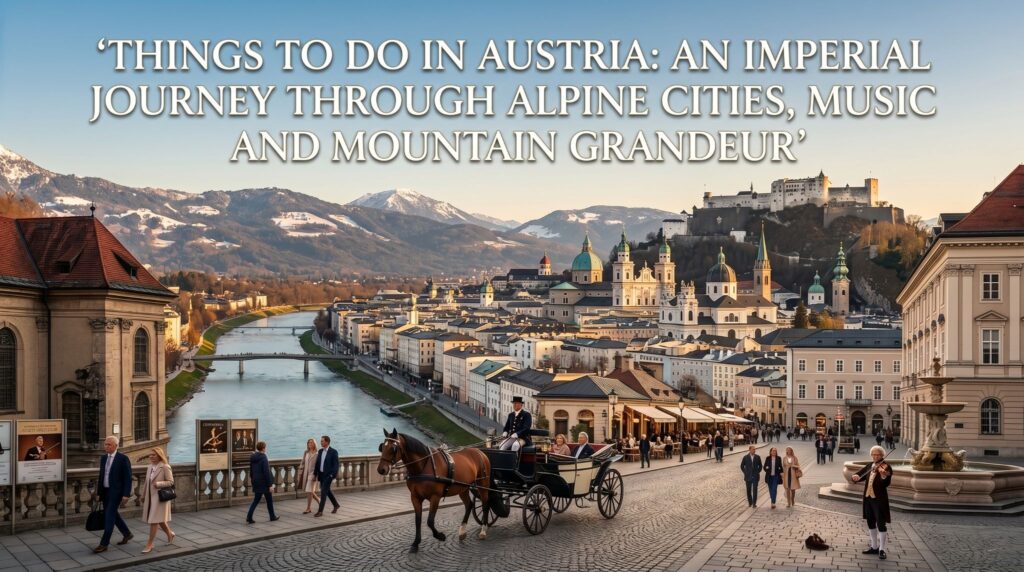
Austria: Where Imperial Elegance Meets Alpine Wilderness
There is a particular quality to Austria that sets it apart from every other country in Europe. It is a nation where the grandeur of a 700 year old empire lingers in every ornate palace facade, every world class concert hall and every elegant coffeehouse where time seems to slow to the pace of a Viennese waltz. It is simultaneously a country of raw and breathtaking Alpine wilderness where glaciers carve through mountain valleys, where emerald lakes mirror the snow capped peaks above them and where tiny villages of extraordinary beauty sit beneath clifftops so dramatic they seem to belong to a different world entirely. The things to do in Austria span this remarkable duality with a completeness and a quality that make it one of the most rewarding and genuinely surprising travel destinations in all of Europe.
This Austria travel guide is your most comprehensive companion for exploring a country that has given the world Mozart, Beethoven, Freud, Gustav Klimt, Arnold Schwarzenegger and the Sound of Music and continues to give every visitor who arrives with curiosity and an open heart an experience of beauty, culture, hospitality and natural wonder that stays with them for the rest of their lives. Austria is a country of profound depth that reveals something new and extraordinary with every visit, whether you are arriving for the first time or returning for the tenth.
Whether you are drawn by the imperial splendor of Vienna, the baroque beauty and Mozart heritage of Salzburg, the Alpine magnificence of Innsbruck, the fairy tale perfection of Hallstatt or the surprisingly vibrant and underrated charms of Graz, the best places to visit in Austria will exceed your most optimistic expectations at every single turn and leave you planning your return before you have even departed.
Mapping Austria’s Greatest Destinations
The best places to visit in Austria span a compact but extraordinarily diverse country that encompasses some of the most magnificent imperial architecture in the entire world alongside some of the most dramatic and beautiful Alpine landscapes on the European continent. The best cities in Austria to visit include Vienna, Salzburg, Innsbruck, Graz, Linz, Bregenz and Klagenfurt, each possessing a completely distinct character, architectural heritage and cultural identity that reflects a different and equally fascinating chapter of Austrian history and civilization.
Beyond the cities, Austria rewards those who venture into its extraordinary natural landscapes with experiences of breathtaking beauty and grandeur. The Austrian Alps cover approximately 62 percent of the country’s total land area and encompass some of the most spectacular mountain scenery, deepest glaciers, most challenging ski resorts and most beautiful Alpine lakes in the entire world. The Salzkammergut lake district in central Austria is a UNESCO World Heritage landscape of extraordinary beauty where dramatic mountains rise directly from the shores of crystal clear lakes creating panoramas of such perfection that they seem almost unreal. The Wachau Valley along the Danube River is a UNESCO listed landscape of vineyards, medieval castles and Baroque monasteries of remarkable beauty.
Vienna Travel Guide
Vienna is one of the most magnificent, culturally overwhelming and genuinely awe inspiring capital cities in the entire world. For over six centuries it served as the imperial capital of the Habsburg dynasty and the center of one of the most powerful and culturally productive empires in human history and the extraordinary legacy of that imperial grandeur is visible and palpable in every boulevard, every palace, every museum and every coffeehouse in this incomparable city. This Vienna travel guide will help you begin to understand and experience a city that could occupy an entire lifetime of exploration and still have more to offer.
Immersing Yourself in Vienna
Things to do in Vienna include visiting the breathtaking Schönbrunn Palace which is the most visited monument in Austria and the former summer residence of the Habsburg emperors with its 1,441 rooms, its magnificent formal gardens and its hilltop Gloriette offering panoramic views over the entire city, exploring the extraordinary Kunsthistorisches Museum which houses one of the greatest art collections in the entire world including an unparalleled concentration of works by Raphael, Titian, Vermeer, Rubens and Bruegel, visiting the magnificent Belvedere Palace complex and its outstanding collection of Austrian art including Gustav Klimt’s legendary painting The Kiss which is without question the most celebrated and beloved work of art ever created in Austria, wandering along the magnificent Ringstrasse boulevard which is lined with some of the most spectacular neo-Gothic, neo-Renaissance and neo-Baroque public buildings ever constructed, attending a performance at the Vienna State Opera which is one of the greatest and most prestigious opera houses in the entire world, experiencing the extraordinary Viennese coffeehouse culture at legendary establishments including Café Central, Café Landtmann and Café Hawelka, visiting the remarkable Naschmarkt which is Vienna’s most celebrated and atmospheric outdoor food and flea market and exploring the outstanding Albertina museum with its extraordinary collection of graphic art including works by Dürer, Monet, Picasso and many others.
Vienna’s Most Magnificent Landmarks and Districts
- Schönbrunn Palace: The most visited monument in Austria, a breathtaking imperial palace of 1,441 rooms set within magnificent formal gardens with a hilltop Gloriette offering panoramic city views
- Kunsthistorisches Museum: One of the greatest art museums in the entire world housing an incomparable collection of European masterpieces assembled by the Habsburg emperors over centuries
- Belvedere Palace: A magnificent baroque palace complex housing Austria’s most important art collection including Klimt’s legendary and infinitely reproduced painting The Kiss
- Vienna State Opera: One of the most prestigious and celebrated opera houses in the entire world, the absolute heart of Vienna’s extraordinary classical music culture
- Ringstrasse: One of the most magnificent urban boulevards in the entire world, lined with spectacular neo-historical public buildings including the Parliament, the Burgtheater and the Vienna City Hall
- St. Stephens Cathedral: The most important Gothic landmark in Austria, the spiritual heart of Vienna and one of the most magnificent cathedrals in all of Central Europe
- Naschmarkt: Vienna’s most beloved and atmospheric outdoor market, a kilometer long celebration of food, culture and Viennese street life
- Prater: Vienna’s historic public park and pleasure ground home to the famous Riesenrad giant Ferris wheel which has been a symbol of the city since 1897
Experiencing Vienna Like a True Viennese
Spend significant time in Vienna’s legendary coffeehouses as they are not merely places to drink coffee but extraordinary cultural institutions where newspapers, conversation, chess and the simple pleasure of watching the world go by have been elevated to an art form. The Vienna City Card provides unlimited public transport and discounted entry to many museums and attractions and is an outstanding value for visitors staying several days. Book opera and concert tickets well in advance as the most prestigious performances sell out many months ahead of time. Explore the vibrant and creative seventh district known as the Neubau for the most contemporary and youthful side of a city that is so much more than just its imperial past.
Salzburg Travel Guide
Salzburg is one of the most perfectly beautiful and immediately captivating cities in all of Europe. Compressed into a relatively small area between the Salzach River and the imposing bulk of the Festungsberg fortress hill, it is a city of extraordinary baroque architectural unity, remarkable historical depth and a musical heritage of such worldwide significance that it has become one of the most visited and most loved destinations in the entire German speaking world. This Salzburg travel guide will help you discover why this magnificent city captivates every single visitor who is fortunate enough to experience it.
Discovering Salzburg
Things to do in Salzburg include visiting the magnificent Hohensalzburg Fortress which dominates the entire city from its hilltop position and is one of the largest and best preserved medieval castles in all of Central Europe, exploring the extraordinary Mozart Birthplace on Getreidegasse which has been transformed into a fascinating museum dedicated to the life and genius of the greatest musical talent the world has ever known, walking through the magnificent and beautifully unified baroque old town which is a UNESCO World Heritage Site of extraordinary architectural coherence and beauty, visiting the stunning Mirabell Palace and its famous gardens where several scenes from the Sound of Music were filmed, taking the funicular to the Hohensalzburg Fortress for breathtaking panoramic views over the city, the Salzach River and the surrounding Alps, exploring the beautiful Hellbrunn Palace with its extraordinary trick fountains that have been surprising and delighting visitors since they were built in 1619, visiting the outstanding Salzburg Museum for a comprehensive understanding of the city’s remarkable history and culture and taking a Sound of Music tour of the city and surrounding Salzkammergut landscape for one of the most uniquely Salzburg experiences available to any visitor.
Salzburg’s Most Celebrated Highlights
- Hohensalzburg Fortress: One of the largest and best preserved medieval castles in Central Europe, dominating the Salzburg skyline from its dramatic hilltop position
- Mozart Birthplace: The most visited museum in Salzburg, the beautifully preserved house where Wolfgang Amadeus Mozart was born on January 27 1756
- UNESCO Old Town: One of the most beautifully unified and architecturally coherent baroque old towns in the entire world, a UNESCO World Heritage Site of extraordinary perfection
- Mirabell Palace and Gardens: A magnificent baroque palace with formal gardens famous worldwide from the Sound of Music and offering breathtaking views of the Hohensalzburg Fortress
- Hellbrunn Palace: A charming Renaissance summer palace famous for its extraordinary and elaborate trick fountain system built in 1619 to surprise unsuspecting guests
- Getreidegasse: Salzburg’s most famous and photogenic shopping street with beautifully decorated wrought iron guild signs and the Mozart Birthplace at number nine
Innsbruck Travel Guide
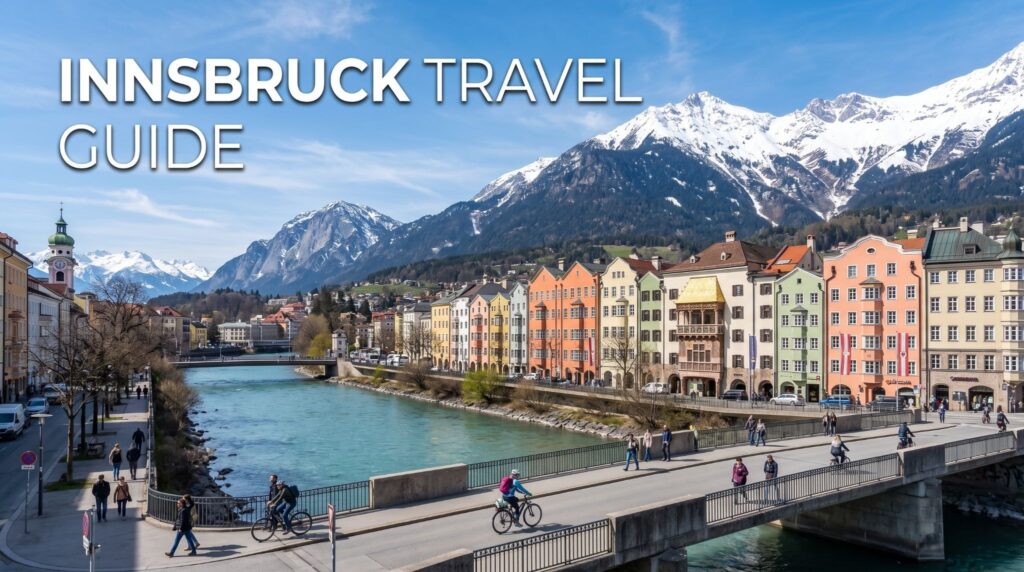
Innsbruck is one of the most dramatically and breathtakingly situated cities in the entire world. The capital of the Austrian state of Tyrol, it sits in a deep Alpine valley completely surrounded by towering mountain peaks that rise so close and so steeply above the city that you can travel from the historic center to a ski slope over 2,000 meters above sea level in less than 20 minutes by cable car. This combination of a beautifully preserved medieval and Renaissance historic center with immediate and extraordinary access to world class Alpine skiing, hiking and outdoor adventure makes Innsbruck one of the most unique and exciting city destinations in all of Europe.
Exploring Innsbruck
Things to do in Innsbruck include visiting the extraordinary Golden Roof which is Innsbruck’s most famous landmark, a magnificent late Gothic oriel window decorated with 2,657 gilded copper tiles commissioned by Emperor Maximilian I in 1500, exploring the beautifully preserved and architecturally extraordinary Herzog Friedrich Strasse which is the historic heart of Innsbruck with its magnificent arcaded buildings and spectacular mountain backdrop, visiting the outstanding Tyrolean Folk Art Museum which houses one of the finest collections of traditional Tyrolean craft, furniture and folk culture in all of Austria, taking the Nordkette cable car from the city center to the Hafelekar peak at 2,334 meters for breathtaking panoramic views over Innsbruck and the surrounding Alpine landscape, visiting the Imperial Palace known as the Hofburg which served as the residence of the Habsburg emperors during their visits to Tyrol, exploring the fascinating Ambras Castle on the outskirts of the city which houses an outstanding collection of Habsburg portraits and armory and taking the short trip to the extraordinary Swarovski Crystal Worlds in nearby Wattens which is one of the most visited attractions in all of Austria.
Innsbruck’s Greatest Attractions
- Golden Roof: Innsbruck’s most iconic landmark, a spectacular late Gothic oriel window covered in 2,657 gilded copper tiles overlooking the historic old town
- Nordkette Cable Car: The most thrilling and spectacular urban cable car journey in Europe, connecting the city center to a mountain peak over 2,000 meters above sea level in minutes
- Tyrolean Folk Art Museum: One of the finest and most comprehensive collections of traditional Alpine folk art and craft culture in the entire German speaking world
- Imperial Palace: The magnificent Habsburg imperial palace in the heart of Innsbruck, a testament to the deep connection between the Tyrolean capital and the Habsburg dynasty
- Bergisel Ski Jump: A spectacular contemporary ski jump and viewing platform designed by the legendary architect Zaha Hadid offering extraordinary views over the city and valley
- Ambras Castle: A beautifully preserved Renaissance castle on the outskirts of Innsbruck housing an outstanding collection of Habsburg artifacts, portraits and the famous armory
Hallstatt Travel Guide
The hallstatt travel guide introduces what is almost certainly the most photographed and most instantly recognizable village in all of Austria and one of the most extraordinarily beautiful small communities anywhere in the entire world. Perched on the impossibly narrow strip of land between the sheer cliff face of the Dachstein massif and the crystal clear waters of the Hallstätter See, Hallstatt is a UNESCO World Heritage village of such concentrated and perfect beauty that it genuinely has to be seen in person to be fully believed and appreciated.
Experiencing Hallstatt
Things to do in Hallstatt include exploring the extraordinarily beautiful village on foot along its narrow lakeside promenade and through its steep cobblestone lanes and staircases that wind up the cliff face between centuries old houses decorated with flowers and overlooking the perfect mirror of the lake below, visiting the remarkable Hallstatt Salt Mine which is the oldest salt mine in the entire world and has been in continuous operation for over 7,000 years providing a fascinating and genuinely extraordinary underground adventure through the history of one of humanity’s oldest industries, taking a boat across the Hallstätter See for the most spectacular and most photographed views of the village reflected in the still waters of the lake, visiting the remarkable Charnel House in the village cemetery which houses beautifully decorated skulls painted with names, dates and floral motifs in a deeply moving and uniquely Alpine tradition, hiking to the spectacular Echern Valley waterfall above the village and taking the funicular to the Salzwelten salt mine entrance for panoramic views over the lake and the surrounding Dachstein mountains.
Hallstatt’s Most Precious Attractions
- Hallstatt Village: One of the most photographed and most instantly recognizable villages in the entire world, a UNESCO World Heritage Site of concentrated and perfect lakeside beauty
- Hallstatt Salt Mine: The oldest salt mine in the entire world, in continuous operation for over 7,000 years and offering a genuinely extraordinary underground historical adventure
- Hallstätter See: One of the most beautiful Alpine lakes in Austria with crystal clear water and breathtaking mountain reflections that create one of the most spectacular natural panoramas in Central Europe
- Charnel House: A unique and deeply moving ossuary in the village cemetery containing beautifully decorated skulls in a tradition that is completely specific to this part of the Austrian Alps
- Dachstein Ice Cave: A spectacular glacial cave system beneath the Dachstein massif accessible from Hallstatt offering an extraordinary encounter with ancient ice formations
Things to Do in Graz
Things to do in Graz reveal Austria’s second largest city as one of the most genuinely surprising, vibrant and rewarding destinations in the entire country. Climb the magnificent Schlossberg hill that rises dramatically from the very heart of the city to the famous Clock Tower which has been watching over Graz since 1712 and offers breathtaking panoramic views over the UNESCO listed old town below, explore the extraordinary Kunsthaus Graz which is one of the most remarkable and provocative contemporary art museums in Central Europe housed in a biomorphic blob like structure of blue acrylic glass panels that has completely transformed the architectural conversation of the city since its construction in 2003, wander through the magnificent arcaded courtyard of the Landhaus which is one of the finest Renaissance buildings in all of Austria, visit the outstanding Schloss Eggenberg on the western edge of the city which is a UNESCO World Heritage baroque palace of extraordinary beauty and historical significance, explore the vibrant and photogenic Lend neighborhood which is Graz’s most creative and rapidly evolving district full of excellent independent restaurants, galleries and design studios and experience the extraordinary concentration of outstanding restaurants that have made Graz one of the most celebrated culinary destinations in the entire German speaking world.
Austrian Alps Travel Guide
The Austrian Alps travel guide introduces one of the most spectacular, diverse and genuinely awe inspiring mountain landscapes in the entire world. The Austrian Alps stretch across the entire width of the country from the Vorarlberg in the west to the Styrian Alps in the east encompassing some of the highest peaks, most extensive glaciers, finest ski resorts and most beautiful Alpine valleys and lakes in all of Central Europe.
The Greatest Alpine Experiences in Austria
The Austrian Alps offer an extraordinary and almost overwhelming range of experiences across every season of the year. In winter they transform into one of Europe’s premier skiing and winter sports destinations with world class resorts including St. Anton am Arlberg which is widely regarded as the birthplace of Alpine skiing, Kitzbühel which hosts the legendary Hahnenkamm downhill race which is the most prestigious and most feared race on the entire World Cup ski circuit, Lech and Zürs which are among the most exclusive and fashionable ski resorts in the entire world and Sölden which serves as a spectacular James Bond film location and one of the finest and most modern high altitude ski areas in Austria.
In summer the same mountains become a paradise for hikers, mountain bikers, via ferrata climbers and paragliders with thousands of kilometers of beautifully marked and maintained trails offering access to some of the most breathtaking and remote Alpine scenery anywhere in Europe. The Grossglockner High Alpine Road which crosses the highest mountain pass in Austria at 2,571 meters is one of the most spectacular and celebrated scenic drives in the entire world.
Austria’s Most Extraordinary Alpine Destinations
- St. Anton am Arlberg: The birthplace of Alpine skiing and one of the finest and most challenging ski resorts in the entire world with extraordinary off-piste terrain
- Kitzbühel: The most glamorous and prestigious ski resort in Austria, home to the legendary and terrifying Hahnenkamm downhill race
- Grossglockner: Austria’s highest mountain at 3,798 meters and the centerpiece of the High Tauern National Park, the largest national park in the entire Alps
- Hallstatt and the Salzkammergut: The most beautiful lake district in Austria, a UNESCO World Heritage landscape of extraordinary Alpine lakes, dramatic cliffs and perfectly preserved villages
- Zell am See and Kaprun: A magnificent Alpine resort town on the shores of the Zeller See offering year round skiing on the Kitzsteinhorn glacier and outstanding summer activities
- Ötztal Valley: One of the most dramatic and spectacular Alpine valleys in Austria, home to the legendary Sölden ski resort and the extraordinary Ötztal Glacier Road
Austrian Food Guide
The Austrian food guide introduces a cuisine of extraordinary richness, historical depth and genuine deliciousness that is far more varied and sophisticated than its international reputation as the home of Wiener Schnitzel and Sachertorte might suggest. Austrian cuisine is the product of centuries of imperial influence, regional diversity and the culinary traditions of the many cultures that made up the vast Habsburg Empire and the result is a food culture of remarkable breadth and quality that deserves far greater international recognition than it currently receives.
Essential Austrian Dishes and Foods to Experience
- Wiener Schnitzel: The most iconic and internationally recognized Austrian dish, a thin escalope of veal pounded flat, breaded and pan fried in clarified butter until perfectly golden and crispy, served with a wedge of lemon and lingonberry jam
- Tafelspitz: Emperor Franz Joseph’s favorite dish and one of the most beloved in all of Viennese cuisine, a beautifully tender boiled beef in a clear broth served with root vegetables, apple and horseradish sauce
- Sachertorte: The most famous cake in Austria and arguably in the entire world, a dense and rich chocolate sponge filled with apricot jam and enrobed in dark chocolate glaze, invented at the Hotel Sacher in Vienna in 1832
- Kaiserschmarrn: A wonderfully indulgent shredded pancake dessert dusted with powdered sugar and served with plum compote, named after Emperor Franz Joseph who adored this simple and deeply satisfying dish
- Apfelstrudel: The most beloved pastry in Austria, a paper thin strudel dough wrapped around a filling of cinnamon spiced apples, raisins and breadcrumbs and served warm with vanilla sauce or whipped cream
- Goulash: A rich and deeply flavored beef stew heavily seasoned with paprika and caraway seeds, introduced to Austria from Hungary during the Habsburg period and now completely integral to Viennese cuisine
- Leberkäse: A uniquely Austrian meat loaf of finely ground beef and pork baked until it develops a beautiful caramelized crust, sliced thick and served in a bread roll as the most beloved Austrian street food
- Linzer Torte: The oldest known cake recipe in the entire world originating from the city of Linz, a rich almond pastry tart filled with redcurrant or raspberry jam and decorated with a distinctive lattice pastry top
Where to Experience the Finest Austrian Food
The Naschmarkt in Vienna is the finest and most atmospheric place in the entire country to sample an extraordinary range of Austrian and international produce, street food and culinary traditions in one vibrant and sensory overwhelming location. The traditional Gasthäuser and Heurigen wine taverns of the Vienna Woods offer the most authentic and convivial setting for experiencing classic Viennese cuisine alongside excellent local wines in a relaxed and genuinely local atmosphere. The extraordinary concentration of outstanding restaurants in Graz has earned that city a reputation as the gastronomic capital of Austria and a destination of genuine pilgrimage for serious food lovers from across the German speaking world.
Austria Itinerary 10 Days
A thoughtfully planned Austria itinerary of 10 days gives you the perfect amount of time to experience the extraordinary breadth and depth of this remarkable country without feeling rushed or missing out on its most essential and irreplaceable experiences.
- Day 1 to 3: Vienna (Schönbrunn Palace, Kunsthistorisches Museum, Belvedere and The Kiss, Vienna State Opera, Ringstrasse, Naschmarkt, Viennese coffeehouse culture)
- Day 4: Wachau Valley day trip from Vienna (Melk Abbey, Dürnstein Castle, Danube River cruise, vineyard exploration)
- Day 5: Hallstatt (UNESCO village, salt mine, lake boat trip, Dachstein excursion)
- Day 6 to 7: Salzburg (Hohensalzburg Fortress, Mozart Birthplace, UNESCO old town, Mirabell Gardens, Sound of Music locations)
- Day 8: Berchtesgaden and Königssee day trip from Salzburg (Eagle’s Nest, spectacular Alpine lake)
- Day 9: Innsbruck (Golden Roof, Nordkette cable car, Tyrolean Folk Art Museum, Imperial Palace)
- Day 10: Graz (Schlossberg, Kunsthaus, Landhaus, Schloss Eggenberg, culinary exploration)
This itinerary delivers an outstanding and genuinely comprehensive experience of Austria covering its magnificent imperial capital, most photographed village, most musically significant city, most dramatically situated Alpine city and most underrated and rewarding second city.
The Perfect Season to Experience Austria
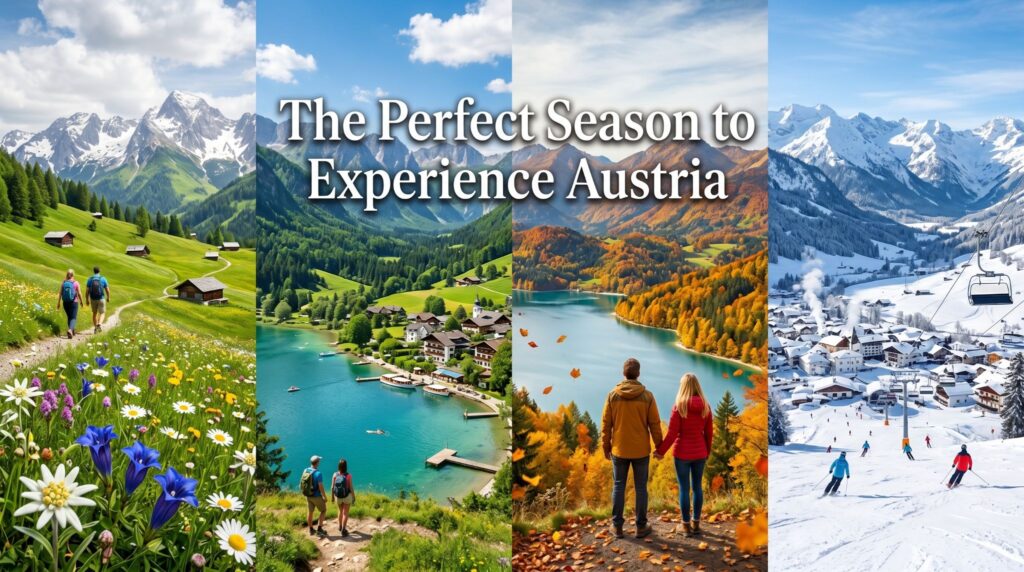
The best time to visit Austria depends entirely on the type of experience you are seeking and which regions of this extraordinarily diverse country you plan to explore most deeply.
Spring from April to May is one of the finest and most beautiful times to visit Austria. The Alpine meadows burst into extraordinary bloom with wildflowers, the lakes of the Salzkammergut shimmer in the fresh spring light, the snow is still dramatically present on the highest peaks creating a breathtaking contrast of green valleys and white summits and the cities feel fresh and alive after the winter months with outdoor cafe terraces opening across Vienna, Salzburg and Graz. The crowds have not yet built to their summer peak and prices for accommodation and travel are significantly more reasonable than during the main tourist season.
Summer from June to August brings warm and often very sunny weather, long days of extraordinary Alpine light and the most vibrant outdoor atmosphere across the entire country. Vienna is alive with outdoor concerts, film screenings and cultural events. The Alpine lakes are warm enough for swimming and the hiking trails are fully open to their highest elevations. However the most popular destinations including Hallstatt, Salzburg and the Salzkammergut become extremely and sometimes uncomfortably crowded during peak summer weeks so book accommodation many months in advance.
Autumn from September to October is an exceptional and increasingly celebrated time to visit Austria. The Alpine forests turn extraordinary shades of gold, amber and russet red, the summer crowds thin considerably, prices begin to fall and the wine harvest season in the Wachau Valley, Burgenland and the Vienna Woods adds a wonderfully convivial and celebratory dimension to any autumn visit. The light in Austria during autumn is particularly beautiful and golden, especially in the Alpine regions and lake districts.
Winter from December to March transforms Austria into one of the most magical and celebrated destinations in the entire world. The Alpine ski resorts are at their most spectacular with deep powder snow, world class skiing and snowboarding and the incomparable atmosphere of Austrian mountain hospitality in cozy alpine huts and candlelit mountain restaurants. The Christmas markets of Vienna, Salzburg, Innsbruck and Graz are among the most beautiful, authentic and atmospheric in all of Europe creating a festive magic that is completely unique to the Austrian cultural tradition.
Austria Visa Requirements
Understanding Austrian visa requirements is an important and necessary first step in planning any visit to this extraordinary country. Austria is a founding member of the European Union and a member of the Schengen Area which means that a single Schengen visa allows entry into Austria alongside all other participating European countries.
Citizens of the United States, Canada, Australia, the United Kingdom and many other countries can visit Austria without a visa for tourism stays of up to 90 days within any 180 day period. From 2025 onwards travelers from many visa exempt countries will be required to obtain an ETIAS travel authorization before visiting Austria and other Schengen countries. This is a simple and straightforward online process but must be completed before departure from your home country.
Citizens of countries not covered by the visa free arrangement will need to apply for a Schengen visa through the Austrian embassy or consulate in their home country well in advance of their planned travel dates. Always verify the most current and accurate entry requirements based on your specific nationality before finalizing any travel bookings as regulations and bilateral agreements can change with relatively little advance notice.
Is Austria Safe for Tourists
Is Austria safe for tourists is a question that virtually every first time visitor considers before planning their trip and the answer is an emphatic and unequivocal yes. Austria is consistently ranked as one of the safest countries in the entire world and one of the very safest travel destinations in Europe with an extremely low crime rate, outstanding public services, excellent healthcare infrastructure and a deeply ingrained culture of order, courtesy and respect toward visitors that makes it one of the most comfortable and reassuring countries in the world to travel through at any time of year.
The most relevant safety considerations for visitors to Austria relate primarily to outdoor activities in the Alps. Always check weather forecasts and trail conditions thoroughly before hiking at altitude as mountain weather in Austria can change with extraordinary speed and violence. Respect all avalanche warnings and closed piste markings during winter ski season and ensure you have appropriate equipment, experience and if necessary qualified mountain guide supervision before attempting challenging mountain routes above the tree line. With proper preparation, respect for the mountain environment and basic common sense, Austria is a completely and genuinely safe destination for all types of travelers regardless of their background, nationality or experience.
Budgeting for Your Austria Journey
Understanding your Austria travel budget before you depart will help you plan a realistic and genuinely enjoyable experience of this magnificent country without any unwanted financial surprises along the way.
- Budget: 70 to 100 dollars per day covering hostels, supermarket meals, free museum visits and affordable public transport
- Mid Range: 150 to 250 dollars per day covering comfortable hotels, restaurants, museum entry and day excursions
- Luxury: 400 dollars and above per day covering five star palace hotels, Michelin starred dining, opera tickets and private guided experiences
Vienna is the most expensive city in Austria by a significant margin though it remains considerably more affordable than comparable imperial capitals like London or Paris. The Vienna City Card and the Salzburg Card provide unlimited public transport and free or heavily discounted entry to the most important museums and attractions in each respective city and represent outstanding value for visitors planning to spend several days exploring these extraordinary destinations. Many of Austria’s greatest natural attractions including the Alpine hiking trails, the Salzkammergut lake shores and the historic old towns of Hallstatt and Graz are completely free to explore and enjoy.
Budget Travel in Austria
Eating at traditional Austrian Würstelstand sausage stands which are found on virtually every busy street corner in Vienna and other major cities is one of the most authentic and affordable ways to eat well in Austria. The Austrian Federal Railways known as ÖBB offer an excellent Sparschiene advance booking discount system that can reduce intercity train travel costs by up to 70 percent compared to full price fares making rail travel between Vienna, Salzburg, Innsbruck and Graz very affordable for budget conscious travelers who plan their journey in advance.
Closing Reflections
Austria is a country that leaves every visitor with a profound and lasting sense of having been somewhere genuinely extraordinary. Whether you are standing speechless before Gustav Klimt’s The Kiss in the Belvedere, listening to the first notes of a Mozart symphony drift across the Mirabell Gardens in Salzburg on a warm summer evening, gazing at the perfect reflection of Hallstatt’s painted houses in the mirror still surface of the Hallstätter See, ascending to the Alpine peaks above Innsbruck by cable car or sitting in a legendary Viennese coffeehouse with a Melange and a slice of Sachertorte as the unhurried hours drift past the window, the things to do in Austria create moments of beauty, culture and genuine human experience that are simply and completely unlike anything else in the world.
This Austria travel guide has covered everything from the best places to visit in Austria and detailed city guides for Vienna, Salzburg, Innsbruck, Hallstatt and Graz to the Austrian Alps travel guide, the austrian food guide, Austria visa requirements, safety information and comprehensive budget planning. Whether you are following a carefully structured Austria itinerary 10 days across the country’s greatest destinations or exploring this magnificent country at your own wonderfully unhurried imperial pace, Austria will reward your curiosity, your love of beauty and your appreciation of the finest things in life with experiences of a quality and a depth that will stay with you for a very long time indeed.
Frequently Asked Questions
What are the best things to do in Austria?
The best things to do in Austria include visiting Schönbrunn Palace and the Belvedere in Vienna, exploring the UNESCO old town of Salzburg, taking the Nordkette cable car in Innsbruck, visiting the extraordinary Hallstatt village and salt mine, hiking in the Austrian Alps and experiencing the legendary Viennese coffeehouse culture.
What are the best cities in Austria to visit?
The best cities in Austria to visit include Vienna for its imperial grandeur and world class museums, Salzburg for its baroque beauty and Mozart heritage, Innsbruck for its dramatic Alpine setting, Hallstatt for its fairy tale lakeside perfection and Graz for its vibrant contemporary culture and outstanding culinary scene.
What is the best time to visit Austria?
The best time to visit Austria is from April to May for spring wildflowers and mild weather, June to August for Alpine hiking and lake swimming, September to October for autumn foliage and wine harvest celebrations and December to March for world class skiing and the most beautiful Christmas markets in Europe.
Is Austria safe for tourists?
Yes. Is Austria safe for tourists is a common concern but Austria is one of the safest countries in the entire world with an extremely low crime rate, outstanding public services and a deeply ingrained culture of safety and respect toward visitors throughout the country.
What is the Austria travel budget?
Your Austrian travel budget can range from 70 dollars per day for budget travelers to 400 dollars or more per day for those seeking a luxury palace hotel and fine dining experience, with Vienna being the most expensive city and smaller Alpine destinations offering considerably better value for money.
Do I need a visa to visit Austria?
Check Austria visa requirements based on your nationality. Many nationalities can visit Austria visa free for up to 90 days under the Schengen Agreement though ETIAS authorization may be required from 2025 onwards for previously visa exempt travelers.
What does the Austrian Alps travel guide cover?
The Austrian Alps travel guide covers the most spectacular mountain landscape in Central Europe including the legendary ski resorts of St. Anton and Kitzbühel, the Grossglockner High Alpine Road, the Salzkammergut lake district, the Zell am See and Kaprun glacier skiing area and the extraordinary Ötztal Valley and Sölden resort.
What is the Austrian food guide most useful for?
The Austrian food guide is most useful for understanding the extraordinary depth and richness of Austrian cuisine including the iconic Wiener Schnitzel, the imperial Tafelspitz, the legendary Sachertorte, the beloved Kaiserschmarrn and Apfelstrudel and the remarkable culinary legacy of the Habsburg Empire that continues to shape Austrian food culture to this day.
What are the best things to do in Hallstatt?
Things to do in Hallstatt include exploring the UNESCO listed village on foot, visiting the world’s oldest salt mine, taking a boat across the Hallstätter See for the most photographed view in Austria, visiting the remarkable Charnel House in the village cemetery and hiking to the spectacular Echern Valley waterfall above the village.
What are the best things to do in Vienna?
Things to do in Vienna include visiting Schönbrunn Palace, the Kunsthistorisches Museum and the Belvedere, attending a performance at the Vienna State Opera, experiencing legendary Viennese coffeehouse culture, walking the magnificent Ringstrasse boulevard, exploring the Naschmarkt and visiting St. Stephens Cathedral at the heart of the magnificent historic city center.