
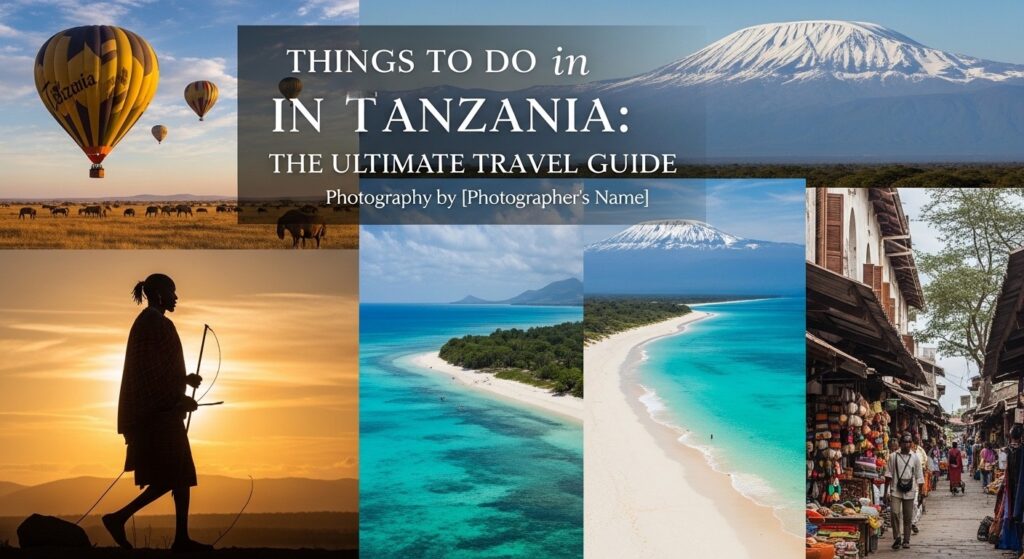
Tanzania is one of those rare destinations that genuinely has it all. Snow-capped mountains, vast golden savannahs, turquoise beaches, ancient cultures, and some of the most extraordinary wildlife on the planet — all packed into one incredible country. Whether you are a first-time traveler or a seasoned explorer, Tanzania will leave you speechless.
This complete Tanzania travel guide covers everything you need to know — from the top cities and attractions to travel costs, itineraries, food, safety, and practical planning tips.
What Is Tanzania Famous For?
Tanzania is world-famous for the Serengeti Great Migration, Mount Kilimanjaro, the spice islands of Zanzibar, and the Ngorongoro Crater. It is home to 22 national parks, some of the richest wildlife on Earth, and a deeply diverse culture shaped by over 120 ethnic groups. It is a place where African safari experience meets tropical paradise — and that combination is truly hard to find anywhere else.
Why Visit Tanzania?
If you are wondering why visit Tanzania, here are a few simple reasons:
• Witness the world’s greatest wildlife migration in the Serengeti
• Climb Africa’s tallest mountain — Kilimanjaro
• Relax on the white-sand beaches of Zanzibar
• Explore UNESCO World Heritage Sites
• Discover one of the most welcoming cultures in Africa
• Experience both adventure and total relaxation in one trip
Tanzania is not just a destination. It is an experience that stays with you for life.
Things to Do in Zanzibar
City Overview
If you are searching for the most memorable things to do in Zanzibar, this tropical island will exceed every expectation. Zanzibar is a stunning archipelago sitting in the Indian Ocean, just off the coast of mainland Tanzania. The main island, Unguja, is a magical blend of Swahili, Arab, Indian, and Portuguese cultures. It is famous for its white sandy beaches, crystal-clear waters, historic Stone Town, and spice plantations. Zanzibar is also the perfect destination to wind down after a mainland safari — combining culture, history, and beach relaxation in one unforgettable island escape.
Top Things to Do
• Explore the winding alleys of Stone Town (UNESCO World Heritage Site)
• Take a spice tour to learn about cloves, cinnamon, and vanilla
• Snorkel or dive in the coral reefs
• Visit the famous Forodhani Night Market for street food
• Take a sunset dhow cruise
Best Places to Visit
• Nungwi Beach — white sand and calm water, perfect for swimming
• Paje Beach — great for kitesurfing
• Prison Island — home to giant Aldabra tortoises
• Jozani Chwaka Bay National Park — see the rare Red Colobus monkeys
Historical Places
• Stone Town — the old city with Swahili architecture, mosques, and the old slave market
• The Old Fort (Arab Fort) — the oldest building in Stone Town, built in the 17th century
• House of Wonders (Beit-el-Ajaib) — a historical palace and museum (currently under restoration)
• Palace Museum (People’s Palace) — former home of the Sultan of Zanzibar
Best Time to Visit
The best time to visit Zanzibar is during the dry seasons: June to October and December to February. These months offer sunny skies, calm seas, and ideal conditions for beach activities and diving.
Is It Safe?
Zanzibar is generally safe for tourists. Petty theft can occur in busy areas, so keep your valuables secure. Dress modestly when visiting Stone Town out of respect for the local Muslim culture. Solo female travelers should take standard precautions, especially at night.
Local Food
• Urojo (Zanzibar Mix) — a flavorful soup with fried snacks, potatoes, and chutney
• Pilau — spiced rice with meat
• Fresh seafood — grilled lobster, octopus, and prawns are a must
• Zanzibar pizza — a popular street food from Forodhani Market
Zanzibar Itinerary
• Day 1: Arrive, check-in, explore Stone Town and Forodhani Night Market
• Day 2: Spice tour in the morning, Prison Island in the afternoon
• Day 3: Full day at Nungwi or Paje Beach, sunset dhow cruise
Zanzibar Travel Cost
• Budget accommodation: $25–$60/night
• Mid-range hotel: $80–$150/night
• Meals per day: $10–$30
• Spice tour: $20–$40 per person
• Overall daily budget: $60–$150 per person
Things to Do in Dar es Salaam
City Overview
Travelers planning things to do in Dar es Salaam will find a city that buzzes with energy from sunrise to sunset. Dar es Salaam is Tanzania’s largest city and its economic powerhouse. Known locally as “Dar,” it is a fast-paced, vibrant city that serves as the main gateway into Tanzania for most international visitors. It is a melting pot of African, Arab, Indian, and European influences. From colourful markets and historic museums to island beaches and waterfront dining, Dar es Salaam offers far more than most visitors expect.
Top Things to Do
• Browse the vast Kariakoo Market
• Visit the National Museum and House of Culture
• Take a boat to Bongoyo or Mbudya Island for stunning beaches
• Watch the sunrise at Kivukoni Fish Market
• Stroll along the Coco Beach waterfront
Best Places to Visit
• Kariakoo Market — one of the largest markets in East Africa
• Bongoyo Island — uninhabited island with pristine beaches, accessible by boat
• Village Museum — 16 traditional homesteads from different Tanzanian tribes
• Oyster Bay — upscale coastal neighborhood with restaurants and beaches
Historical Places
• National Museum of Tanzania — houses the skull of “Nutcracker Man,” one of the oldest human ancestors
• State House — colonial-era building, now the presidential residence
• St. Joseph’s Metropolitan Cathedral — built in 1897 during German colonial rule
Best Time to Visit
Visit Dar es Salaam between June and September (dry season) for the most comfortable weather. Avoid the long rains of March to May.
Is It Safe?
Dar es Salaam is a relatively safe city for tourists. However, like any major city, petty crime exists. Avoid displaying expensive jewelry or cameras in crowded markets. Use reputable taxis or ride-hailing apps.
Local Food
• Ugali — stiff maize porridge served with meat or vegetables
• Nyama Choma — grilled meat, a national favorite
• Chipsi Mayai — chips and egg omelette, a popular street snack
• Fresh mango, pineapple, and coconut from street vendors
Dar es Salaam Itinerary
• Day 1: National Museum, Kariakoo Market, Kivukoni Fish Market at dawn
• Day 2: Boat trip to Bongoyo Island, evening at Coco Beach or Oyster Bay
Dar es Salaam Travel Cost
• Budget guesthouse: $20–$50/night
• Mid-range hotel: $70–$130/night
• Meals per day: $8–$25
• Boat to Bongoyo Island: $10–$15 return
• Overall daily budget: $50–$120 per person
Things to Do in Arusha
City Overview
For anyone planning things to do in Arusha, this dynamic city is the perfect launchpad for one of the greatest safari adventures on Earth. Arusha is known as the “Safari Capital of Tanzania,” sitting at the foot of Mount Meru and positioned close to all the major northern circuit parks. It is the main starting point for safaris to the Serengeti, Ngorongoro Crater, Tarangire, and Lake Manyara. Beyond its role as a safari gateway, Arusha is a lively and diverse city with a rich local culture, colorful markets, and a welcoming atmosphere that makes it well worth spending a couple of extra days.
Top Things to Do
• Start your northern circuit safari from here
• Visit Arusha National Park for hiking and wildlife viewing
• Explore cultural villages and meet the Maasai people
• Shop at the Maasai Market for handmade crafts, beads, and jewelry
• Visit coffee plantations and learn how Tanzanian coffee is made
Best Places to Visit
• Arusha National Park — home to Mount Meru, giraffes, zebras, flamingos, and over 400 bird species
• Cultural Heritage Centre — showcases Tanzanian art, gemstones, and crafts
• Ngurdoto Crater — a beautiful crater within Arusha National Park
• Meserani Snake Park — a fascinating collection of African reptiles
Historical Places
• Arusha Declaration Museum — commemorates the famous 1967 Arusha Declaration by Julius Nyerere
• Boma (German Fort) — colonial-era building now housing the Natural History Museum
• Clock Tower — marks the halfway point between Cairo and Cape Town
Best Time to Visit
The best time is June to October (dry season). Mount Kilimanjaro trekking is best in January to March when skies are clear.
Is It Safe?
Arusha is generally safe for tourists, but street hustlers near the markets can be persistent. Stick to reputable safari operators and avoid walking alone at night.
Local Food
• Supu ya Ndizi — green banana soup
• Makande — mixed beans and maize, a local staple
• Roasted corn — a popular street snack
• Indian-influenced curries — Arusha has a large Indian community with great restaurants
Arusha Itinerary
• Day 1: Arusha National Park game drive, Ngurdoto Crater hike
• Day 2: Cultural village tour, Maasai Market, coffee plantation visit
Arusha Travel Cost
• Budget stay: $30–$60/night
• Mid-range lodge: $80–$160/night
• Arusha National Park entry: $45–$50 per person/day
• Overall daily budget: $80–$180 per person (excluding safaris)
Things to Do in Serengeti
City Overview
When it comes to things to do in Serengeti, no amount of research or photographs can fully prepare you for what awaits. The Serengeti is Tanzania’s most iconic national park and one of the Seven Natural Wonders of Africa. It covers over 14,750 square kilometers of endless plains, rivers, forests, and rocky kopjes. The Serengeti is the stage for the world’s greatest wildlife spectacle — the Great Wildebeest Migration — and a destination that belongs on every serious traveler’s bucket list.
Top Things to Do
• Witness the Great Wildebeest Migration (over 1.5 million wildebeest)
• Game drives to spot the Big Five: lion, leopard, elephant, rhino, and buffalo
• Hot air balloon safari at sunrise over the plains
• Visit Maasai villages for a cultural experience
• Night game drives (available in some private conservancies)
Best Places to Visit
• Seronera Valley — the wildlife-rich heart of the Serengeti
• Grumeti River — famous for dramatic crocodile river crossings during the migration
• Ndutu Area (Southern Serengeti) — best for witnessing calving season (January–March)
• Lobo Wildlife Lodge Area (Northern Serengeti) — best for the Mara River crossing (July–September)
Historical Places
• Olduvai Gorge — one of the most important paleoanthropological sites in the world
• Maasai Bomas — traditional Maasai settlements with centuries-old cultural practices
Best Time to Visit
January to March is ideal for calving season and big cat sightings. June to October is peak wildlife viewing season with dramatic river crossings in the north.
Is It Safe?
The Serengeti is very safe for visitors who travel with licensed safari operators. Always follow your guide’s instructions around wildlife. Never exit the safari vehicle unless instructed.
Local Food
• Full board meals at safari lodges and tented camps
• Local Tanzanian dishes and international cuisine available at all camps
• Bush picnic lunches included in most safari packages
Serengeti Itinerary
• Day 1: Arrive via Arusha, afternoon game drive in Seronera
• Day 2: Full day game drive, hot air balloon at sunrise (optional)
• Day 3: Morning drive, depart to Ngorongoro or Arusha
Serengeti Travel Cost
• Budget camping safari: $200–$300/person/day
• Mid-range lodge safari: $350–$600/person/day
• Luxury lodge safari: $600–$1,500+/person/day
• Park entry fee: $60–$70/person/day
• Hot air balloon: approximately $500–$600 per person
Things to Do in Kilimanjaro
City Overview
Adventure seekers exploring things to do in Kilimanjaro will discover one of the most awe-inspiring and life-changing experiences on the planet. Mount Kilimanjaro is Africa’s tallest mountain, rising to 5,895 meters (19,341 feet) above sea level. The nearby town of Moshi serves as the main base for all climbers and trekkers. Even if you are not climbing, the region offers coffee farms, cultural villages, and stunning scenic landscapes well worth exploring.
Top Things to Do
• Trek to Uhuru Peak via the Machame, Lemosho, or Rongai routes
• Hike through five distinct climate zones — from rainforest to arctic summit
• Visit Moshi town for local markets and culture
• Explore Kilimanjaro National Park at lower altitudes for day hikes
• Visit local coffee farms on the slopes of the mountain
Best Places to Visit
• Uhuru Peak — the roof of Africa at 5,895m
• Shira Plateau — stunning plateau crossing at around 3,800m
• Barranco Wall — a dramatic and scenic climbing section
• Moshi Town — charming base town with local markets and restaurants
Historical Places
• Kilimanjaro National Park Museum (Marangu Gate) — history of Kilimanjaro and its first climbers
• Chagga Cultural Villages — traditional communities on Kilimanjaro’s slopes for centuries
Best Time to Visit
The best time for Mount Kilimanjaro trekking is January to March and June to October. These months offer the clearest skies and most stable weather for the summit attempt.
Is It Safe?
Kilimanjaro is safe to climb with a licensed guide. Altitude sickness is the main risk — acclimatize slowly and choose a route with enough days (at least 7 days recommended). All trekkers must be accompanied by a certified guide by law.
Local Food
• Banana stew (Mchanyato) — a traditional Chagga dish
• Roasted sweet potatoes and plantains
• Moshi coffee — some of the finest coffee in Africa, grown on the slopes of Kilimanjaro
Kilimanjaro Itinerary
• Day 1: Arrive Moshi, briefing and gear check
• Day 2: Machame Gate to Machame Camp (3,000m)
• Day 3: Machame Camp to Shira Camp (3,840m)
• Day 4: Shira to Barranco Camp via Lava Tower (4,600m acclimatization)
• Day 5: Barranco to Karanga Camp
• Day 6: Karanga to Barafu Camp — Base Camp (4,640m)
• Day 7: Summit attempt (midnight start), descend to Mweka Camp
Kilimanjaro Travel Cost
• 7-day Machame Route trek: $2,000–$3,500 per person (all-inclusive)
• Budget 6-day route (Marangu): $1,500–$2,200 per person
• Luxury guided trek: $4,000+ per person
• Park fees are included in most packages
Things to Do in Ngorongoro
City Overview
Visitors planning things to do in Ngorongoro are in for one of the most extraordinary wildlife encounters on the entire African continent. The Ngorongoro Conservation Area is a UNESCO World Heritage Site. At its heart lies the Ngorongoro Crater — the world’s largest intact volcanic caldera, stretching 19 kilometers across and sheltering a permanent population of around 25,000 large animals. Inside this natural amphitheater, you can spot lions resting in the open, elephants moving across the crater floor, and the rare and endangered black rhino.
Top Things to Do
• Game drive inside the crater to see the Big Five (including the rare black rhino)
• Visit Olduvai Gorge — one of the most important archaeological sites in human history
• Explore the Empakaai Crater for stunning views and flamingos
• Trek to the rim for panoramic views of the entire caldera
• Visit Maasai villages inside the conservation area
Best Places to Visit
• Ngorongoro Crater Floor — dense wildlife including lions, elephants, zebras, wildebeest, and black rhino
• Lerai Forest — a fig and acacia forest inside the crater frequented by elephants
• Lake Magadi — a flamingo-dotted soda lake on the crater floor
• Olduvai Gorge — 45 km from the crater, where early human fossils were unearthed
Historical Places
• Olduvai Gorge Museum — dedicated to the discoveries of Louis and Mary Leakey
• Shifting Sands — a unique volcanic black sand dune that moves several meters each year
Best Time to Visit
June to September (dry season) is the best for game viewing. February is excellent for witnessing wildebeest calving in the nearby Ndutu area.
Is It Safe?
Ngorongoro is very safe for tourists. All game drives must be done in a vehicle with a registered guide. Do not attempt to walk on the crater floor.
Local Food
• Full board meals at lodges on the crater rim
• Mix of Tanzanian and continental cuisine at most lodges
• Boma dinners under the stars — a highlight at several crater rim lodges
Ngorongoro Itinerary
• Day 1: Arrive at crater rim lodge, afternoon visit to Olduvai Gorge
• Day 2: Full day game drive on the crater floor, depart late afternoon
Ngorongoro Travel Cost
• Crater entry fee: approximately $70–$300 per vehicle/day (varies by season)
• Budget lodge on crater rim: $150–$250/night
• Luxury lodge: $500–$1,200+/night
• Overall daily budget: $200–$500 per person
Things to Do in Mwanza
City Overview
Travelers curious about things to do in Mwanza will uncover a side of Tanzania that most tourists never get to see. Mwanza is Tanzania’s second-largest city, dramatically positioned on the southern shores of Lake Victoria — Africa’s largest lake. Nicknamed “Rock City” for the enormous granite boulders that rise dramatically from the landscape, Mwanza has a raw, authentic beauty that sets it apart from Tanzania’s more visited destinations. It serves as the gateway to Rubondo Island National Park and the western Serengeti circuit.
Top Things to Do
• Visit Saanane Island National Park — Tanzania’s smallest national park, accessible by boat
• Explore the famous Bismarck Rock on the lakeside
• Take a boat trip on Lake Victoria
• Visit the Sukuma Museum (Bujora Cultural Centre) for traditional dance and history
• Fish for Nile Perch at the local fish market
Best Places to Visit
• Saanane Island National Park — small island with hippos, crocodiles, and birdlife
• Bismarck Rock — the iconic granite rock formation in the lake
• Lake Victoria shores — sunset views and local fishing villages
• Rubondo Island National Park — remote park with chimpanzees and rare bird species
Historical Places
• Nyerere Museum — celebrating Tanzania’s founding father, Julius Nyerere
• Bujora Cultural Centre (Sukuma Museum) — one of the oldest open-air museums in Tanzania
Best Time to Visit
June to September is the most comfortable time to visit Mwanza with dry weather and cooler temperatures.
Is It Safe?
Mwanza is generally safe. As with any large city, take normal precautions and use reliable transportation.
Local Food
• Sangara (Nile Perch) — freshly grilled lake fish, a local specialty
• Dagaa — small dried lake sardines, commonly eaten with ugali
• Matoke — cooked green bananas served with stew
Mwanza Itinerary
• Day 1: Bismarck Rock, Saanane Island, sunset over Lake Victoria
• Day 2: Bujora Cultural Centre, local fish market, boat trip on the lake
Mwanza Travel Cost
• Budget guesthouse: $20–$50/night
• Mid-range hotel: $60–$120/night
• Daily meals: $8–$20
• Overall daily budget: $40–$100 per person
Things to Do in Bagamoyo
City Overview
History lovers and curious travelers looking for things to do in Bagamoyo will find one of the most hauntingly atmospheric and culturally significant towns in all of East Africa. Located approximately 70 km north of Dar es Salaam along the Indian Ocean coast, Bagamoyo carries centuries of layered history within its weathered stone walls. Its name in Swahili translates to “lay down your heart” — a phrase deeply tied to its painful past as one of the most important terminus points of the East African slave trade. Today, Bagamoyo is a quiet, unhurried town with remarkable ruins, colonial-era churches, pristine beaches, and UNESCO World Heritage Site candidate status.
Top Things to Do
• Explore the historic stone buildings and ruins of the old town
• Visit the Bagamoyo Arts College (TaSUBa) — one of East Africa’s top arts institutions
• Relax on Bagamoyo’s quiet, uncrowded beaches
• Visit Kaole Ruins — 13th-century mosque ruins near the town
• Watch local fishermen bring in their catch at sunrise
Best Places to Visit
• Kaole Ruins — ruins of a 13th-century mosque and tombs, oldest Islamic sites in Tanzania
• Old Mission Church — built by Catholic missionaries in 1868, where David Livingstone’s body rested
• Bagamoyo Beach — peaceful and largely untouched by mass tourism
Historical Places in Bagamoyo
• Livingstone Church (Catholic Mission) — where the body of Dr. David Livingstone rested in 1874
• The Old German Boma — colonial administrative building from the German East Africa era
• Old Slave Market Site — a sobering reminder of the town’s painful history
Best Time to Visit Bagamoyo
June to October is ideal. Bagamoyo is a good day trip from Dar es Salaam or a quiet overnight stop.
Is It Safe?
Bagamoyo is a quiet and peaceful town, generally safe for visitors. It sees fewer tourists than other destinations, which adds to its charm.
Local Food in Bagamoyo
• Fresh grilled seafood — fish, prawns, and octopus caught from the Indian Ocean
• Coconut-based curries
• Mandazi — sweet fried dough, popular at breakfast with tea
Bagamoyo Itinerary
• Day 1: Kaole Ruins, Old Mission Church, Slave Market Site, afternoon at the beach
• Day 2 (optional): Boat trip along the coast, local market visit
Bagamoyo Travel Cost
• Budget guesthouse: $20–$40/night
• Meals per day: $8–$18
• Kaole Ruins entry: approximately $5 per person
• Overall daily budget: $35–$80 per person
Tanzania Travel Tips & Practical Info
Tanzania is one of Africa’s most rewarding destinations but a little preparation goes a long way. Here are key Tanzania travel tips to make your trip smooth.
Best Time to Visit Tanzania Overall
• June to October — best for safari and wildlife viewing (dry season)
• January to March — best for Kilimanjaro trekking and Zanzibar beaches
• December to February — perfect for Zanzibar with calm Indian Ocean waters
• March to May — low season with heavy rains; some lodges close but prices drop significantly
Visa & Entry Requirements
Most visitors need a visa to enter Tanzania. Since January 30, 2025, it is no longer possible to obtain a visa on arrival — all travelers must apply for an e-Visa online before departure at immigration.go.tz. The standard tourist visa costs $50 USD for most nationalities. US citizens must apply for a multiple-entry visa at $100 USD. EAC member countries are generally visa-exempt.
Currency & Payments
The local currency is the Tanzanian Shilling (TZS). US Dollars are widely accepted at hotels, safari operators, and tour companies — ensure your bills are dated 2006 or later. ATMs are available in major cities but limited in rural areas. Carry enough cash when heading to national parks or remote areas.
Safety Tips
Tanzania is generally safe for tourists. Standard precautions apply: avoid displaying expensive items, use licensed taxis or apps, and travel with reputable safari operators. The national emergency number is 111/112.
How to Get Around
• Safari vehicles with guides (most common for park visits)
• Domestic flights between major cities and parks (recommended for saving time)
• Dalla-dallas (local minibus) for budget city transport
• Reliable bus services between Dar es Salaam, Arusha, and Mwanza
What to Pack
• Neutral-colored clothing for safaris (avoid bright colors)
• Light layers — mornings and evenings can be cool even in dry season
• Strong sunscreen, insect repellent, and a hat
• Yellow fever vaccination certificate if arriving from an endemic country
• Malaria prophylaxis (consult your doctor before travel)
Tanzania Travel Guide for First-Time Visitors
Tanzania is one of Africa’s most rewarding countries to visit — but for first-timers, the sheer scale of the destination can feel overwhelming. This is a vast, diverse country spanning over 945,000 square kilometers, with 22 national parks, multiple island chains, Africa’s highest mountain, and a coastline stretching for hundreds of kilometers. Knowing where to start is the first challenge.
The good news is that Tanzania has one of the most well-developed tourism infrastructures in Africa. Reputable safari operators, clear travel routes, accessible airports, and a strong tradition of hospitality make this a genuinely welcoming country to explore — even on your very first trip.
One of the first things first-time visitors notice is how warmly Tanzanians welcome guests. The Swahili word “Karibu” — meaning “welcome” — is something you will hear dozens of times a day, and it is always sincere. English is widely spoken in hotels, safari camps, restaurants, and tourist areas across the country, so language is rarely a barrier.
The most important piece of advice for any first-time visitor is this: give yourself enough time. Tanzania is not a destination to rush. Most experienced travelers recommend a minimum of 10–14 days to combine safari and beach properly. Anything shorter and you will leave feeling like you only scratched the surface.
How to Plan a Trip to Tanzania
Planning your Tanzania trip does not have to be complicated. Here is a straightforward, step-by-step approach designed as a practical Tanzania travel guide for beginners:
Step 1 — Decide What You Want to Experience
Are you drawn to wildlife safaris, mountain trekking, beach relaxation, cultural history, or a mix of everything? Tanzania genuinely offers all of these, and most visitors combine at least two. Knowing your priorities will shape your entire route.
Step 2 — Choose Your Route
The most popular and well-serviced route for first-timers is the Northern Circuit: Arusha → Tarangire → Serengeti → Ngorongoro Crater → Zanzibar. This itinerary gives you the best of wildlife and island relaxation in a single trip.
Step 3 — Set Your Safari Budget
• Budget camping safaris: $200–$300 per person per day
• Mid-range lodge safaris: $350–$600 per person per day
• Luxury safaris: $600–$1,500+ per person per day
• All-inclusive packages typically cover accommodation, meals, park entry fees, guide, and transport
Step 4 — Book Well in Advance
Tanzania’s best lodges, tented camps, and safari operators fill up fast — especially during peak season from June to October. Book your safari and accommodation at least 3–6 months in advance to secure the best options and rates.
Step 5 — Apply for Your e-Visa Early
Since January 30, 2025, visa on arrival is no longer available in Tanzania. All visitors must apply for a Tanzania e-Visa online at immigration.go.tz before departure. Apply at least 2–4 weeks ahead to avoid delays. Most nationalities pay $50 USD; US citizens pay $100 USD.
Step 6 — Add a Zanzibar Extension
Almost every first-time visitor benefits from adding 3–5 days in Zanzibar at the end of their mainland safari. Short domestic flights connect Arusha or Dar es Salaam to Zanzibar in under an hour.
Step 7 — Sort Your Health Preparations
Visit your doctor or travel clinic at least 4–6 weeks before your departure date. Malaria prophylaxis is strongly recommended for most parts of Tanzania. A yellow fever vaccination certificate is required if you are arriving from a country where yellow fever is endemic.
Recommended First-Timer Tanzania Itinerary (10 Days)
• Days 1–2: Arrive in Arusha, rest, city tour and Arusha National Park
• Days 3–4: Tarangire National Park — elephants, baobab trees, birdlife
• Days 5–6: Serengeti National Park — game drives, Great Migration (seasonal)
• Day 7: Ngorongoro Crater — full day game drive inside the caldera
• Days 8–10: Zanzibar — Stone Town exploration, spice tour, beach days
Conclusion
Tanzania is a destination that genuinely deserves all the praise it receives. From the breathtaking Tanzania national parks teeming with wildlife, to the powder-soft beaches and islands of Zanzibar, to the towering summit of Kilimanjaro — this country offers an unparalleled depth of experience.
Whether you are drawn by the Tanzania culture and traditions of its 120+ ethnic communities, the raw power of an African safari experience, or simply the desire to stand in a place of extraordinary natural beauty — Tanzania will exceed every expectation.
Start planning, apply for your e-Visa, choose your safari, and get ready for the trip of a lifetime. Tanzania is waiting for you.
FAQs — Things to Do in Tanzania
Is Tanzania safe for tourists?
Yes, Tanzania is generally safe for tourists. While petty crime exists in cities, violent crime against visitors is rare. Travel with reputable operators and follow standard safety precautions.
What is the best time to visit Tanzania?
The best time is June to October for safaris and January to March for trekking Kilimanjaro. Zanzibar beaches are excellent December through February.
Do I need a visa for Tanzania?
Most nationalities need a visa. Since January 2025, all visitors must apply for a Tanzania e-Visa online before arriving. The fee is $50 USD for most nationalities and $100 for US citizens.
How much does it cost to travel to Tanzania?
It depends heavily on your travel style. A budget traveler can manage on $100–$150/day, while safari packages range from $200 to $1,500+ per person per day. A 10-day trip combining safari and Zanzibar typically costs $3,000–$6,000+ per person including flights.
What wildlife can I see in Tanzania?
Tanzania is home to the Big Five (lion, leopard, elephant, buffalo, rhino), cheetahs, giraffes, zebras, hippos, crocodiles, and over 1,000 bird species. The Serengeti hosts the world’s largest land animal migration.
Do I need vaccinations for Tanzania?
A yellow fever certificate is required if arriving from an endemic country. Malaria prophylaxis is strongly recommended. Consult your doctor about typhoid, hepatitis A, and other vaccines.
Can I combine Tanzania safari and beach in one trip?
Absolutely. Combining a northern circuit safari with a Zanzibar extension is one of the most popular travel experiences in Africa and is very easy to arrange.
What language is spoken in Tanzania?
Swahili (Kiswahili) is the national language. English is also widely spoken, especially in tourist areas, hotels, and safari camps.