
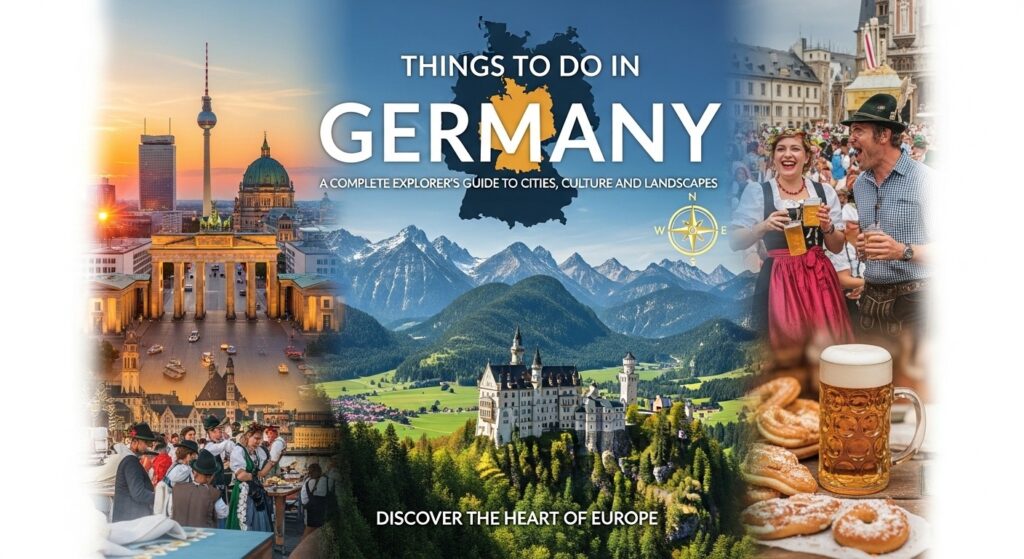
Germany: A Country That Has Everything
Germany is a country of extraordinary contrasts and remarkable depth. It is a nation where fairy tale castles rise above dense forested valleys, where world class art museums anchor the hearts of ancient cities, where cutting edge contemporary culture thrives alongside centuries old traditions and where the warmth and generosity of its people make every visitor feel genuinely welcome. The things to do in Germany span an astonishing range of experiences that will satisfy history lovers, food and beer enthusiasts, outdoor adventurers, architecture fans and culture seekers in equal measure.
This Germany travel guide is designed to take you on a comprehensive journey through one of Europe’s most fascinating and rewarding travel destinations. Germany is the most visited country in Central Europe and for very good reason. Its cities are diverse and captivating, its landscapes are breathtaking and its cultural contributions to art, music, philosophy, science and literature have shaped the entire world. From the cosmopolitan energy of Berlin and the Bavarian traditions of Munich to the medieval romance of the Rhine Valley and the wild natural beauty of the Black Forest, Germany offers a travel experience that is as varied as it is unforgettable.
Whether you are planning your first visit or returning to discover corners of the country you have not yet explored, the best places to visit in Germany will reward you at every turn with beauty, history, culture and the very best of European hospitality.
Charting the Best of Germany
The best places to visit in Germany are spread across a large and diverse country that encompasses everything from the flat northern coastline of the North Sea and the Baltic to the towering peaks of the Bavarian Alps in the south. The best cities in Germany to visit include Berlin, Munich, Hamburg, Cologne, Frankfurt, Dresden, Nuremberg, Heidelberg and Freiburg, each possessing a completely distinct character, architectural heritage and cultural identity.
Beyond the cities, Germany rewards those who venture into its extraordinary regions. Bavaria in the south combines Alpine scenery, medieval towns and a deeply cherished local culture. The Rhine Valley cuts through some of the most romantic and castle studded landscapes in all of Europe. The Black Forest in the southwest offers dense ancient woodland, spa towns and picture perfect villages. The Baltic and North Sea coasts provide dramatic seascapes and charming historic harbor towns. Germany is a country that reveals something new and extraordinary at every turn.
Berlin Travel Guide
Berlin is one of the most compelling, complex and creatively electric cities in the entire world. It is a city that has been through more dramatic upheaval, destruction and reinvention than almost any other in modern history and the result is a metropolis of extraordinary depth, raw energy and genuine cultural power. This Berlin travel guide will help you understand and experience everything that makes this remarkable city so utterly unique and endlessly fascinating.
Immersing Yourself in Berlin
Things to do in Berlin include standing before the iconic Brandenburg Gate which has witnessed some of the most defining moments in modern European history, walking along the remaining sections of the Berlin Wall and exploring the East Side Gallery which is the longest open air gallery in the world, visiting the extraordinary complex of museums on Museum Island which is a UNESCO World Heritage Site, exploring the haunting Memorial to the Murdered Jews of Europe, visiting the Reichstag building with its spectacular glass dome designed by Norman Foster offering panoramic views over the entire city, discovering the vibrant street art and creative culture of the Kreuzberg and Friedrichshain neighborhoods, exploring the magnificent Charlottenburg Palace, visiting the world class Pergamon Museum and experiencing the legendary Berlin nightlife and electronic music scene that is unrivaled anywhere in the world.
Berlin’s Most Powerful Landmarks and Districts
- Brandenburg Gate: The most iconic symbol of Germany and of Berlin’s extraordinary journey from division to reunification
- East Side Gallery: The longest remaining section of the Berlin Wall transformed into an extraordinary open air gallery of murals
- Museum Island: A UNESCO World Heritage Site housing five of the world’s greatest museums including the Pergamon and the Neues Museum
- Memorial to the Murdered Jews of Europe: A profoundly moving and architecturally extraordinary memorial to the six million Jewish victims of the Holocaust
- Reichstag: The seat of the German parliament with a stunning glass dome that symbolizes the transparency of German democracy
- Kreuzberg: Berlin’s most culturally diverse and creatively vibrant neighborhood famous for its street art, markets and outstanding food scene
- Charlottenburg Palace: The largest and most magnificent royal palace in Berlin surrounded by beautiful baroque gardens
- Potsdamer Platz: A striking modern district that was once the epicenter of the divided city and has been completely reimagined since reunification
Making the Most of Berlin
The Berlin Welcome Card offers unlimited public transport and discounted entry to many museums and attractions and is an excellent value for visitors staying several days. Museum Island alone requires at least a full day so plan accordingly. Book the Reichstag dome visit in advance as it is free but requires a reservation. Explore the neighborhoods of Prenzlauer Berg, Mitte and Neukölln on foot to discover the real character of the city beyond the major tourist landmarks.
Munich Travel Guide
Munich is the proud and magnificent capital of Bavaria and one of the most beloved and visited cities in all of Germany. It is a city that combines the grandeur of royal architecture, the warmth of Bavarian hospitality, world class art collections, outstanding cuisine and an extraordinary beer culture into one of the most enjoyable and complete city experiences in Europe. This Munich travel guide will help you experience everything that makes this city so special and so endlessly appealing.
The Munich Experience
Things to do in Munich include exploring the magnificent Marienplatz and watching the famous Glockenspiel chime from the towers of the New Town Hall, visiting the extraordinary Deutsches Museum which is the largest science and technology museum in the world, experiencing the world famous Oktoberfest beer festival if visiting in late September and early October, exploring the vast and beautiful English Garden which is larger than Central Park in New York and home to a famous river surfing wave, visiting the three outstanding art museums of the Pinakothek complex, touring the magnificent Nymphenburg Palace and its extensive baroque gardens, taking a day trip to the breathtaking Neuschwanstein Castle in the nearby Bavarian Alps and experiencing the incredible atmosphere of a Bayern Munich football match at the Allianz Arena.
Munich’s Finest Attractions
- Marienplatz: The historic heart of Munich dominated by the stunning neo-Gothic New Town Hall and its famous Glockenspiel
- Deutsches Museum: The largest and most comprehensive science and technology museum in the entire world
- English Garden: One of the largest urban parks in the world, beloved by Müncheners for relaxation, cycling and river surfing
- Nymphenburg Palace: A magnificent baroque summer palace on the western edge of Munich surrounded by beautiful formal gardens
- Viktualienmarkt: Munich’s most famous and beloved daily food market, an outstanding place to sample Bavarian food and culture
- Pinakothek Museums: Three outstanding art museums housing collections spanning from medieval masterpieces to cutting edge contemporary art
- Hofbräuhaus: The most famous beer hall in the world and an essential and utterly authentic Munich cultural experience
- BMW Museum and Welt: A world class automotive museum and delivery center celebrating the history and future of one of Germany’s most iconic brands
Experiencing Munich Like a Local
Embrace the Bavarian way of life by spending time in a traditional beer garden. Munich has more beer gardens per capita than any other city in the world and they are a genuinely wonderful way to experience local culture. The Munich U-Bahn and S-Bahn networks are excellent for getting around the city. Book Oktoberfest beer tent reservations many months in advance if you plan to visit during the festival period as they fill up extremely quickly.
Hamburg Travel Guide
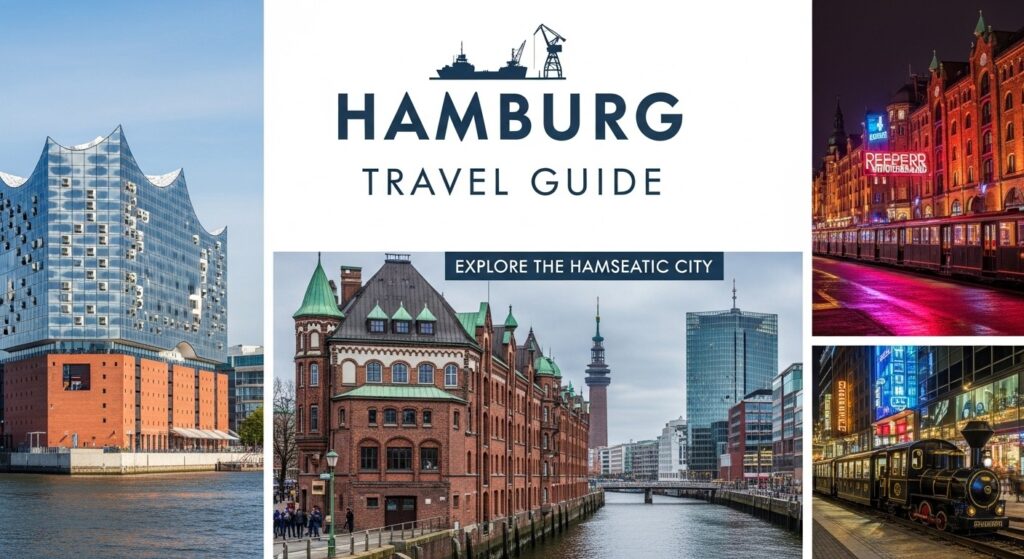
Hamburg is one of the most underrated and genuinely surprising cities in all of Germany. As the country’s largest port city and second largest city overall, it is a place of extraordinary maritime heritage, stunning waterfront architecture, world class cultural institutions and a creative and independent spirit that sets it apart from any other German city.
Uncovering Hamburg
Things to do in Hamburg include exploring the magnificent Speicherstadt warehouse district which is a UNESCO World Heritage Site and one of the most architecturally stunning areas in all of Germany, visiting the outstanding Miniatur Wunderland which is the largest model railway exhibition in the entire world and one of Germany’s most visited attractions, exploring the vibrant and historic Reeperbahn entertainment district, visiting the stunning new Elbphilharmonie concert hall which has become one of the most celebrated new buildings in Europe, wandering through the charming Blankenese neighborhood with its beautiful villas and hillside lanes above the Elbe, exploring the historic Altstadt and its magnificent St. Michaelis Church and experiencing the extraordinary fish market at the St. Pauli Fischmarkt on Sunday mornings.
Hamburg’s Greatest Highlights
- Speicherstadt: A UNESCO listed district of magnificent red brick warehouse buildings on a network of canals, now home to museums, galleries and design studios
- Elbphilharmonie: A breathtaking new concert hall built on top of a historic warehouse with a stunning wave shaped roof and free public viewing platform
- Miniatur Wunderland: The world’s largest model railway exhibition covering over 1,500 square meters with extraordinary detail and craftsmanship
- HafenCity: Europe’s largest inner city urban development project transforming Hamburg’s historic harbor into a stunning contemporary district
- Alster Lakes: Two beautiful artificial lakes in the heart of Hamburg perfect for sailing, rowing and waterfront dining
- St. Michaelis Church: Hamburg’s most beloved landmark and one of the finest baroque churches in northern Germany
Cologne Travel Guide
Cologne is one of the oldest and most historically significant cities in Germany, founded by the Romans over 2,000 years ago on the banks of the Rhine. It is a city of extraordinary cathedral architecture, outstanding museums, a vibrant carnival tradition and a warmth and openness that makes it one of the most welcoming destinations in the entire country.
Exploring Cologne
Things to do in Cologne include visiting the magnificent Cologne Cathedral which is a UNESCO World Heritage Site and one of the greatest Gothic structures ever built, crossing the famous Hohenzollern Bridge covered in thousands of love locks, exploring the outstanding Museum Ludwig which houses one of the finest collections of modern and contemporary art in Europe, visiting the fascinating Roman-Germanic Museum built directly above ancient Roman ruins, wandering through the charming old town neighborhoods of Altstadt Nord and Altstadt Sud, exploring the vibrant Belgian Quarter with its independent boutiques and excellent restaurants, taking a Rhine River cruise to admire the city from the water and experiencing the legendary Cologne Carnival if visiting in February which is one of the most spectacular street festivals in all of Europe.
Cologne’s Crown Jewels
- Cologne Cathedral: One of the most magnificent Gothic cathedrals in the entire world, dominating the city skyline with its twin spires
- Hohenzollern Bridge: A historic railway bridge across the Rhine adorned with hundreds of thousands of love locks and offering wonderful city views
- Museum Ludwig: One of the most important modern art museums in Europe housing outstanding works by Picasso, Warhol and many others
- Roman-Germanic Museum: A world class archaeological museum built directly above a preserved ancient Roman mosaic floor
- Chocolate Museum: One of the most visited museums in Germany telling the fascinating story of chocolate from its Aztec origins to the present day
- Rhine Promenade: A beautiful riverside walkway offering outstanding views of the cathedral and the city waterfront
Frankfurt Travel Guide
Frankfurt is one of the most misunderstood cities in Germany. Often dismissed as purely a business destination, it is in fact a city of remarkable cultural depth, outstanding museums, a beautifully restored medieval old town and one of the most impressive skylines in all of Europe. Frankfurt deserves a much more prominent place in any serious German travel guide.
Discovering Frankfurt
Things to do in Frankfurt include exploring the beautifully reconstructed Römerberg old town with its magnificent half timbered houses and historic town hall, visiting the outstanding Städel Museum which is one of the most important art museums in Germany with a collection spanning 700 years of European art, exploring the remarkable Museum Embankment along the south bank of the River Main which houses no fewer than 15 outstanding museums within walking distance of one another, visiting the Goethe House where the great German writer Johann Wolfgang von Goethe was born and lived, exploring the vibrant Sachsenhausen neighborhood famous for its traditional apple wine taverns, visiting the spectacular Palmengarten botanical garden and taking day trips to the charming medieval towns of Heidelberg and Rothenburg ob der Tauber.
Frankfurt’s Essential Attractions
- Römerberg: The magnificently restored historic heart of Frankfurt with beautiful half timbered buildings surrounding a central fountain
- Städel Museum: One of the most important and comprehensive art museums in Germany with an extraordinary collection of European masterpieces
- Museum Embankment: One of the finest concentrations of world class museums anywhere in Europe, stretching along the south bank of the River Main
- Goethe House: The beautifully preserved birthplace and childhood home of Germany’s greatest literary figure
- Sachsenhausen: Frankfurt’s most atmospheric neighborhood famous for traditional apple wine taverns and an excellent flea market
- Frankfurt Skyline: One of the most dramatic and impressive city skylines in Europe, earning Frankfurt the nickname Mainhattan
Bavaria Travel Guide
The Bavaria travel guide introduces one of the most romantic, culturally rich and visually stunning regions in all of Germany. Bavaria occupies the entire southeastern corner of the country and encompasses Alpine mountains, medieval towns, fairy tale castles, deep blue lakes and a deeply cherished local culture that is unlike anything else in Germany.
The Magic of Bavaria
Bavaria is home to some of the most iconic images in all of German travel. Neuschwanstein Castle perched dramatically on a rocky hilltop above the Alpsee lake is the most photographed castle in Germany and the inspiration for the Disney castle. The medieval walled town of Rothenburg ob der Tauber is the finest surviving example of a medieval German town anywhere in the country. The crystal clear Königssee lake surrounded by towering Alpine peaks offers some of the most breathtaking scenery in Central Europe. The charming town of Berchtesgaden nestled in the heart of the Bavarian Alps provides access to outstanding hiking, the spectacular Eagle’s Nest and the serene Königssee.
Must Visit Destinations in Bavaria
- Neuschwanstein Castle: The most iconic and visited castle in Germany, a breathtaking 19th century fairy tale fortress in the Bavarian Alps
- Rothenburg ob der Tauber: The most perfectly preserved medieval walled town in Germany and one of the finest in all of Europe
- Berchtesgaden: A stunning Alpine town surrounded by mountains offering world class hiking, skiing and the historic Eagle’s Nest
- Königssee: One of the most beautiful and pristine Alpine lakes in Germany, surrounded by towering mountain peaks
- Regensburg: A remarkably well preserved medieval city on the Danube with a stunning Gothic cathedral and one of the oldest stone bridges in Germany
- Bamberg: A UNESCO World Heritage City of extraordinary beauty with outstanding baroque architecture and a famous smoked beer brewing tradition
Black Forest Travel Guide
The Black Forest travel guide covers one of the most atmospheric, ancient and scenically beautiful regions in all of Germany. The Schwarzwald as it is known in German is a vast area of dense forested hills, deep river valleys, traditional farmhouses, spa towns and picture perfect villages in the southwestern corner of the country bordering France and Switzerland.
Exploring the Black Forest
The Black Forest offers an extraordinary range of experiences for every type of traveler. Hike or cycle through the ancient woodland on hundreds of kilometers of well marked trails. Visit the elegant spa town of Baden-Baden which has been one of Europe’s most fashionable resort destinations since the Roman era. Explore the charming town of Triberg which is home to Germany’s highest waterfall and the world’s largest cuckoo clock. Drive the spectacular Black Forest High Road which winds through the finest scenery in the region. Visit the open air museum at Vogtsbauernhof to discover traditional Black Forest farmhouse life. Explore the picturesque town of Freiburg im Breisgau which is the sunniest and most charming city in Germany with a magnificent Gothic cathedral and a unique network of tiny water channels running through its medieval streets.
Black Forest Highlights
- Baden-Baden: One of Europe’s most elegant and sophisticated spa towns with magnificent thermal baths and a world famous casino
- Freiburg im Breisgau: The sunniest and most charming city in Germany with a magnificent Gothic cathedral and a wonderful weekly market
- Triberg: Famous for Germany’s highest waterfall and an extraordinary concentration of traditional cuckoo clock makers and sellers
- Black Forest High Road: A spectacular scenic driving route winding through the finest forest and mountain scenery in the region
- Titisee: A beautiful glacial lake in the heart of the Black Forest surrounded by forested hills and traditional villages
- Vogtsbauernhof Open Air Museum: An outstanding open air museum presenting the traditional life and architecture of the Black Forest region
Germany Itinerary 10 Days
Planning a well considered Germany itinerary for 10 days is the key to experiencing the extraordinary diversity of this magnificent country without feeling rushed or overwhelmed.
- Day 1 to 3: Berlin (Brandenburg Gate, East Side Gallery, Museum Island, Kreuzberg, Reichstag)
- Day 4: Dresden (Frauenkirche, Zwinger Palace, Semper Opera House, Albertinum Museum)
- Day 5: Nuremberg (Imperial Castle, medieval old town, WWII Documentation Center)
- Day 6 to 7: Munich (Marienplatz, English Garden, Nymphenburg Palace, Deutsches Museum)
- Day 8: Neuschwanstein Castle and Hohenschwangau (Bavarian Alps day trip from Munich)
- Day 9: Heidelberg (castle ruins, old town, Philosopher’s Walk, Neckar River)
- Day 10: Cologne (Cathedral, Museum Ludwig, Hohenzollern Bridge, Rhine cruise)
This itinerary delivers a genuinely comprehensive and deeply rewarding experience of Germany covering its greatest cities, most iconic landscapes and richest historical and cultural experiences.
The Best Season to Visit Germany
The best time to visit Germany depends on the regions you plan to explore and the type of experience you are seeking.
Spring from April to May is one of the finest times to visit Germany. The weather is mild and increasingly warm, the countryside is green and blooming, the beer gardens begin to open across Bavaria and the major tourist sites are busy but not yet at their summer peak. The famous Rheinland-Pfalz wine villages along the Rhine and Mosel valleys are particularly beautiful during spring when the vineyards come back to life.
Summer from June to August brings warm sunny weather, long days and a vibrant outdoor atmosphere across the entire country. Beer gardens in Munich and across Bavaria are in full swing, outdoor festivals fill the calendar and the North Sea and Baltic coast resorts are at their most lively. However popular destinations like Neuschwanstein Castle and the Romantic Road towns can become extremely crowded during peak summer weeks.
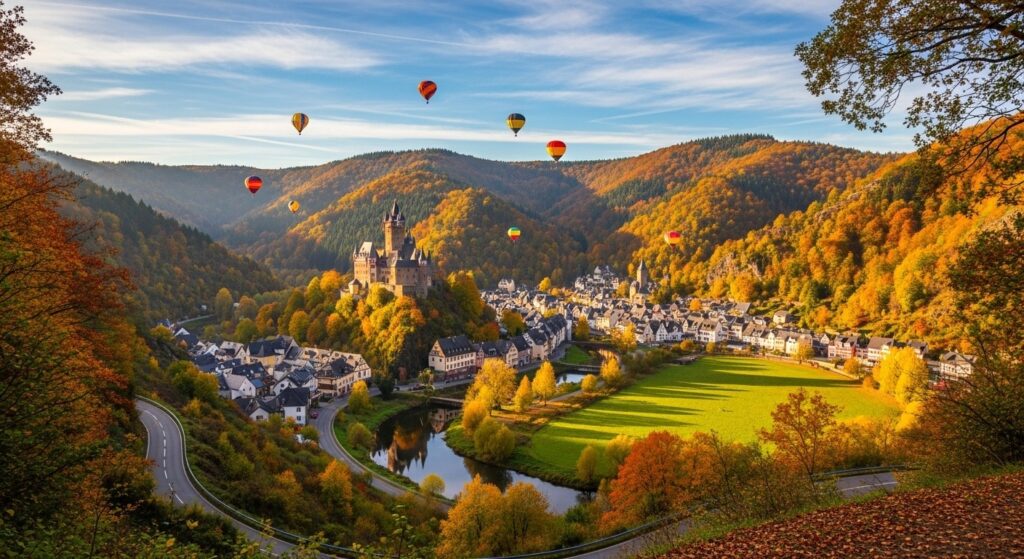
Autumn from September to October is arguably the finest time to visit Germany. The famous Oktoberfest festival in Munich runs from late September to early October and is one of the greatest and most exhilarating cultural events in the world. The Rhine and Mosel valleys are transformed by the wine harvest season and the forests of the Black Forest and Bavaria turn extraordinary shades of red, gold and amber.
Winter from November to February brings Germany’s legendary Christmas markets to life in cities and towns across the entire country. Nuremberg, Cologne, Dresden, Rothenburg ob der Tauber and Munich host some of the most beautiful and atmospheric Christmas markets in the world. The Bavarian Alps offer outstanding skiing and the country takes on a wonderfully festive and magical atmosphere throughout the season.
Germany Visa Requirements
Understanding Germany visa requirements is an essential first step in planning your trip. Germany is a member of the European Union and the Schengen Area which means a single Schengen visa allows entry into Germany and all other participating European countries.
Citizens of the United States, Canada, Australia, the United Kingdom and many other countries can visit Germany without a visa for stays of up to 90 days within any 180 day period for tourism purposes. However from 2025 onwards, travelers from many visa exempt countries will be required to obtain an ETIAS travel authorization before visiting Germany and other Schengen countries. This is a simple online process but must be completed before departure.
Citizens of countries not covered by the visa free agreement will need to apply for a Schengen visa through the German embassy or consulate in their home country. Always check the latest entry requirements based on your specific nationality on the official German government website before booking your trip.
Is Germany Safe for Tourists
Is Germany safe for tourists is a question that many first time visitors ask before planning their trip. Germany is one of the safest travel destinations in Europe and in the entire world. It has excellent public services, a professional and well resourced police force, outstanding healthcare infrastructure and a well established tourism industry that welcomes tens of millions of international visitors every year.
As with any major travel destination, basic precautions are advisable in busy urban areas. Pickpocketing can occasionally occur at major tourist sites in Berlin, Munich and Frankfurt and on busy public transport routes. Keeping your belongings secure, being aware of your surroundings in crowded spaces and avoiding displaying expensive items openly is all that is required to travel safely and comfortably throughout Germany.
Budgeting for Germany
Understanding your Germany travel budget before you depart will help you plan a genuinely enjoyable and financially comfortable trip through this wonderful country.
- Budget: 60 to 90 dollars per day covering hostels, supermarket meals, free museums and affordable public transport
- Mid Range: 130 to 220 dollars per day covering comfortable hotels, restaurants, paid attractions and intercity travel
- Luxury: 350 dollars and above per day covering boutique hotels, fine dining and private guided experiences
Cities like Berlin and Hamburg offer outstanding value for money compared to many other major European capitals. Munich is more expensive especially during Oktoberfest when accommodation prices can increase dramatically. Taking advantage of Germany’s excellent supermarkets for breakfast and lunch while eating out for dinner is one of the most effective ways to manage your daily costs without sacrificing the experience.
Budget Travel in Germany
Budget travel in Germany is very achievable with the right approach. Germany has an outstanding network of affordable hostels in every major city. Many of the country’s greatest museums and galleries offer free or heavily discounted entry on certain days of the week. The Deutschlandticket is an outstanding monthly public transport pass that allows unlimited travel on all regional trains, buses and trams across the entire country and is one of the best budget travel tools available in Europe.
Germany Packing List
A well considered Germany packing list will ensure you are fully prepared for the diverse range of experiences, climates and activities that Germany offers across its varied regions and seasons.
- A good quality waterproof jacket as rain can occur at any time of year across all parts of Germany
- Comfortable and sturdy walking shoes suitable for cobblestone city streets and countryside hiking trails
- Warm layers for travel to the Bavarian Alps, the Black Forest and northern Germany especially outside of summer
- Smart casual clothing for evenings in restaurants, bars, concert halls and theatres especially in cities like Berlin and Munich
- Sunscreen and sunglasses for summer travel especially in Bavaria and along the Rhine Valley
- A reusable water bottle as tap water is safe, clean and excellent quality throughout Germany
- A compact day bag suitable for day trips and city exploration
- All necessary travel documents including passport, ETIAS authorization if required, travel insurance and any pre booked attraction tickets
Closing Words
Germany is a country that surprises, moves and inspires every traveler who takes the time to truly explore it. Whether you are standing before the haunting sections of the Berlin Wall, raising a magnificent stein of beer in a Munich beer garden, gazing up at the impossible beauty of Cologne Cathedral, hiking through the ancient forests of the Black Forest or watching the sun set over the fairy tale towers of Neuschwanstein Castle, the things to do in Germany create experiences and memories that stay with you for a very long time.
This Germany travel guide has covered everything from the best places to visit in Germany and detailed city and regional guides to Germany visa requirements, safety advice and budget planning. Whether you are following a carefully structured Germany itinerary for 10 days or exploring the country at your own pace, Germany will reward your curiosity and your sense of adventure with extraordinary depth, beauty and warmth at every turn.
Frequently Asked Questions
What are the best things to do in Germany?
The best things to do in Germany include visiting the Berlin Wall and Museum Island in Berlin, experiencing Oktoberfest in Munich, exploring Cologne Cathedral, hiking in the Black Forest, visiting Neuschwanstein Castle and discovering the historic old towns of Heidelberg and Rothenburg ob der Tauber.
What are the best cities in Germany to visit?
The best cities in Germany to visit include Berlin for history and culture, Munich for Bavarian tradition and beer, Hamburg for maritime heritage, Cologne for its magnificent cathedral and Frankfurt for its outstanding museum scene and striking skyline.
What is the best time to visit Germany?
The best time to visit Germany is from April to May for spring blossoms and mild weather, September to October for Oktoberfest and autumn foliage and December for the world famous Christmas markets across the country.
Is Germany safe for tourists?
Yes. Is Germany safe for tourists is a common concern but Germany is one of the safest destinations in Europe with excellent public services and a very welcoming local population throughout the country.
What is the Germany travel budget?
Your Germany travel budget can range from 60 dollars per day for budget travelers to 350 dollars or more per day for those seeking a luxury experience with Berlin and Hamburg offering particularly good value compared to other major European cities.
Do I need a visa to visit Germany?
Check Germany visa requirements based on your nationality. Many nationalities can visit Germany visa free for up to 90 days under the Schengen Agreement though ETIAS authorization may be required from 2025 onwards.
What should I pack for Germany?
A good germany packing list includes a waterproof jacket, comfortable walking shoes, warm layers, smart casual clothing for evenings, a reusable water bottle and all necessary travel documents including ETIAS authorization if required.
What does the Bavaria travel guide cover?
The bavaria travel guide covers the most romantic and culturally rich region in Germany including Neuschwanstein Castle, the medieval town of Rothenburg ob der Tauber, the stunning Königssee lake, the Alpine town of Berchtesgaden and the UNESCO listed city of Bamberg.
What is the Black Forest travel guide most useful for?
The black forest travel guide is most useful for planning a journey through one of Germany’s most atmospheric and scenic regions including the elegant spa town of Baden-Baden, the charming city of Freiburg, the spectacular Black Forest High Road and the traditional cuckoo clock villages of Triberg.
What are the best things to do in Berlin?
Things to do in Berlin include visiting the Brandenburg Gate, walking the East Side Gallery, exploring Museum Island, standing at the Memorial to the Murdered Jews of Europe, visiting the Reichstag dome and experiencing the legendary creative and nightlife culture of Kreuzberg and Friedrichshain.