
Paris: A City That Lives Up to Every Expectation and Then Exceeds Them
There are cities that disappoint when you finally arrive in person after years of anticipation and there are cities that exceed every expectation you brought with you. Paris is emphatically and consistently the latter. It is a city of such extraordinary beauty, such remarkable cultural density and such effortless elegance that first time visitors frequently find themselves simply stopping in the middle of a boulevard or a bridge and staring in something approaching disbelief at the perfection of what surrounds them. The things to do in Paris span an almost overwhelming range of experiences from the most celebrated art museum in the entire world and the most iconic tower ever built to the most sublime food markets in Europe and the most beautiful and most intellectually stimulating neighborhoods on the continent.
This Paris travel guide is written for every type of traveler whether you are arriving in Paris for the first time with a list of famous landmarks to experience or returning for the fifth time in search of the quieter and more personal corners of a city that reveals new layers of beauty and meaning with every visit. Paris is a city that rewards both the first timer and the seasoned visitor with equal generosity and the depth of experience it offers is genuinely and consistently inexhaustible.
Mapping the Best of Paris
The best places to visit in Paris are distributed across a city of extraordinary variety where 20 arrondissements each possessing its own distinct character, architecture and social identity create a metropolitan landscape of remarkable diversity and richness. Understanding which neighborhoods and which landmarks to prioritize is the foundation of a truly rewarding Paris for first time visitors experience and the key to avoiding the feeling of being overwhelmed by a city that contains more world class attractions per square kilometer than almost anywhere else on earth.
The Seine River divides Paris into the Rive Gauche Left Bank to the south and the Rive Droite Right Bank to the north and this fundamental geographic division shapes the character of the entire city. The Left Bank is traditionally associated with intellectual life, bohemian culture, the great universities and the most atmospheric and literary cafes and neighborhoods. The Right Bank is associated with commerce, fashion, luxury and the grandest monuments and museums of the city.
The Greatest Attractions and Things to Do in Paris
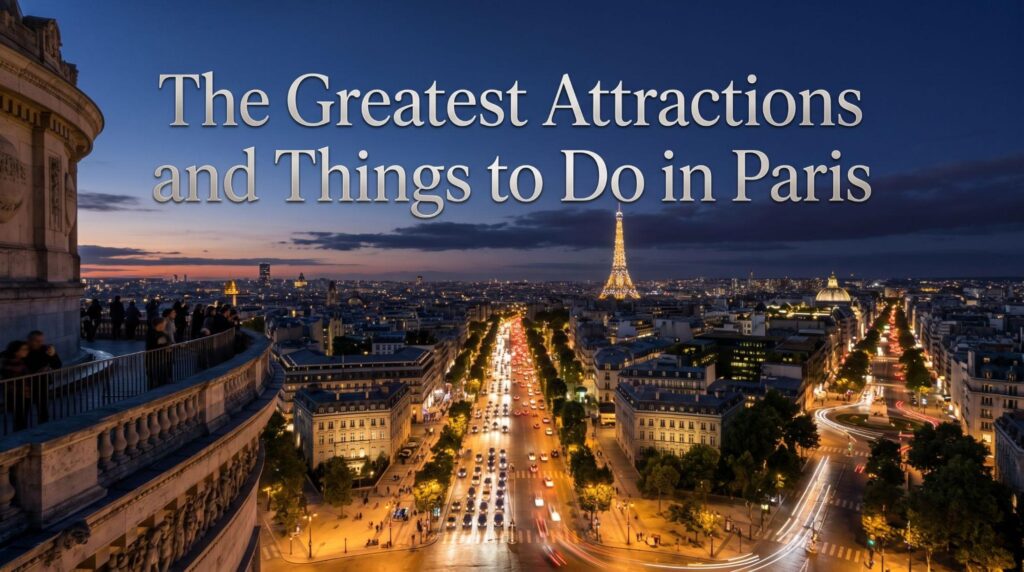
Things to do in Paris begin with the monuments and cultural institutions that have made this city the most visited in the entire world and extend outward into the neighborhoods, markets, parks and hidden corners that reveal the genuine and living character of Parisian daily life.
Eiffel Tower Paris Guide
The Eiffel Tower Paris guide begins with an acknowledgment that no structure in the entire world is more immediately recognizable or more universally associated with a single city than the Eiffel Tower. Built by Gustave Eiffel for the 1889 World Exhibition and originally intended as a temporary structure, the Tower stands 330 meters tall and has become the most visited paid monument in the entire world with approximately seven million visitors every year. Book tickets well in advance as walk up queues can be extremely long especially during peak season. The view from the second floor is outstanding but the summit platform offers a genuinely extraordinary 360 degree panorama over Paris and on clear days toward the surrounding Ile de France countryside. Visit at dusk to watch the city transition from golden afternoon light to the extraordinary light show that illuminates the Tower every evening after dark.
Louvre Museum Paris Guide
The Louvre Museum Paris guide introduces what is by virtually every measure the greatest and most comprehensive art museum in the entire world. The Louvre houses a collection of approximately 380,000 objects of which around 35,000 are on permanent display spanning virtually every civilization and every period of human artistic production from ancient Mesopotamia and Egypt through Greek and Roman antiquity to European painting and sculpture from the medieval period to the mid 19th century. The museum occupies the former royal palace of France and its sheer scale is one of the most immediately overwhelming aspects of the experience. Book tickets in advance online to avoid the queues at the entrance. One visit cannot hope to do justice to the collection and prioritizing in advance is strongly recommended. The Denon Wing houses the most famous works including the Mona Lisa, the Venus de Milo and the Winged Victory of Samothrace.
Notre Dame Cathedral
Notre Dame Cathedral on the Ile de la Cité is one of the finest and most historically significant examples of Gothic architecture in the entire world and one of the most important landmarks in all of France. Currently being restored following the devastating fire of April 2019 and reopened to visitors in December 2024, Notre Dame is once again one of the most essential and most moving experiences available in Paris. The Cathedral’s extraordinary facade with its twin towers, its rose windows and its extraordinary sculptural program represents the summit of French Gothic architectural achievement.
Musée d’Orsay
The Musée d’Orsay housed in a magnificently converted 19th century railway station on the Left Bank of the Seine is the most important Impressionist art museum in the entire world housing the greatest collection of works by Monet, Renoir, Degas, Pissarro, Sisley and Cézanne in existence alongside outstanding works of Post-Impressionism by Van Gogh, Gauguin and Seurat. It is consistently one of the most rewarding and most enjoyable museum experiences in Paris precisely because its scale is human and manageable in a way that the Louvre is not.
Versailles Day Trip From Paris
The Versailles day trip from Paris is the single most popular and most rewarding excursion available from the city and one of the most extraordinary architectural and historical experiences in all of Europe. The Palace of Versailles was built by Louis XIV the Sun King between 1661 and 1710 as a deliberate and overwhelming statement of absolute royal power and remains one of the most magnificent and most extravagant buildings ever constructed by any monarch anywhere in the world. The Hall of Mirrors alone with its 357 mirrors reflecting the light from 17 arched windows overlooking the garden is one of the most breathtaking interiors in existence. The formal gardens extending behind the palace over approximately 800 hectares are equally extraordinary. Take the RER C train from central Paris to Versailles Château Rive Gauche station in approximately 40 minutes. Book palace tickets well in advance.
Best Neighborhoods in Paris
Understanding the best neighborhoods in Paris is absolutely essential for experiencing the city beyond its most famous landmarks and discovering the genuine and living character of Parisian daily life.
Montmartre Paris Guide
The Montmartre Paris guide introduces one of the most atmospheric, most romantic and most historically significant neighborhoods in all of Paris. Perched on the highest hill in the city crowned by the magnificent white domes of the Sacré Coeur Basilica, Montmartre was the neighborhood where the most important artistic revolution of the late 19th and early 20th centuries took place as Picasso, Modigliani, Toulouse-Lautrec, Renoir and dozens of other artists lived, worked, argued and created in the studios and cafes of this extraordinary hillside community. The Place du Tertre at the summit of the hill is permanently occupied by portrait artists and painters. The steep lanes and staircases of the neighborhood are among the most beautiful and most atmospheric in Paris especially in the early morning before the tourist crowds arrive.
Le Marais Paris Guide
The Le Marais Paris guide covers what is widely considered the most diverse, most vibrant and most culturally rich neighborhood in contemporary Paris. The Marais occupies the 3rd and 4th arrondissements on the Right Bank and is one of the few areas of central Paris to have survived the Baron Haussmann urban renovations of the 19th century largely intact, preserving an extraordinary concentration of medieval and Renaissance architecture including magnificent aristocratic hotels particuliers private palaces that now house some of the finest museums in Paris. The neighborhood is home to the outstanding Centre Pompidou, the excellent Musée Picasso, the magnificent Place des Vosges which is the oldest planned square in Paris and one of the most beautiful in the entire world and a vibrant concentration of independent galleries, concept stores, excellent restaurants and the heart of Parisian Jewish culture centered on the Rue des Rosiers.
Saint-Germain-des-Prés
Saint-Germain-des-Prés on the Left Bank is the most intellectually celebrated and most literarily significant neighborhood in Paris, the quarter where Sartre, de Beauvoir, Hemingway, Fitzgerald and generations of the most important writers and thinkers of the 20th century gathered in the legendary cafes of Les Deux Magots and Café de Flore to discuss, debate and create. Today the neighborhood retains much of its elegance and intellectual atmosphere and is home to excellent independent bookshops, outstanding restaurants and some of the finest antique and art dealers in Paris.
Bastille and Oberkampf
The Bastille and Oberkampf neighborhoods in the 11th arrondissement represent the most vibrant and most authentically contemporary face of Paris, a quarter of excellent independent restaurants, cocktail bars, concept stores and music venues that attracts the most creative and most forward looking demographic of the city. This is where contemporary Parisian life happens most visibly and most energetically.
Best Museums in Paris
The best museums in Paris extend far beyond the Louvre and the Musée d’Orsay to encompass one of the most remarkable concentrations of world class cultural institutions in any city in the entire world.
The Centre Pompidou in the Marais is the most important modern and contemporary art museum in Europe housing an extraordinary collection of 20th and 21st century art including outstanding works by Matisse, Kandinsky, Duchamp, Warhol and many others in a building of radical architectural innovation that caused enormous controversy when it opened in 1977 and is now universally recognized as one of the masterpieces of 20th century architecture. The Musée Rodin in a beautiful 18th century hotel particulier surrounded by sculpture gardens in the 7th arrondissement houses the most comprehensive collection of Auguste Rodin’s sculptures in the world including The Thinker and The Kiss in a setting of extraordinary intimacy and beauty. The Musée de l’Orangerie in the Tuileries Gardens houses Monet’s monumental Water Lilies paintings in two purpose built oval rooms that provide one of the most extraordinary and most meditative art viewing experiences in all of Paris.
Paris Food Guide
The Paris food guide introduces a culinary tradition of extraordinary depth, sophistication and variety that has shaped the entire history of fine dining around the world and continues to set the global standard for gastronomic excellence at every level from the simplest neighborhood brasserie to the most celebrated Michelin starred restaurant.
Essential Parisian Foods and Dining Experiences
The Croissant is the most iconic and most immediately recognizable symbol of Parisian breakfast culture and eating a perfectly made buttery and flaky croissant fresh from a great boulangerie bakery is one of the most simple and most genuinely pleasurable food experiences available in the city. Steak Frites is the most quintessentially Parisian bistro dish in existence, a perfectly cooked entrecôte steak served with crispy golden frites and a sauce béarnaise or sauce au poivre that is one of the most deeply satisfying meals available in the city at any price level. Soupe à l’Oignon is the most beloved and most comforting of all classic French dishes, a deeply flavored beef broth enriched with slowly caramelized onions and topped with a thick layer of melted Gruyère cheese over toasted bread that has been warming Parisians for centuries. A Plateau de Fromages cheese board assembled from the extraordinary variety of French cheeses available at any good fromagerie is one of the most revelatory food experiences available to any visitor and an essential part of understanding French food culture. Macarons from the legendary pâtisseries of Pierre Hermé and Ladurée are the most internationally recognized Parisian sweet and while they have become something of a cliché they remain genuinely extraordinary when made by the finest practitioners.
Where to Eat in Paris
The Rue Montorgueil in the 2nd arrondissement is the finest and most atmospheric pedestrian food street in central Paris lined with outstanding fromageries, charcuteries, boulangeries, fishmongers and restaurants. The Marché d’Aligre in the 12th arrondissement is the most authentic and most affordable covered food market in Paris, a neighborhood institution of extraordinary character and variety. Avoid tourist trap restaurants around the Eiffel Tower, Notre Dame and the major tourist sites and instead seek out the neighborhood bistros and brasseries of the Bastille, Oberkampf, Batignolles and Belleville areas for the most honest and most affordable Parisian dining experiences.
Paris Fashion Guide
The Paris fashion guide is an essential companion for any visitor with an interest in the city’s extraordinary and internationally defining role in the global fashion industry. Paris has been the undisputed capital of world fashion since the 17th century when Louis XIV made the French court the most influential arbiter of taste and style in Europe and the city continues to host the most prestigious and most internationally attended fashion weeks in the world four times a year.
The Avenue Montaigne and the Rue du Faubourg Saint-Honoré are the two most prestigious and most internationally recognized luxury fashion streets in Paris home to the flagship stores of Chanel, Dior, Louis Vuitton, Hermès, Givenchy and virtually every other great French and international luxury house. The Palais Royal gardens surrounded by arcaded galleries are home to some of the most interesting and most creative independent fashion designers and concept stores in Paris. The Marais neighborhood offers the finest concentration of emerging and independent French fashion talent alongside excellent vintage clothing dealers and concept stores.
Paris Shopping Guide
The Paris shopping guide reveals a city of extraordinary retail variety extending from the most prestigious luxury boutiques in the world to the most vibrant and most authentic flea markets in Europe. The Galeries Lafayette and Printemps department stores on the Boulevard Haussmann are the most magnificent and most comprehensive department stores in Paris with extraordinary fashion, beauty, food and home departments housed in spectacular Belle Époque buildings with breathtaking glass domed ceilings. The Marché aux Puces de Saint-Ouen at the Porte de Clignancourt is the largest antique market in the world with hundreds of dealers selling everything from rare antique furniture and vintage jewelry to rare books, vintage clothing and collectible objects across a vast warren of covered and open air market passages.
Paris Nightlife Guide
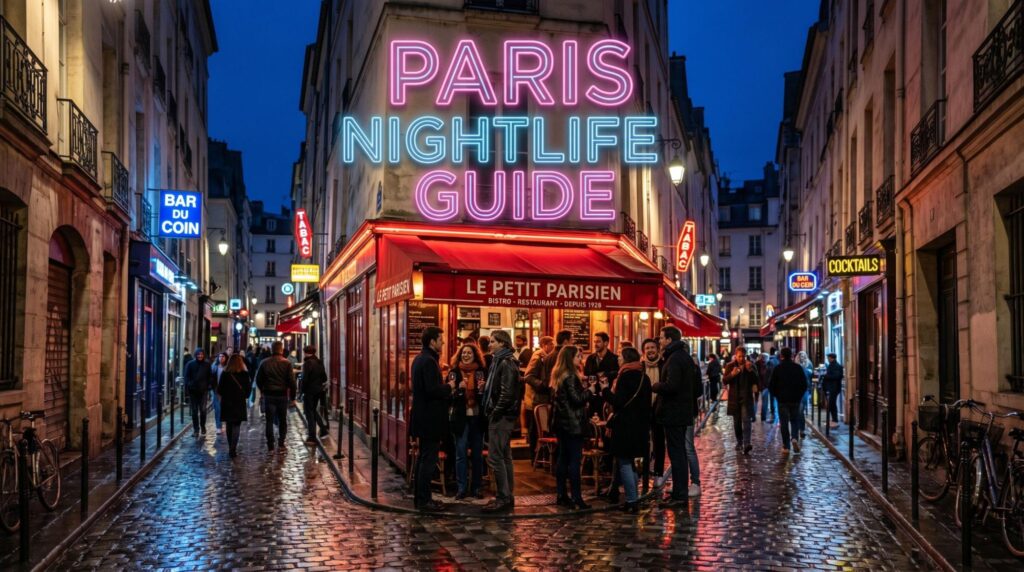
The Paris nightlife guide covers a city of extraordinary after dark sophistication and variety that operates on a different timetable from most European cities. Parisian evenings begin late with dinner rarely starting before 8pm and often not until 9pm or later. The cocktail bar scene in Paris is among the finest in the entire world with outstanding bars concentrated in the Marais, Saint-Germain-des-Prés, Pigalle and Oberkampf neighborhoods. The legendary Moulin Rouge cabaret in Montmartre remains one of the most spectacular and most internationally celebrated entertainment experiences in Paris. The electronic music and club scene centered on venues including the Rex Club, La Machine du Moulin Rouge and the floating club boats along the Seine is internationally recognized as among the most innovative and most exciting in Europe.
Day Trips From Paris
The day trips from Paris available to visitors are outstanding given the city’s exceptional transport connections and its central position in the Ile de France region surrounded by some of the most historically significant and most scenically beautiful landscapes in Northern France.
The Versailles day trip from Paris is covered in detail above and remains the most popular and most essential excursion. Giverny is the village in Normandy where the Impressionist painter Claude Monet lived for 43 years and created the famous water garden that inspired his Water Lilies series, one of the most beautiful and most emotionally moving artistic pilgrimages available from Paris. Reims is a magnificent cathedral city in the Champagne region approximately 45 minutes from Paris by TGV high speed train, home to one of the greatest Gothic cathedrals in France and the most prestigious Champagne houses in the world including Taittinger, Veuve Clicquot and Mumm. Mont Saint-Michel is a longer day trip of approximately 3.5 hours by TGV and coach but rewards the effort with one of the most extraordinary and most instantly recognizable sights in all of France.
Getting Around Paris
Getting around Paris is straightforward and efficient thanks to one of the finest urban public transport networks in the entire world. The Paris Métro has 16 lines covering the city comprehensively and is fast, frequent and affordable with trains running approximately every 2 minutes during peak hours. The RER suburban rail network connects the city center to the major airports, Versailles and other suburban destinations. The Vélib bicycle sharing system provides an excellent and affordable way to explore the city by bike. Walking is highly recommended for exploring the historic center as many of the most beautiful and most rewarding streets and neighborhoods are best discovered on foot. The Paris Visite travel card provides unlimited travel on the Métro, RER, buses and trams within the city and represents excellent value for visitors planning to use public transport frequently.
Paris Itinerary
Paris Itinerary 3 Days
A Paris itinerary of 3 days gives you enough time to experience the essential highlights of the city while also allowing time to discover some of the neighborhoods and experiences that reveal its genuine contemporary character.
Day 1 begins with the Eiffel Tower in the morning followed by a walk along the Champ de Mars and the Trocadéro and an afternoon at the Musée d’Orsay finishing with dinner in the Saint-Germain-des-Prés neighborhood.
Day 2 is devoted to the Louvre in the morning allowing at least three hours for the collection followed by an afternoon exploring the Tuileries Gardens, the Palais Royal and the Marais neighborhood including the Place des Vosges and the Centre Pompidou.
Day 3 begins with Montmartre and the Sacré Coeur in the morning followed by the Musée de l’Orangerie in the early afternoon and an evening exploring the shops, restaurants and cocktail bars of the Bastille and Oberkampf neighborhoods.
Extended Paris Itinerary
A Paris itinerary of five or more days allows for the Versailles day trip, deeper exploration of the Marais and Saint-Germain neighborhoods, visits to the Musée Rodin and the Musée Picasso and extended time in the food markets and fashion districts that reveal the full extraordinary depth of this magnificent city.
Best Time to Visit Paris
The best time to visit Paris is from April to June and September to October when the weather is mild and beautiful, the chestnut trees lining the grand boulevards are in full leaf and the summer crowds have not yet reached their peak or have begun to thin considerably.
July and August bring warm weather and a vibrant outdoor atmosphere but also the largest crowds and the highest prices at all major attractions and hotels. Many Parisian restaurants and small businesses close during August as locals take their summer holidays creating a slightly quieter and more tourist oriented atmosphere in some neighborhoods.
November to March offers the most authentic and most affordable experience of Paris with dramatically reduced crowds at the major museums and attractions, very competitive hotel prices and a city that operates entirely for its own residents rather than for visitors creating an atmosphere of genuine Parisian daily life that is impossible to experience during the busy tourist season.
Is Paris Safe for Tourists
Is Paris safe for tourists is a question that most first time visitors ask before planning their trip. Paris is a very safe city with a well developed tourism infrastructure and a professional and visible police presence throughout the major tourist areas. Pickpocketing is the most common concern and can occur around the Eiffel Tower, on the Métro and in crowded tourist areas. Keep your belongings secure, use a crossbody bag and be particularly alert in very crowded spaces and on busy Métro lines. With basic precautions Paris is an extremely safe and genuinely welcoming destination for all types of travelers.
Paris Travel Budget
Understanding your Paris travel budget before you arrive will help you plan a realistic and genuinely enjoyable experience of this extraordinary city. Paris is an expensive city but offers excellent value at every budget level for those who know where to look.
Budget travelers staying in hostels and eating at boulangeries, markets and affordable neighborhood bistros can manage on approximately 80 to 110 dollars per day. Mid-range travelers staying in comfortable hotels and dining at good restaurants should budget between 160 and 280 dollars per day. Luxury travel in Paris including five star palace hotels, Michelin starred dining and private guided experiences starts from 500 dollars per day and can go considerably higher.
Budget travel in Paris is very achievable with smart choices. Many of the greatest experiences in Paris are completely free including the permanent collections of the Musée Carnavalet, the Musée d’Art Moderne de la Ville de Paris and many other municipal museums. The Jardins des Tuileries, the Luxembourg Gardens, the Canal Saint-Martin and the extraordinary street life of the Marais and Montmartre are all completely free to enjoy. Eating a sandwich and a coffee at a boulangerie rather than sitting at a café terrace reduces food costs dramatically without sacrificing the quality of the food.
Paris Visa Requirements
Paris visa requirements follow the same rules as the broader French and Schengen Area entry requirements. Citizens of the United States, Canada, Australia, the United Kingdom and many other countries can visit Paris and France without a visa for tourism stays of up to 90 days within any 180 day period. From 2025 onwards travelers from many previously visa exempt countries will be required to obtain an ETIAS travel authorization before visiting. Always verify the most current requirements for your specific nationality before booking your trip.
Closing Thoughts
Paris does not disappoint. It cannot disappoint because it is genuinely and completely extraordinary in a way that no amount of advanced knowledge, no number of photographs and no quantity of prior preparation can fully anticipate. Whether you are standing before the Mona Lisa in the Louvre feeling the full weight of human artistic achievement, watching the Eiffel Tower light show from the Trocadéro on a warm summer evening, eating the finest croissant of your life at a zinc counter in a neighborhood boulangerie at 8am or simply sitting at a café terrace on the Boulevard Saint-Germain watching Paris walk past you with the unhurried confidence of a city that has been doing this magnificently for a thousand years, the things to do in Paris create experiences of such beauty, depth and genuine human richness that they stay with you for the rest of your life.
This Paris travel guide has covered everything from the best places to visit in Paris and detailed neighborhood guides to the Paris food guide, the Paris fashion guide, the Versailles day trip from Paris, Paris visa requirements and comprehensive budget planning. Paris is waiting and it will exceed every expectation you bring to it.
Frequently Asked Questions
What are the best things to do in Paris?
The best things to do in Paris include visiting the Eiffel Tower, exploring the Louvre Museum, discovering the Musée d’Orsay, wandering through Montmartre and taking the day trip to the Palace of Versailles.
How many days do I need in Paris?
A Paris itinerary of 3 days covers the essential highlights while a Paris itinerary of five or more days allows for Versailles, deeper neighborhood exploration and the finest museum collections.
What is the best time to visit Paris?
The best time to visit Paris is from April to June and September to October for the finest combination of pleasant weather and manageable crowds.
Is Paris safe for tourists?
Yes. Is Paris safe for tourists is a common concern but Paris is a very safe city with basic precautions including keeping belongings secure in crowded areas being all that is required.
What is the Paris travel budget?
Your Paris travel budget ranges from 80 dollars per day for budget travelers to 500 dollars or more per day for those seeking a luxury palace hotel and Michelin dining experience.
What is the Montmartre Paris guide most useful for?
The Montmartre Paris guide is most useful for understanding the extraordinary artistic heritage of this hilltop neighborhood and planning a visit to the Sacré Coeur Basilica and the most atmospheric streets and viewpoints.
What is the Le Marais Paris guide most useful for?
The Le Marais Paris guide is most useful for planning exploration of the most diverse and culturally rich neighborhood in Paris including the Centre Pompidou, Place des Vosges and the finest independent galleries and restaurants.
What are the best day trips from Paris?
The best day trips from Paris include Versailles for the magnificent royal palace, Giverny for Monet’s famous garden, Reims for Gothic cathedral architecture and Champagne tasting and Mont Saint-Michel for one of the most extraordinary sights in all of France.
What is the Paris fashion guide most useful for?
The Paris fashion guide is most useful for understanding the layout of the luxury fashion districts, knowing where to find independent French designers and planning a shopping experience across every budget level in the fashion capital of the world.
Do I need a visa to visit Paris?
Paris visa requirements follow Schengen Area rules and many nationalities can visit visa free for up to 90 days though ETIAS authorization may be required from 2025 onwards.