
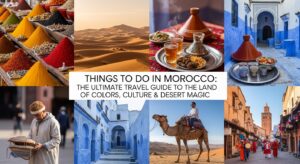
There are very few countries in the world that manage to be everything at once — ancient and modern, wild and welcoming, mountainous and coastal, mystical and real. Morocco is one of them. The moment you step off the plane and breathe in the mix of cedar wood, cumin, and sea breeze, you understand that this country is going to leave a mark on you unlike any other destination you have ever visited.
So why visit Morocco? Because nowhere else on Earth can you wander through a 1,000-year-old medieval medina in the morning, ride a camel into golden Sahara dunes at sunset, surf Atlantic waves the next day, and sip mint tea overlooking snowcapped Atlas Mountains on the day after that. Morocco is that rare kind of place where every single day brings a completely new landscape, flavor, and story.
This complete guide covers the best things to do in Morocco, city by city, with everything you need to explore this extraordinary country with confidence and curiosity.
Why Visit Morocco?
What is Morocco famous for? The answer is almost impossible to keep short. Morocco is famous for its imperial cities and ancient medinas, its labyrinthine souks overflowing with handwoven rugs and hand-hammered copper lanterns, its dramatic desert landscapes, its extraordinary food, and its deeply warm, hospitable people. It is a country where Berber, Arab, Andalusian, and French cultures have blended over thousands of years into something entirely unique.
Morocco travel destinations span from the blue alleys of Chefchaouen tucked into the Rif Mountains to the terracotta walls of Marrakech, from the white-washed ramparts of Atlantic Essaouira to the vast silence of the Sahara Desert near Merzouga. Whether you come for history, adventure, beach relaxation, or culinary discovery, Morocco delivers every single time.
Things to Do in Marrakech
City Overview
Marrakech is Morocco’s most iconic and visited city — a sensory explosion of color, sound, and scent that overwhelms and enchants in equal measure. Known as the Red City for its distinctive ochre-pink walls, Marrakech sits at the edge of the High Atlas Mountains and has served as a major trading and cultural hub for over a thousand years. It is arguably the most dramatic and layered city in all of North Africa, and for first-time visitors to Morocco, it is an absolutely essential experience.
Top Things to Do in Marrakech
Things to do in Marrakech begin and end at Jemaa el-Fnaa, the city’s legendary central square and a UNESCO Intangible Cultural Heritage site. By day it buzzes with orange juice vendors, henna artists, and snake charmers. By night it transforms into one of the world’s most extraordinary open-air festivals — food stalls, storytellers, musicians, and acrobats filling the air with an energy unlike anywhere else on Earth. Watching the square come alive at dusk from a rooftop terrace with a bowl of harira soup is one of Morocco’s defining experiences.
Jardin Majorelle is another unmissable highlight — a stunning botanical garden originally designed by French painter Jacques Majorelle and later restored by fashion designer Yves Saint Laurent. The cobalt blue buildings and exotic plants create a genuinely magical space. Book tickets in advance as it sells out quickly.
A traditional hammam experience is a must-do in Marrakech. These communal bathhouses, using black beldi soap and an exfoliating kessa mitt, have been central to Moroccan culture and traditions for centuries. Beyond relaxation, a hammam visit gives you an intimate glimpse into everyday Moroccan life.
Getting lost in the medina’s souks — wandering alleyways dedicated to spices, leather goods, carpets, lanterns, and silver jewelry — is not just shopping. It is an education in Moroccan craft traditions that stretch back hundreds of years. Haggling is not just acceptable — it is expected and part of the experience.
Best Places to Visit in Marrakech
- Jemaa el-Fnaa Square
- Jardin Majorelle and Berber Museum
- Bahia Palace (19th-century royal residence)
- Ben Youssef Madrasa (14th-century Islamic school)
- Saadian Tombs (hidden royal burial grounds)
- El Badi Palace ruins
- Marrakech Museum (Dar Menebhi Palace)
- Koutoubia Mosque
- Le Jardin Secret
Historical Places in Marrakech
Bahia Palace, built in the late 19th century, was the residence of the Grand Vizier and remains one of the finest examples of Moroccan architecture in existence. Its stained glass, Italian marble courtyards, and intricate carved cedarwood ceilings are breathtaking. Ben Youssef Madrasa, founded in the 14th century, was once the largest Islamic school in North Africa and its tilework and carved plasterwork remain extraordinarily beautiful. The Saadian Tombs, sealed for centuries and only rediscovered in 1917, contain the resting place of Sultan Ahmad al-Mansur and his dynasty — a genuinely moving piece of hidden Moroccan history.
Best Time to Visit Marrakech
Spring (March to May) and autumn (September to November) offer the most pleasant temperatures for exploring Marrakech, with weather ranging from 20°C to 30°C. Summer months from June to August can be brutally hot, regularly exceeding 40°C, which makes outdoor sightseeing very challenging. Winter (December to February) brings milder, cooler days that are comfortable for walking, though evenings can be cold.
Is Marrakech Safe?
Marrakech is generally safe for tourists. Millions of visitors travel there annually without incident. As with any busy tourist city, be mindful of your belongings in crowded souks and squares, use reputable transport, and be aware of common tourist scams such as being led to a shop by a “helpful local.” A polite but firm attitude goes a long way. Solo female travelers visit regularly and report positive experiences overall.
Local Food in Marrakech
Morocco food and cuisine reach one of their finest expressions in Marrakech. Tagine — a slow-cooked stew of meat, preserved lemon, olives, and aromatic spices cooked in a conical clay pot — is the dish you will encounter everywhere and should try at least once from a local restaurant rather than a tourist trap. Couscous, Morocco’s national dish, is traditionally served on Fridays. Pastilla, a flaky pastry filled with spiced pigeon or chicken, almonds, and cinnamon dusted with powdered sugar, is a uniquely Moroccan sweet-and-savory treat that every visitor should experience. Harira soup, made with tomatoes, lentils, chickpeas, and herbs, is a warming classic. Finish any meal with a glass of fresh mint tea — sweet, fragrant, and poured from a great height into a small glass in a ritual that is itself a form of Moroccan hospitality.
Marrakech Itinerary (3 Days)
- Day 1: Jemaa el-Fnaa, souks, Ben Youssef Madrasa, Marrakech Museum
- Day 2: Jardin Majorelle, Bahia Palace, Saadian Tombs, traditional hammam
- Day 3: El Badi Palace, Le Jardin Secret, Atlas Mountains day trip or cooking class
Marrakech Travel Cost
Travel costs in Marrakech vary significantly depending on your choices. Staying in a traditional riad in the medina ranges from budget-friendly guesthouses to genuinely luxurious boutique properties — each offering a very different experience at a very different price point. Street food and local restaurant meals are affordable, while rooftop dining establishments charge more for the atmosphere and views. Museum entrance fees, hammam treatments, and guided medina tours each add to your daily budget. Overall, your spending in Marrakech will depend entirely on the level of comfort and the number of paid experiences you choose to include.
Things to Do in Fez
City Overview
Fez — or Fes — is Morocco’s oldest imperial city and its undisputed cultural and spiritual soul. Founded in the 9th century, it is home to the world’s oldest continuously operating university (Al-Qarawiyyin, founded in 859 AD by a woman, Fatima al-Fihri) and the world’s largest car-free urban area — the ancient Fes el-Bali medina. If Marrakech is Morocco’s glamorous face, Fez is its beating historical heart.
Top Things to Do in Fez Morocco
Things to do in Fes Morocco begin with simply getting lost in the medina — a labyrinth of over 9,000 narrow streets, covered passages, and hidden courtyards that has changed little in a thousand years. No cars, no motorbikes — just merchants, students, donkeys, and the sound of craftsmen at work. It is one of the most immersive and authentic urban environments anywhere in the world.
The Chouara Tanneries are one of Morocco’s most iconic sights — a large open courtyard filled with colorful vats of dye where leather has been processed by hand using the same ancient methods for over a thousand years. View them from the rooftops of surrounding leather shops for the best perspective, ideally in the morning when the colors are brightest.
Bou Inania Madrasa, a 14th-century theological school, is widely considered one of the finest examples of Marinid architecture anywhere. Its carved cedar, intricate tilework, and ornate stucco are extraordinary. Al-Qarawiyyin University and its attached mosque, while not fully open to visitors, can be glimpsed through doorways — and simply standing before the world’s oldest university is a humbling experience.
Historical Places in Fez
Bab Boujloud — the Blue Gate — is the grand entrance to Fes el-Bali and one of Morocco’s most photographed landmarks. The Merenid Tombs on the hillside above the city offer panoramic views over the medina and are especially magical at sunset. Fez was the capital of Morocco during multiple dynasties and its architecture reflects the contributions of Andalusian refugees, Arab scholars, and Berber craftsmen across many centuries.
Best Time to Visit Fez
Spring and autumn are ideal. Summer in Fez is very hot and the medina can feel stifling. Winter visits are possible with layers as evenings can be cold. October and November offer excellent conditions with comfortable temperatures and fewer crowds than peak spring season.
Is Fez Safe?
Fez is safe for tourists. The medina can feel overwhelming and disorienting at first, which makes first-time visitors vulnerable to unofficial “guides” who may lead you off-track. Hiring a licensed official guide for your first day in the medina is money very well spent — they navigate effortlessly and provide genuine historical context that brings the city to life.
Local Food in Fez
Fez has its own distinct culinary identity within Moroccan cuisine. Try pastilla here — Fez is considered its spiritual home. Trid (a layered flatbread dish with chicken and lentils), mechoui (slow-roasted whole lamb), and bissara (a thick fava bean soup served with olive oil and cumin) are local staples. The food stalls around Rcif Square serve some of the most authentic and affordable Moroccan street food you will find anywhere.
Fez Itinerary (2 Days)
- Day 1: Bab Boujloud, Bou Inania Madrasa, medina souks, Chouara Tanneries
- Day 2: Al-Qarawiyyin, Merenid Tombs at sunset, Mellah (Jewish Quarter), local food tour
Fez Travel Cost
Fez is generally more affordable than Marrakech. Riad accommodation, meals, and local transport are all reasonably priced. The main expenses are the official medina guide fee (highly recommended), tannery shop entry (usually refunded against purchases), and museum entrance fees. Budget travelers will find Fez one of Morocco’s most wallet-friendly major cities.
Things to Do in Chefchaouen
City Overview
Chefchaouen is one of the most visually distinctive cities in the entire world. Nestled in the folds of the Rif Mountains in northern Morocco, every wall, staircase, doorway, and alley in its medina is painted in breathtaking shades of blue — from the palest powder blue to deep cobalt and indigo. It is a place of genuine tranquility, artisan markets, and mountain hiking that offers a completely different pace from Morocco’s busier imperial cities.
Top Things to Do in Chefchaouen
Things to do in Chefchaouen begin with simply wandering — there is no more accurate description. The medina is small enough to navigate comfortably but rich enough in beauty and detail to spend hours exploring. Photography opportunities exist at literally every corner. The Spanish Mosque, a 20-minute uphill walk from the medina, offers panoramic views over the blue city and surrounding mountains that are among the most beautiful in Morocco, especially at sunset.
Ras El Maa — a small waterfall and stream at the edge of the medina — is a local gathering spot where women still wash clothes in the traditional way and children play in the water. It is a peaceful, genuine scene that captures Chefchaouen’s unhurried character perfectly.
The Kasbah Museum in the central Plaza Uta el-Hammam offers good local history context. The plaza itself, shaded by trees and surrounded by cafes, is the perfect place to drink mint tea and watch life go by. Hiking into the Rif Mountains from Chefchaouen is excellent, with trails ranging from short valley walks to longer multi-day routes.
Historical Places in Chefchaouen
Chefchaouen was founded in 1471 as a small fortress to protect against Portuguese invasions. Its blue painting tradition is thought to have been introduced by Jewish refugees who arrived from Spain in the 15th century — blue representing the sky and heaven in Jewish symbolism. The old kasbah in the center of the medina dates to the 15th century and offers a well-preserved glimpse into the town’s founding history.
Best Time to Visit Chefchaouen
Spring (March to May) is the most beautiful time, when the surrounding mountains are green and wildflowers bloom. Autumn is also excellent. Summer weekends can be busy with Moroccan domestic tourists, while winter brings cool, quiet days that give the city a particularly peaceful character.
Is Chefchaouen Safe?
Chefchaouen is one of Morocco’s safest and most relaxed cities for tourists. It has a calm, unhurried atmosphere that makes solo travelers, couples, and families alike feel very comfortable. Vendors are friendly rather than aggressive, and the local community is genuinely welcoming to visitors.
Local Food in Chefchaouen
Chefchaouen sits in the Rif Mountains, where goat farming is central to local life. Fresh goat cheese is a Chefchaouen specialty — mild, creamy, and served with local honey and flatbread. Bissara (fava bean soup), mountain herb tagines, and local amlou (an almond and argan oil spread) are regional highlights. The cafes around Plaza Uta el-Hammam serve excellent mint tea and traditional pastries at very affordable prices.
Chefchaouen Itinerary (2 Days)
- Day 1: Medina wandering, Kasbah Museum, Plaza Uta el-Hammam, Ras El Maa waterfall
- Day 2: Sunrise in the medina, Spanish Mosque hike at sunset, artisan shopping, mountain walk
Chefchaouen Travel Cost
Chefchaouen is one of Morocco’s most affordable destinations. Guesthouses and small riads are very reasonably priced. Meals in local restaurants are simple and inexpensive. There are essentially no expensive ticketed attractions — the main costs are accommodation, food, and any hiking guide fees if you venture deeper into the mountains.
Things to Do in Casablanca Morocco
City Overview
Casablanca is Morocco’s largest city and its economic capital — a sprawling, modern, cosmopolitan metropolis on the Atlantic coast that operates at a completely different pace from the ancient imperial cities. It is the Morocco of commerce, contemporary art, French colonial architecture, Art Deco buildings, and excellent seafood. Most travelers pass through Casablanca’s airport without stopping, but the city rewards those who give it even a day or two.
Top Things to Do in Casablanca Morocco
Things to do in Casablanca Morocco are centered around the extraordinary Hassan II Mosque — one of the largest mosques in the world, built partially over the Atlantic Ocean, with a retractable roof, intricate Moroccan tilework across every surface, and a minaret standing 210 meters tall. It is one of the very few mosques in Morocco open to non-Muslim visitors and is an absolutely breathtaking architectural achievement.
The Corniche — Casablanca’s seafront promenade — is perfect for an evening stroll, with cafes, restaurants, and the Atlantic breeze making it a favorite gathering spot for locals. The Old Medina and the Art Deco buildings of the Habous Quarter offer a different, quieter face of the city away from the modern boulevards. The Museum of Moroccan Judaism, the only Jewish museum in the Arab world, is a fascinating and moving cultural institution.
Historical Places in Casablanca
The Hassan II Mosque, completed in 1993, was built on the site of a former royal palace. The nearby Mahkama du Pacha, an ornate government building decorated with traditional Moroccan plasterwork, mosaics, and carved cedar, is a hidden architectural gem. The Old Medina, while less spectacular than Fez or Marrakech’s ancient quarters, still contains interesting remnants of the city’s pre-colonial past.
Best Time to Visit Casablanca
Casablanca’s Atlantic coastal location gives it a mild, pleasant climate year-round. Spring and autumn are ideal, but even summer is more comfortable here than in inland Morocco. The city is largely a year-round destination.
Is Casablanca Safe?
Casablanca is a safe city for tourists, with the same general precautions that apply to any large metropolitan area worldwide. The tourist areas around Hassan II Mosque, the Corniche, and the city center are well-patrolled and welcoming.
Local Food in Casablanca
Casablanca’s seafood is exceptional, given its Atlantic location. Fresh prawns, grilled sardines, calamari, and Moroccan fish tagine are all highlights. The city also has a strong café culture inherited from its French colonial period — excellent coffee, fresh pastries, and croissants alongside more traditional Moroccan breakfast options. Try fresh seafood at the port area restaurants for the most authentic experience.
Casablanca Itinerary (1–2 Days)
- Day 1: Hassan II Mosque, Old Medina, Corniche walk, Art Deco district
- Day 2: Habous Quarter, Museum of Moroccan Judaism, seafood lunch at the port, day trip to Rabat
Casablanca Travel Cost
Casablanca has a wide range of accommodation from international business hotels to local guesthouses. As a business city, mid-range and upscale hotels dominate, though budget options exist. Dining ranges from affordable local restaurants to upscale modern establishments along the Corniche. The overall cost of a Casablanca visit depends largely on your accommodation choice and dining preferences.
Things to Do in Rabat Morocco
City Overview
Rabat is Morocco’s capital city — elegant, relatively quiet, and often overlooked by travelers who rush straight to Marrakech or Fez. This is a mistake. Rabat is a beautifully balanced city that blends ancient Moroccan history with tree-lined French colonial boulevards, an excellent beach, and a genuinely charming whitewashed medina that is far less chaotic than its more famous counterparts. It holds a UNESCO World Heritage designation for its outstanding historical monuments.
Top Things to Do in Rabat Morocco
Things to do in Rabat Morocco start with the Kasbah of the Udayas — a striking fortress at the mouth of the Bou Regreg River with brilliant blue-and-white painted streets that feel like a smaller, coastal version of Chefchaouen. The Andalusian Gardens inside the kasbah are peaceful and beautiful, with jasmine-scented pathways overlooking the Atlantic.
Hassan Tower — the unfinished minaret of a 12th-century mosque — stands alongside the Mausoleum of Mohammed V, the grandfather of the current king. The mausoleum’s gleaming white marble and intricate Moroccan tilework make it one of the finest royal monuments in the country. Chellah, a walled necropolis where Roman ruins and Islamic tombs intertwine amid storks’ nests and wildflowers, is one of the most atmospheric and unusual historical sites in Morocco.
Historical Places in Rabat
Hassan Tower was begun in 1195 by Sultan Yacoub al-Mansour but was never completed. Had it been finished, it would have been the tallest minaret in the world. The Chellah complex dates back to ancient Roman Sala Colonia, later adopted and expanded by Merinid sultans in the 13th century. The ancient city of Sala — predating even the Roman presence — makes Rabat one of Morocco’s most historically layered destinations.
Best Time to Visit Rabat
Rabat’s Atlantic coast location gives it pleasant, mild weather for much of the year. Spring and early autumn are ideal. Summer is warm and breezy rather than brutally hot, making it a comfortable year-round destination.
Is Rabat Safe?
Rabat is one of the safest cities in Morocco. As the capital, it is well-policed and organized, with a strong diplomatic and government presence. The medina is relaxed and visitors rarely report negative experiences. It is an excellent city for solo travelers and families alike.
Local Food in Rabat
Rabat’s food scene blends classic Moroccan dishes with fresh Atlantic seafood. The Medina market area serves excellent street food — bissara, fresh-baked msemen flatbreads, and grilled brochettes. The city’s cafes serve some of the best coffee and traditional Moroccan pastries in the country. The Bou Regreg riverside is lined with restaurants where you can enjoy a meal with views over the water to the ancient walls of Salé opposite.
Rabat Itinerary (1–2 Days)
- Day 1: Kasbah of the Udayas, Hassan Tower, Mausoleum of Mohammed V, Medina
- Day 2: Chellah, National Archaeological Museum, Corniche beach, riverside dining
Rabat Travel Cost
Rabat is generally more affordable than Marrakech and offers excellent value. As a working capital rather than a tourist-focused city, restaurants and accommodation are priced more for local budgets. Entrance fees to historical monuments are modest. Overall, Rabat is one of Morocco’s best-value destinations.
Things to Do in Essaouira
City Overview
Essaouira is Morocco’s most free-spirited coastal city — a wind-swept, artsy Atlantic town with UNESCO-listed ramparts, Portuguese-era fortifications, a pristine sandy beach, and a charming medina that feels genuinely relaxed compared to the intensity of Marrakech or Fez. Known historically as Mogador, it attracted traders from across Africa, Europe, and the Middle East, and its cosmopolitan spirit still lingers in its art galleries, music festivals, and wonderfully diverse food scene.
Top Things to Do in Essaouira
Things to do in Essaouira begin with walking the sea ramparts — the Skala de la Ville — where Portuguese-era cannons still point out to sea and the Atlantic wind whips dramatically off the water. The views of the ocean from the ramparts are extraordinary, especially at sunset. The medina below is a pleasure to wander — wide enough not to feel claustrophobic, lined with art galleries, woodwork workshops, and small seafood restaurants.
The beach at Essaouira stretches for miles south of the city and is one of the world’s premier kitesurfing and windsurfing destinations, powered by consistent Atlantic trade winds. Even if you do not surf, simply walking along the vast, wild beach as the sun sets behind the ramparts is one of Morocco’s most beautiful experiences.
Essaouira’s working fishing port is a must-visit — arrive in the morning as the boats come in with their catch, and choose your fish from the vendors to have it grilled right there on the spot. It is one of Morocco’s most authentic and delicious food experiences.
Historical Places in Essaouira
The 18th-century fortifications were built by French architect Théodore Cornut under Sultan Sidi Mohammed Ben Abdallah, giving the city a distinctly European feel unusual in Morocco. The mellah (Jewish quarter) reflects the city’s historical role as a major trading center where Moroccan Jewish merchants (called tujjar al-sultan, or merchants of the sultan) played a crucial role in trade with sub-Saharan Africa and Europe.
Best Time to Visit Essaouira
Essaouira can be visited year-round. The wind (known locally as the “alizé”) blows consistently, which keeps summer temperatures pleasantly cool compared to inland Morocco. The famous Gnaoua World Music Festival takes place in June and is a spectacular cultural event. Spring and autumn are quieter and very pleasant.
Is Essaouira Safe?
Essaouira is one of Morocco’s most relaxed and tourist-friendly cities. The medina vendors are generally low-pressure and the overall atmosphere is calm and welcoming. It is an excellent destination for solo travelers.
Local Food in Essaouira
Fresh Atlantic seafood is the star of Essaouira’s food scene. The port-side grills serve the freshest possible fish, prawns, and calamari at very reasonable prices. The medina has excellent restaurants serving local Moroccan dishes alongside international options. Try chermoula-marinated grilled fish (a spiced herb marinade unique to coastal Morocco), fresh oysters from nearby farms, and local argan oil products — Essaouira sits in the heart of Morocco’s argan forest region.
Essaouira Itinerary (2 Days)
- Day 1: Sea ramparts, medina wandering, art galleries, port fish lunch
- Day 2: Beach walk, kitesurfing lesson or watching, sunset from the ramparts, music at a local café
Essaouira Travel Cost
Essaouira is one of Morocco’s most affordable destinations. Boutique guesthouses and riads offer excellent value. Fresh seafood meals at the port are very inexpensive. The overall cost of a visit is modest, making it a favorite for budget travelers as well as those seeking a relaxed, affordable coastal escape.
Things to Do in Meknes
City Overview
Meknes is the quietest and most underrated of Morocco’s four imperial cities. Founded by Sultan Moulay Ismail in the 17th century, who envisioned it as a Moroccan Versailles, Meknes is a city of grand gates, royal stables, vast granaries, and beautiful medina streets — all experienced with a fraction of the tourist crowds found in Marrakech or Fez. Its UNESCO World Heritage medina is one of Morocco’s finest, and its proximity to the extraordinary Roman ruins of Volubilis makes it an essential stop on any Morocco itinerary.
Top Things to Do in Meknes
Bab Mansour — considered the most beautiful gate in all of Morocco — is the grand entrance to the imperial city. Decorated with elaborate zellige tilework and inscriptions honoring Sultan Moulay Ismail, it is a genuinely imposing and beautiful structure. The Mausoleum of Moulay Ismail, one of the few shrines in Morocco open to non-Muslim visitors, is an oasis of peace and architectural beauty — cool, quiet, and elaborately decorated.
The Royal Stables (Heri es-Souani) once housed 12,000 horses for the sultan’s army. Even in ruins, the scale is extraordinary — a vast series of underground chambers and vaulted halls stretching further than you can see. The adjacent underground granaries, designed to keep grain cool through an ancient ventilation system, are equally impressive.
A day trip to Volubilis — Morocco’s best-preserved Roman city, declared a UNESCO World Heritage Site — is one of the best cultural excursions in the country. Walking among mosaic-floored Roman houses, triumphal arches, and ancient olive presses in the Moroccan countryside is a genuinely remarkable experience.
Best Time to Visit Meknes
Spring and autumn are ideal. Meknes has hot summers but its lower elevation than Fez makes it slightly more comfortable. The Roman ruins at Volubilis are most enjoyable in cooler weather when you can explore them at a leisurely pace without excessive heat.
Is Meknes Safe?
Meknes is very safe and considerably less pressured from tourist touts than Marrakech or Fez. It has an authentic, working-city atmosphere where visitors can explore with great freedom and comfort.
Local Food in Meknes
Meknes is famous for its olive production — the region surrounding the city produces some of Morocco’s finest olives and olive oil, and they appear on every table. Try kefta tagine (spiced minced meat in tomato sauce), mechoui (whole roasted lamb), and local nougat — a Meknes specialty that makes an excellent souvenir.
Meknes Itinerary (1–2 Days)
- Day 1: Bab Mansour, Mausoleum of Moulay Ismail, Royal Stables, Medina
- Day 2: Day trip to Volubilis and Moulay Idriss Zerhoun (Morocco’s holiest town)
Meknes Travel Cost
Meknes is one of Morocco’s most affordable imperial cities. Accommodation, food, and local transport are all very reasonably priced. The day trip to Volubilis involves a modest entrance fee and transport costs but is exceptional value for the experience it delivers.
Things to Do in Agadir
City Overview
Agadir is Morocco’s premier beach resort city — a modern, sun-drenched Atlantic coast destination that was almost entirely rebuilt after a devastating 1960 earthquake. Today it is a wide, clean, organized city with a magnificent 10-kilometer sandy beach, a relaxed cosmopolitan atmosphere, and year-round sunshine that makes it one of Morocco’s most popular family holiday destinations.
Top Things to Do in Agadir
Agadir’s main attraction is its beach — one of the finest in Africa, with calm Atlantic waters and consistently warm weather from March through October. Water sports including surfing, paddleboarding, and jet skiing are popular. The Souss-Massa National Park, just south of the city, is one of Morocco’s best birdwatching sites, with flamingos, rare bald ibises, and desert wildlife.
The reconstructed Old Kasbah on the hilltop above Agadir offers panoramic views over the city and beach. The Amazigh Heritage Museum is a beautifully designed cultural institution celebrating Berber (Amazigh) culture and traditions. The Valley of the Birds — a small urban garden and aviary in the city center — is a pleasant green escape.
Historical Places in Agadir
Agadir’s original medina was completely destroyed in the 1960 earthquake. A reconstruction — the Medina Polizzi — was painstakingly built using traditional Moroccan materials and craftsmanship by Italian artist Coco Polizzi as a living tribute to what was lost. The old Kasbah walls date to the 16th century and are all that remains of the pre-earthquake city on the hillside above.
Best Time to Visit Agadir
Agadir enjoys the best beach weather in Morocco from April to October. Even winter is mild and sunny compared to European winters, making it a popular winter sun destination. The city essentially offers warm, pleasant weather all year round.
Is Agadir Safe?
Agadir is one of Morocco’s safest and most tourist-adapted cities. As a resort destination, tourist safety and comfort are priorities. It is particularly well-suited to families and first-time visitors to Morocco who prefer a gentler introduction to the country.
Local Food in Agadir
Agadir sits at the heart of Morocco’s argan oil region, and this precious golden oil appears in many local dishes. Fresh Atlantic fish and seafood are exceptional. Try local argan oil dips with bread, fresh sardines grilled at beachfront restaurants, and Amazigh Berber dishes from the surrounding Souss region, including tfaya (caramelized onions with raisins and spices served over couscous).
Agadir Itinerary (2–3 Days)
- Day 1: Agadir beach, Souss-Massa National Park birdwatching
- Day 2: Old Kasbah, Amazigh Heritage Museum, Medina Polizzi, Valley of the Birds
- Day 3: Day trip to Taroudant (a beautifully preserved walled city nearby) or surf lesson
Agadir Travel Cost
Agadir has a wide range of accommodation from all-inclusive beach resorts to budget guesthouses. As a resort city, costs tend to be slightly higher than in Morocco’s historical cities, particularly for beachfront hotels. Food and local transport are reasonably priced, and the city offers good overall value for a beach holiday.
Things to Do in Tangier
City Overview
Tangier sits at the very tip of Africa, gazing across the Strait of Gibraltar toward the coast of Spain just 14 kilometers away. It is Morocco’s most international city — a place where Europe and Africa genuinely meet — with a long history of intrigue, creativity, and cultural collision. Tangier was once home to countless writers, artists, and adventurers including William Burroughs, Paul Bowles, and Henri Matisse, and its bohemian, slightly mysterious character remains intact.
Top Things to Do in Tangier
The medina and kasbah of Tangier sit high above the port, offering extraordinary views across the Strait of Gibraltar. On clear days, the Spanish coastline is clearly visible — a reminder of how close Europe and Africa actually are. The Kasbah Museum, housed in the former palace of the Sultan’s representative, holds an excellent collection of Moroccan art and history.
Hercules Caves — dramatic natural sea caves on the coast just outside Tangier where, according to legend, the mythological Hercules rested during his labors — are a fascinating natural attraction. The cave opening facing the sea is shaped remarkably like the continent of Africa. The Cap Spartel lighthouse and headland nearby mark the meeting point of the Atlantic Ocean and Mediterranean Sea — a genuinely dramatic geographical spot.
Tangier’s modern gallery scene, excellent restaurants, and lively café culture in the Ville Nouvelle (French-era new town) reflect the city’s cosmopolitan character. The Grand Socco and Petit Socco squares are vibrant gathering points connecting the old medina to the modern city.
Historical Places in Tangier
The Kasbah, built in the 17th century, was once the seat of the Sultan’s ambassador to foreign powers. Dar el-Makhzen palace within the kasbah dates to the same period. The American Legation Museum — the oldest American public property outside the United States, established in 1821 — is a unique and fascinating cultural institution in the heart of the medina.
Best Time to Visit Tangier
Spring and autumn are ideal. Tangier’s northern location gives it a more temperate climate than southern Morocco — warm summers, mild winters, and occasional Atlantic rain. It is a year-round destination, though summer can be very busy with ferry traffic from Spain.
Is Tangier Safe?
Tangier has improved significantly in safety and tourist infrastructure in recent years. The medina is generally safe and the city is well-visited. As with any busy port city, standard awareness is recommended. The tourist police presence is strong in the main visitor areas.
Local Food in Tangier
Tangier’s food reflects its international crossroads character. Fresh Mediterranean and Atlantic seafood, Moroccan tagines, Spanish tapas influences, and excellent street food all coexist. Try fresh grilled sardines at the port, traditional Moroccan mint tea with amlou dipping sauce, and the local specialty of briwat (crispy fried pastries filled with cheese or seafood).
Tangier Itinerary (1–2 Days)
- Day 1: Medina, Kasbah, Kasbah Museum, American Legation, Grand Socco
- Day 2: Hercules Caves, Cap Spartel, Corniche coastal drive, day trip to Chefchaouen or Asilah
Tangier Travel Cost
Tangier offers a range of accommodation from boutique riads in the medina to international hotels near the port. As a major transit and tourist hub, prices are moderate. Day trips to Chefchaouen and surrounding areas are popular and well-organized with local operators at reasonable prices.
Things to Do in Merzouga — The Sahara Desert
City Overview
Merzouga is not a city in the traditional sense — it is a small desert town that serves as the gateway to Erg Chebbi, one of the most dramatic and beautiful sections of the Moroccan Sahara. The golden dunes here rise up to 150 meters above the surrounding flat desert plain, creating a landscape of extraordinary beauty that must be experienced in person to be fully appreciated. A night in the Sahara is one of the most transformative and unforgettable travel experiences available anywhere on Earth.
Top Things to Do in Merzouga
A camel trek into the dunes at sunset is the quintessential Merzouga experience — riding in silence across golden sand as the light shifts from amber to pink to deep purple over the dunes is one of the most beautiful things you will see on any journey. Spending the night in a Berber desert camp under a sky so full of stars it seems impossible is equally extraordinary. With no light pollution for hundreds of kilometers, the Milky Way is clearly visible and the silence is absolute.
Sandboarding down the dunes, 4WD desert safaris into the wider Erg Chebbi landscape, and visiting Berber nomad families in their encampments are all deeply memorable experiences. Merzouga is also famous for its therapeutic hot sand baths — locals bury people in the warm sand as a treatment for rheumatism and skin conditions.
Historical Places in Merzouga
The Sahara itself is Morocco’s most ancient landscape — these desert dunes have been crossed by trans-Saharan caravan routes carrying gold, salt, and enslaved people for over 2,000 years. The nearby village of Rissani contains the historical mausoleum of Moulay Ali Cherif, ancestor of the current Alaoui dynasty that has ruled Morocco since the 17th century.
Best Time to Visit Merzouga
October to April is the ideal time. The Sahara summer (May through September) brings extreme heat that makes daytime outdoor activities very difficult. October and November offer warm days and cool nights — perfect desert conditions. February and March can bring occasional cold desert nights so pack accordingly.
Is Merzouga Safe?
Merzouga and the Erg Chebbi area are safe for tourists. Desert camps are well-organized and experienced. Always use a reputable operator for camel treks and overnight stays. The desert road from Marrakech or Fez to Merzouga is long but safe and stunningly scenic.
Local Food in Merzouga
Berber desert cuisine is simple, hearty, and delicious. Traditional desert camps serve méchoui (whole roasted lamb), Berber tagines cooked over charcoal, khobz (traditional Moroccan bread) baked in the sand, and sweet mint tea poured from a height. Breakfast in the desert — fresh bread, argan oil, local honey, and dates — served as the sun rises over the dunes is a genuinely beautiful experience.
Merzouga Itinerary (2 Days)
- Day 1: Arrive Merzouga, camel trek at sunset, Berber desert camp overnight, stargazing
- Day 2: Sunrise over dunes, sandboarding, 4WD safari, visit nomad families, return journey
Merzouga Travel Cost
Desert camp experiences range from basic communal tents to genuinely luxurious private tent accommodations with proper beds, private bathrooms, and gourmet meals — at very different price points. The camel trek, camp accommodation, and meals are generally bundled into packages. The biggest cost for most travelers is transportation to and from Merzouga, which requires either a very long drive, an organized tour, or internal flights.
Recommended First-Timer Morocco Itinerary
For first-time visitors asking where to go in Morocco, this route covers the essential highlights in a logical, enjoyable sequence.
Morocco Itinerary 7 Days
- Day 1: Arrive Casablanca — Hassan II Mosque, Corniche
- Day 2: Travel to Fez — medina, Chouara Tanneries, Bou Inania Madrasa
- Day 3: Fez — Al-Qarawiyyin, Bab Boujloud, Merenid Tombs at sunset
- Day 4: Travel to Chefchaouen — blue medina, Spanish Mosque hike
- Day 5: Travel to Marrakech — Jemaa el-Fnaa, souks, hammam
- Day 6: Marrakech — Jardin Majorelle, Bahia Palace, Saadian Tombs
- Day 7: Day trip to Atlas Mountains or Essaouira — depart from Marrakech
Morocco Itinerary 10 Days (Extended)
Add to the 7-day route:
- Day 8: Travel to Essaouira — ramparts, port, beach
- Day 9: Continue to Agadir or return via Marrakech
- Day 10: Meknes and Volubilis Roman ruins en route between cities
Key Tips for First-Timers: Trains are the most comfortable and affordable way to travel between major cities. Book riad accommodation in medinas for the most authentic experience. Always carry small denomination Moroccan dirhams for souks and street food. Learn a few words in Darija (Moroccan Arabic) — even “shukran” (thank you) and “la shukran” (no thank you) will serve you constantly and are genuinely appreciated by locals.
Morocco Travel Tips and Practical Information
Visa Requirements: Many nationalities including citizens of the EU, USA, UK, Canada, and Australia can enter Morocco visa-free for up to 90 days. So — do I need a visa for Morocco? For most Western passport holders, no. Always verify current requirements based on your specific nationality before travel.
Best Time to Visit Morocco Overall: Spring (March to May) and autumn (September to November) are the ideal windows for most of Morocco. The south and Sahara are best avoided in peak summer heat. The Atlantic coast is enjoyable year-round.
Currency: Morocco uses the Moroccan Dirham (MAD). Cash is essential, particularly in medinas, souks, and smaller towns. ATMs are widely available in cities. Carry small bills for market purchases and tips.
Getting Around: Morocco’s train network (ONCF) connects Casablanca, Rabat, Meknes, Fez, Tangier, and Marrakech efficiently and comfortably. High-speed Al Boraq trains connect Tangier to Casablanca in just over two hours. CTM buses cover destinations not served by trains. For the south and Sahara, a rental car or organized tour is the best option.
Dress Code: Morocco is a predominantly Muslim country. Dress modestly outside resort areas — cover shoulders and knees in medinas, mosques, and rural areas. A light scarf is invaluable for women. At beach resorts like Agadir, Western dress is more accepted, but modest attire is always respectful.
Language: Arabic (Darija) and Berber (Tamazight) are the native languages. French is widely spoken in cities and tourist areas. Spanish is useful in northern Morocco. English is increasingly common in tourist-facing businesses.
Safety: Morocco is generally safe for tourists. Standard travel precautions apply. Be aware of common tourist-focused scams in Marrakech and Fez, particularly unofficial “guides.” Book licensed guides through your riad or official tourism offices.
How to Plan a Trip to Morocco
How many days in Morocco is enough? A minimum of 7 days covers the essential circuit of 2–3 cities. Ten days allows you to add coastal or desert experiences. Two weeks gives you the full Morocco experience — imperial cities, Sahara, and Atlantic coast combined.
This Morocco travel planning guide recommends building your trip around a core imperial city circuit (Marrakech, Fez, and Chefchaouen) combined with one or two additional experiences from either the desert (Merzouga), coast (Essaouira, Agadir), or north (Tangier). The country is surprisingly compact and well-connected, making it easier to combine multiple destinations than you might expect.
Morocco trip ideas for different traveler types:
- History lovers: Fez → Meknes → Volubilis → Marrakech → Essaouira
- Adventure seekers: Marrakech → Atlas Mountains → Merzouga Sahara → Fez
- Beach + culture: Casablanca → Rabat → Chefchaouen → Marrakech → Essaouira → Agadir
- Budget travelers: The entire Morocco circuit is achievable on a modest budget using trains, local buses, street food, and guesthouse accommodation
Moroccan Culture and Traditions
Moroccan culture and traditions are rich, layered, and genuinely welcoming to curious visitors. Hospitality — “diyafa” — is one of the most important values in Moroccan life. Being invited for mint tea is not just a commercial transaction but a genuine act of welcome, and accepting graciously creates real human connection.
Morocco is home to three major cultural strands — Berber (Amazigh), Arab, and Andalusian — each contributing to the country’s extraordinary music, architecture, textile arts, and cuisine. The call to prayer sounds five times daily across every city, town, and village, giving the country a rhythmic spiritual character. During Ramadan, Morocco’s cities transform with evening lantern light, communal iftar meals, and music that continues through the night.
Moroccan craftsmanship — zellige tilework, carved cedarwood, hand-knotted carpets, hammered copper, and hand-painted pottery — represents one of the world’s great living craft traditions. Purchasing directly from artisans, rather than mass tourist shops, supports these traditions and ensures your souvenir carries genuine cultural meaning.
Conclusion
Morocco is a country that gets under your skin in the best possible way. It is a place where ancient and modern coexist with extraordinary grace, where every city tells a different story, and where the landscape shifts from Atlantic beaches to mountain passes to golden desert in a single day’s journey. The best things to do in Morocco are not just activities — they are experiences that reshape how you understand the world and your place in it.
From the first sip of sweet mint tea poured ceremonially at a riad in Marrakech to the last camel ride across Sahara dunes as the stars emerge above the silence, Morocco stays with you. Plan your journey, embrace the beautiful chaos of the medinas, and discover for yourself why so many travelers return to this extraordinary country again and again.
Morocco is waiting. All you have to do is arrive.
FAQs — Things to Do in Morocco
1. Is Morocco good for first-time travelers?
Morocco is an excellent choice for first-time travelers to Africa or the Arab world. The tourism infrastructure is well-developed, cities are well-connected by train and bus, and English is spoken in most tourist areas. Starting in Marrakech gives new visitors a gentle but exciting introduction to the country.
2. How much does it cost to travel to Morocco?
Morocco offers excellent value across all budget levels. Budget travelers using local transport, eating street food, and staying in simple guesthouses can travel very affordably. Mid-range travelers can enjoy beautiful riads, restaurant meals, and guided experiences at moderate cost. Luxury riads, private guided tours, and desert camp upgrades push costs higher. Your Morocco budget will ultimately depend on your comfort preferences and the experiences you prioritize.
3. Is Morocco safe for tourists?
Morocco is generally safe for tourists and welcomes millions of international visitors annually. As with any destination, standard precautions apply — watch your belongings in busy medinas, use reputable transport, and be aware of common tourist scams. Women traveling alone report generally positive experiences, particularly in more relaxed cities like Essaouira and Chefchaouen.
4. What is the best time to visit Morocco?
Spring (March to May) and autumn (September to November) offer the most comfortable temperatures for exploring across the country. The Sahara and desert areas are best visited October to April. Atlantic coastal cities like Essaouira and Agadir are pleasant year-round.
5. Do I need a visa for Morocco?
Most Western passport holders (EU, USA, UK, Canada, Australia) can enter Morocco visa-free for up to 90 days. Always verify current visa requirements based on your specific nationality before travelling.
6. What are the best places to visit in Morocco?
The essential Morocco experience includes Marrakech (medina, souks, Bahia Palace), Fez (ancient medina, tanneries), Chefchaouen (blue city), Essaouira (Atlantic coast), Merzouga (Sahara Desert), and Meknes and Volubilis (Roman ruins). Casablanca, Rabat, Agadir, and Tangier each add their own distinct character to a longer itinerary.
7. How many days in Morocco is enough?
Seven days is a good minimum for first-timers, covering Casablanca, Fez, Chefchaouen, and Marrakech. Ten days allows you to add Essaouira or a Sahara experience. Two weeks gives you the full range — imperial cities, desert, and coast without feeling rushed.
8. What is Morocco famous for?
Morocco is famous for its ancient medinas, colorful souks, extraordinary cuisine, the Sahara Desert, the blue city of Chefchaouen, the Atlas Mountains, world-class handicrafts, mint tea, and its extraordinarily warm hospitality. It is also famous as a film location — countless Hollywood productions, including parts of Game of Thrones and Gladiator, were filmed in Morocco’s landscapes and historic sites.
9. What is affordable travel in Morocco like?
Morocco is one of the world’s best destinations for affordable travel. Street food is excellent and inexpensive. Trains and buses are very reasonable. Many of Morocco’s greatest pleasures — wandering medinas, watching sunsets from ramparts, drinking mint tea in a café — cost nothing at all. Even riad accommodation, while it can be luxurious, often starts at very moderate price points in smaller cities.
10. What should I pack for Morocco?
Light, breathable clothing that covers shoulders and knees is essential for medinas and religious sites. A light scarf or wrap for women is invaluable. Comfortable walking shoes with good grip are critical for cobblestone medina streets. A sun hat, sunscreen, and refillable water bottle are important for summer or desert visits. For Merzouga desert nights, bring a warm layer as temperatures drop dramatically after dark.